• 文献检索
  • 文档翻译
  • 深度研究
  • 学术资讯
  • Suppr Zotero 插件Zotero 插件
  • 邀请有礼
  • 套餐&价格
  • 历史记录
应用&插件
Suppr Zotero 插件Zotero 插件浏览器插件Mac 客户端Windows 客户端微信小程序
定价
高级版会员购买积分包购买API积分包
服务
文献检索文档翻译深度研究API 文档MCP 服务
关于我们
关于 Suppr公司介绍联系我们用户协议隐私条款
关注我们

Suppr 超能文献

核心技术专利:CN118964589B侵权必究
粤ICP备2023148730 号-1Suppr @ 2026

文献检索

告别复杂PubMed语法,用中文像聊天一样搜索,搜遍4000万医学文献。AI智能推荐,让科研检索更轻松。

立即免费搜索

文件翻译

保留排版,准确专业,支持PDF/Word/PPT等文件格式,支持 12+语言互译。

免费翻译文档

深度研究

AI帮你快速写综述,25分钟生成高质量综述,智能提取关键信息,辅助科研写作。

立即免费体验

一种土壤真菌——木霉 QYCD-6 对多种重金属的耐受和去除。

Multiple heavy metal tolerance and removal by an earthworm gut fungus Trichoderma brevicompactum QYCD-6.

机构信息

School of Life Sciences, Anhui Agricultural University, Hefei, 230036, P.R. China.

Institute of Vegetables and Flowers, Chinese Academy of Agricultural Sciences, Beijing, 100081, China.

出版信息

Sci Rep. 2020 Apr 24;10(1):6940. doi: 10.1038/s41598-020-63813-y.

DOI:10.1038/s41598-020-63813-y
PMID:32332813
原文链接:https://pmc.ncbi.nlm.nih.gov/articles/PMC7181882/
Abstract

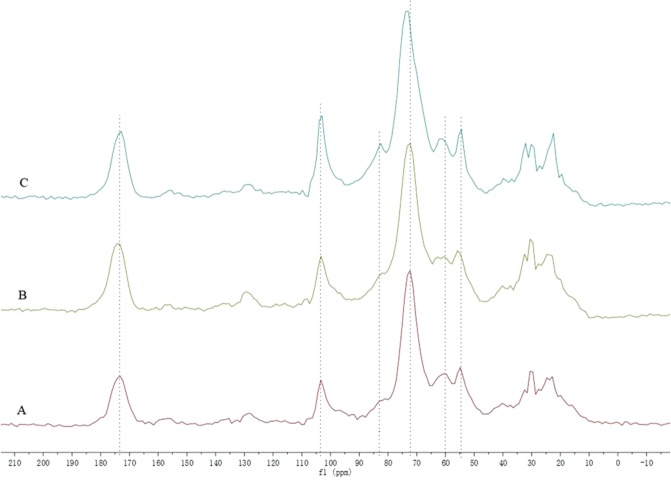
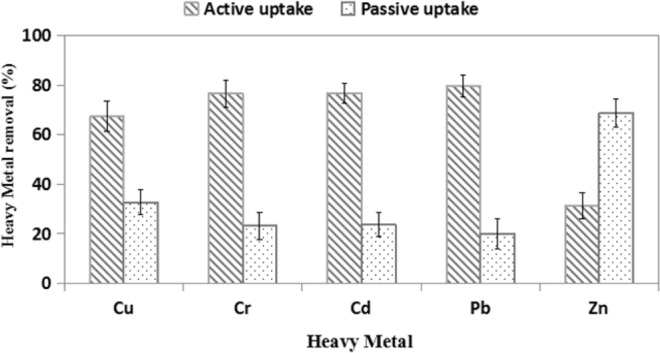
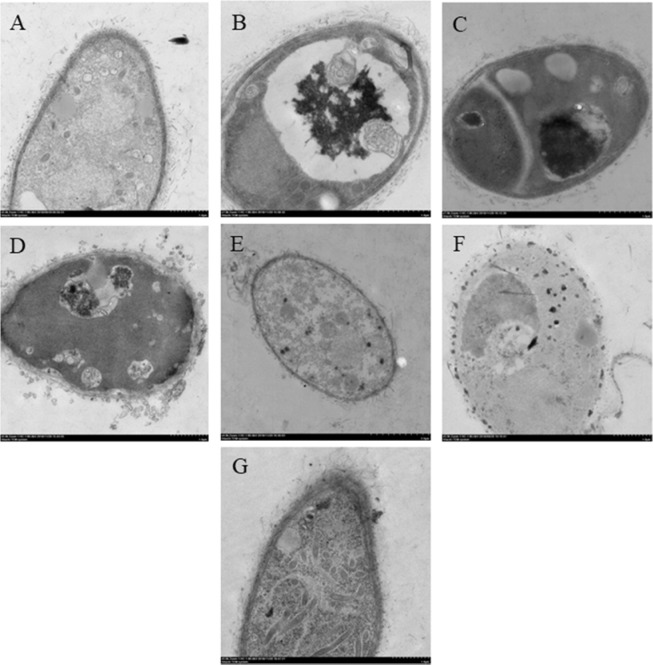
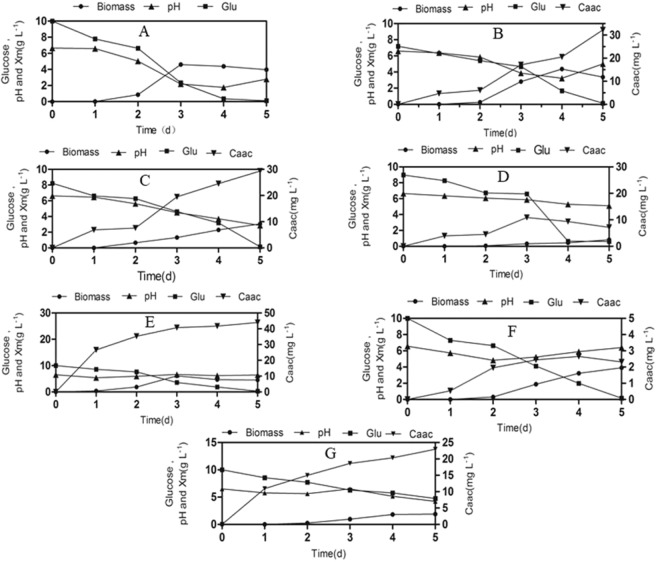
Fungal bioremediation is a promising approach to remove heavy-metal from contaminated water. Present study examined the ability of an earthworm gut fungus Trichoderma brevicompactum QYCD-6 to tolerate and remove both individual and multi-metals. The minimum inhibitory concentration (MIC) of heavy metals [Cu(II), Cr(VI), Cd(II) and Zn(II)] against the fungus was ranged 150-200 mg L on composite medium, and MIC of Pb(II) was the highest with 1600 mg L on potato dextrose (PD) medium. The Pb(II) presented the highest metal removal rate (97.5%) which mostly dependent on bioaccumulation with 80.0%, and synchronized with max biomass (6.13 g L) in PD medium. However, on the composite medium, the highest removal rate was observed for Cu(II) (64.5%). Cellular changes in fungus were reflected by TEM analysis. FTIR and solid-state NMR analyses indicated the involvement of different functional groups (amino, carbonyl, hydroxyl, et al.) in metallic biosorption. These results established that the earthworm-associated T. brevicompactum QYCD-6 was a promising fungus for the remediation of heavy-metal wastewater.

摘要

真菌生物修复是一种从受污染的水中去除重金属的很有前途的方法。本研究考察了蚯蚓肠道真菌密粘褶菌 QYCD-6 耐受和去除单一和多种金属的能力。重金属 [Cu(II)、Cr(VI)、Cd(II) 和 Zn(II)] 对该真菌的最小抑制浓度 (MIC) 在复合培养基中为 150-200mg/L,而在马铃薯葡萄糖 (PD) 培养基中 Pb(II) 的 MIC 最高,为 1600mg/L。Pb(II) 表现出最高的金属去除率(97.5%),主要依赖于生物积累,为 80.0%,与 PD 培养基中的最大生物量(6.13g/L)同步。然而,在复合培养基中,Cu(II)(64.5%)的去除率最高。真菌的细胞变化通过 TEM 分析反映出来。FTIR 和固态 NMR 分析表明,不同的功能基团(氨基、羰基、羟基等)参与了金属的生物吸附。这些结果表明,与蚯蚓相关的密粘褶菌 QYCD-6 是一种很有前途的用于重金属废水修复的真菌。
https://cdn.ncbi.nlm.nih.gov/pmc/blobs/7ce7/7181882/13d887836f30/41598_2020_63813_Fig4_HTML.jpg
https://cdn.ncbi.nlm.nih.gov/pmc/blobs/7ce7/7181882/4f3fefe9fea8/41598_2020_63813_Fig1_HTML.jpg
https://cdn.ncbi.nlm.nih.gov/pmc/blobs/7ce7/7181882/cc8cbedbf40c/41598_2020_63813_Fig2_HTML.jpg
https://cdn.ncbi.nlm.nih.gov/pmc/blobs/7ce7/7181882/b56845663e34/41598_2020_63813_Fig3_HTML.jpg
https://cdn.ncbi.nlm.nih.gov/pmc/blobs/7ce7/7181882/13d887836f30/41598_2020_63813_Fig4_HTML.jpg
https://cdn.ncbi.nlm.nih.gov/pmc/blobs/7ce7/7181882/4f3fefe9fea8/41598_2020_63813_Fig1_HTML.jpg
https://cdn.ncbi.nlm.nih.gov/pmc/blobs/7ce7/7181882/cc8cbedbf40c/41598_2020_63813_Fig2_HTML.jpg
https://cdn.ncbi.nlm.nih.gov/pmc/blobs/7ce7/7181882/b56845663e34/41598_2020_63813_Fig3_HTML.jpg
https://cdn.ncbi.nlm.nih.gov/pmc/blobs/7ce7/7181882/13d887836f30/41598_2020_63813_Fig4_HTML.jpg

相似文献

1
Multiple heavy metal tolerance and removal by an earthworm gut fungus Trichoderma brevicompactum QYCD-6.一种土壤真菌——木霉 QYCD-6 对多种重金属的耐受和去除。
Sci Rep. 2020 Apr 24;10(1):6940. doi: 10.1038/s41598-020-63813-y.
2
Multiple heavy metal removal using an entomopathogenic fungi Beauveria bassiana.利用昆虫病原真菌球孢白僵菌进行多种重金属去除。
Bioresour Technol. 2016 Oct;218:388-96. doi: 10.1016/j.biortech.2016.06.096. Epub 2016 Jun 27.
3
Removal of industrial dyes and heavy metals by Beauveria bassiana: FTIR, SEM, TEM and AFM investigations with Pb(II).球孢白僵菌去除工业染料和重金属:FTIR、SEM、TEM 和 AFM 对 Pb(II)的研究。
Environ Sci Pollut Res Int. 2018 Jul;25(21):20486-20496. doi: 10.1007/s11356-017-0246-1. Epub 2017 Oct 1.
4
Taxonomy characterization and plumbum bioremediation of novel fungi.新型真菌的分类特征与铅生物修复。
J Basic Microbiol. 2018 Apr;58(4):368-376. doi: 10.1002/jobm.201700469. Epub 2018 Feb 2.
5
Hexavalent chromium stress response, reduction capability and bioremediation potential of Trichoderma sp. isolated from electroplating wastewater.六价铬胁迫响应、还原能力及一株从电镀废水中分离的木霉的生物修复潜力。
Ecotoxicol Environ Saf. 2019 Dec 15;185:109734. doi: 10.1016/j.ecoenv.2019.109734. Epub 2019 Sep 28.
6
[Biosorption of Cd(II), Cu(II), Pb(II) and Zn(II) in aqueous solutions by fruiting bodies of macrofungi (Auricularia polytricha and Tremella fuciformis)].[大型真菌(毛木耳和银耳)子实体对水溶液中Cd(II)、Cu(II)、Pb(II)和Zn(II)的生物吸附]
Huan Jing Ke Xue. 2010 Jul;31(7):1566-74.
7
Tolerance to heavy metals in filamentous fungi isolated from contaminated mining soils in the Zanjan Province, Iran.从伊朗赞詹省受污染采矿土壤中分离出的丝状真菌对重金属的耐受性
Chemosphere. 2017 Oct;185:290-296. doi: 10.1016/j.chemosphere.2017.07.022. Epub 2017 Jul 5.
8
Mechanisms for metal removal established via electron microscopy and spectroscopy: a case study on metal tolerant fungi Penicillium simplicissimum.通过电子显微镜和光谱学确定的金属去除机制:以耐金属真菌 Penicillium simplicissimum 为例的研究。
J Hazard Mater. 2019 Jan 15;362:394-402. doi: 10.1016/j.jhazmat.2018.08.077. Epub 2018 Sep 9.
9
Combined effects of Cu, Cd, Pb, and Zn on the growth and uptake of consortium of Cu-resistant Penicillium sp. A1 and Cd-resistant Fusarium sp. A19.铜、镉、铅和锌对铜抗性青霉 A1 和镉抗性镰刀菌 A19 共生体生长和摄取的联合效应。
J Hazard Mater. 2009 Nov 15;171(1-3):761-6. doi: 10.1016/j.jhazmat.2009.06.080. Epub 2009 Jun 21.
10
Mechanistic insight to mycoremediation potential of a metal resistant fungal strain for removal of hazardous metals from multimetal pesticide matrix.从机制角度深入了解一株抗金属真菌菌株用于从多金属农药基质中去除有害金属的修复潜力。
Environ Pollut. 2020 Jul;262:114255. doi: 10.1016/j.envpol.2020.114255. Epub 2020 Mar 6.

引用本文的文献

1
Unveiling the potential of Aspergillus terreus SJP02 for zinc remediation and its driving mechanism.揭示土曲霉SJP02在锌修复方面的潜力及其驱动机制。
Sci Rep. 2025 Jan 27;15(1):3376. doi: 10.1038/s41598-025-87749-3.
2
Bioremediation petroleum wastewater and oil-polluted soils by the non-toxigenic indigenous fungi.利用非产毒土著真菌进行石油废水和油污染土壤的生物修复。
World J Microbiol Biotechnol. 2024 Oct 3;40(11):336. doi: 10.1007/s11274-024-04146-0.
3
Enhancing biodegradable smart food packaging: Fungal-synthesized nanoparticles for stabilizing biopolymers.

本文引用的文献

1
Comparative studies on Pb(II) biosorption with three spongy microbe-based biosorbents: High performance, selectivity and application.三种基于海绵微生物的生物吸附剂对 Pb(II)的吸附比较研究:高性能、选择性和应用。
J Hazard Mater. 2019 Jul 5;373:39-49. doi: 10.1016/j.jhazmat.2019.03.056. Epub 2019 Mar 15.
2
Removal and tolerance mechanism of Pb by a filamentous fungus: A case study.丝状真菌去除和耐受 Pb 的机制:案例研究。
Chemosphere. 2019 Jun;225:200-208. doi: 10.1016/j.chemosphere.2019.03.027. Epub 2019 Mar 7.
3
Potentiality of white-rot fungi in biosorption of nickel and cadmium: Modeling optimization and kinetics study.
增强可生物降解的智能食品包装:用于稳定生物聚合物的真菌合成纳米颗粒。
Heliyon. 2024 Sep 12;10(18):e37692. doi: 10.1016/j.heliyon.2024.e37692. eCollection 2024 Sep 30.
4
Microbial Removal of Heavy Metals from Contaminated Environments Using Metal-Resistant Indigenous Strains.利用耐金属本地菌株从受污染环境中微生物去除重金属
J Xenobiot. 2023 Dec 29;14(1):51-78. doi: 10.3390/jox14010004.
5
and Nanotechnology in Sustainable Agriculture: A Review.以及可持续农业中的纳米技术:综述
Front Fungal Biol. 2021 Dec 1;2:764675. doi: 10.3389/ffunb.2021.764675. eCollection 2021.
6
Toxicity of Heavy Metals and Recent Advances in Their Removal: A Review.重金属毒性及其去除的最新进展:综述
Toxics. 2023 Jul 3;11(7):580. doi: 10.3390/toxics11070580.
7
Bioremoval of heavy metals from aqueous solution using dead biomass of indigenous fungi derived from fertilizer industry effluents: isotherm models evaluation and batch optimization.利用源自肥料工业废水的土著真菌死生物质从水溶液中去除重金属:等温模型评价和批量优化。
Biometals. 2023 Dec;36(6):1307-1329. doi: 10.1007/s10534-023-00520-x. Epub 2023 Jul 10.
8
The utilization of microbes for sustainable food production.利用微生物实现可持续粮食生产。
BioTechnologia (Pozn). 2023 Jun 26;104(2):209-216. doi: 10.5114/bta.2023.127209. eCollection 2023.
9
Multimetal bioremediation from aqueous solution using dead biomass of Mucor sp. NRCC6 derived from detergent manufacturing effluent.利用来源于洗涤剂制造废水的毛霉 NRCC6 死细胞生物质从水溶液中进行多金属生物修复。
J Appl Genet. 2023 Sep;64(3):569-590. doi: 10.1007/s13353-023-00765-9. Epub 2023 Jul 5.
10
Ecological adaptation of earthworms for coping with plant polyphenols, heavy metals, and microplastics in the soil: A review.蚯蚓应对土壤中植物多酚、重金属和微塑料的生态适应性:综述
Heliyon. 2023 Mar 15;9(3):e14572. doi: 10.1016/j.heliyon.2023.e14572. eCollection 2023 Mar.
白腐真菌对镍和镉的生物吸附潜力:建模优化与动力学研究
Chemosphere. 2019 Feb;216:124-130. doi: 10.1016/j.chemosphere.2018.10.113. Epub 2018 Oct 17.
4
Influence of metal-contamination on distribution in subcellular fractions of the earthworm (Metaphire californica) from Hunan Province, China.金属污染对中国湖南省蚯蚓(Metaphire californica)亚细胞组分分布的影响。
J Environ Sci (China). 2018 Nov;73:127-137. doi: 10.1016/j.jes.2018.01.021. Epub 2018 Feb 3.
5
Mechanisms for metal removal established via electron microscopy and spectroscopy: a case study on metal tolerant fungi Penicillium simplicissimum.通过电子显微镜和光谱学确定的金属去除机制:以耐金属真菌 Penicillium simplicissimum 为例的研究。
J Hazard Mater. 2019 Jan 15;362:394-402. doi: 10.1016/j.jhazmat.2018.08.077. Epub 2018 Sep 9.
6
New approach for immobilization of 3-aminopropyltrimethoxysilane and TiO nanoparticles into cellulose for BJ1 skin cells proliferation.将 3-氨丙基三甲氧基硅烷和 TiO 纳米粒子固定到纤维素中以促进 BJ1 皮肤细胞增殖的新方法。
Carbohydr Polym. 2018 Nov 1;199:193-204. doi: 10.1016/j.carbpol.2018.07.004. Epub 2018 Jul 9.
7
Therapeutic Effect of Intestinal Autochthonous P16 Against Waterborne Lead Toxicity in .肠道固有 P16 对水中铅毒性的治疗作用。
Front Immunol. 2018 Aug 7;9:1824. doi: 10.3389/fimmu.2018.01824. eCollection 2018.
8
Antiproliferative and Antimicrobial Activities of Secondary Metabolites and Phylogenetic Study of Endophytic Species From Plants.植物内生菌次生代谢产物的抗增殖和抗菌活性及其系统发育研究
Front Microbiol. 2018 Jul 11;9:1484. doi: 10.3389/fmicb.2018.01484. eCollection 2018.
9
Molecular architecture of fungal cell walls revealed by solid-state NMR.固态 NMR 揭示真菌细胞壁的分子结构。
Nat Commun. 2018 Jul 16;9(1):2747. doi: 10.1038/s41467-018-05199-0.
10
Adsorption of Pb(II) from aqueous solution using a magnetic chitosan/graphene oxide composite and its toxicity studies.用磁性壳聚糖/氧化石墨烯复合材料从水溶液中吸附 Pb(II)及其毒性研究。
Int J Biol Macromol. 2018 Aug;115:1142-1150. doi: 10.1016/j.ijbiomac.2018.04.185. Epub 2018 May 2.