Department of Pharmacology and Systems Physiology, University of Cincinnati, Cincinnati, OH, USA.
Department of Molecular Genetics, Biochemistry, and Microbiology, University of Cincinnati, Cincinnati, OH, USA.
Endocrinology. 2020 Jul 1;161(7). doi: 10.1210/endocr/bqaa066.
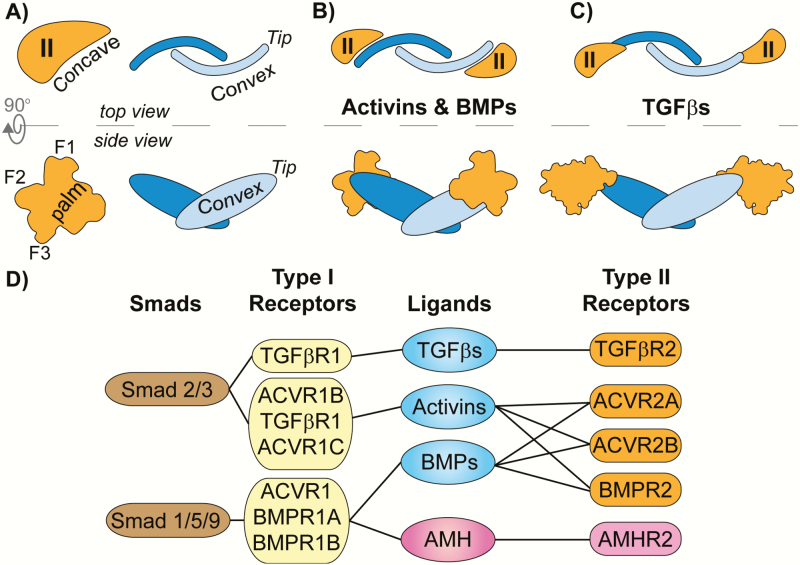
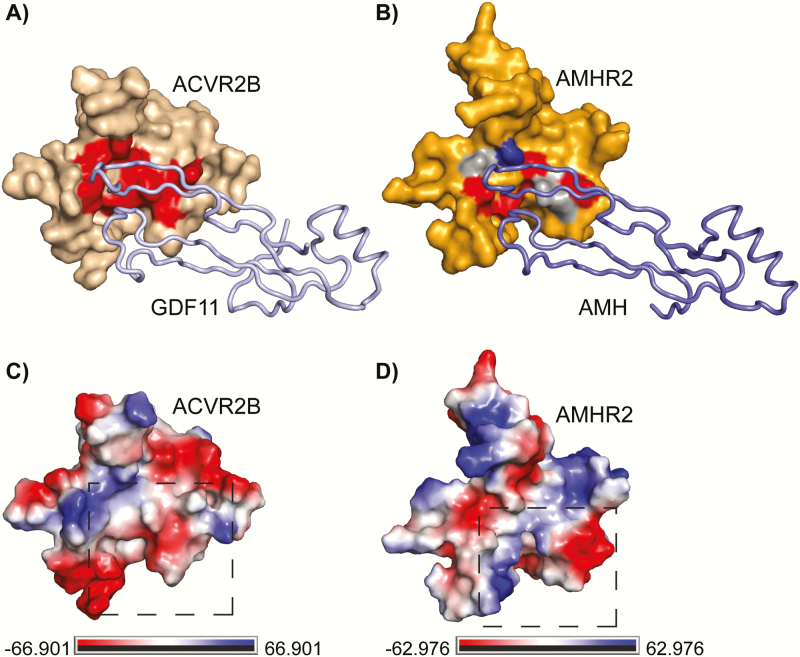
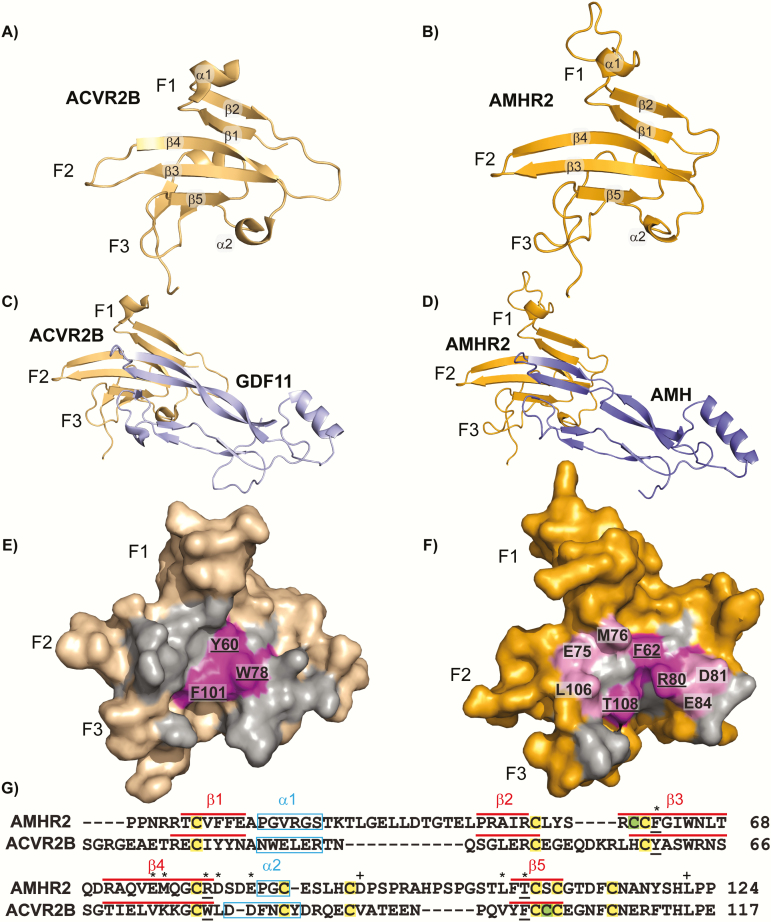
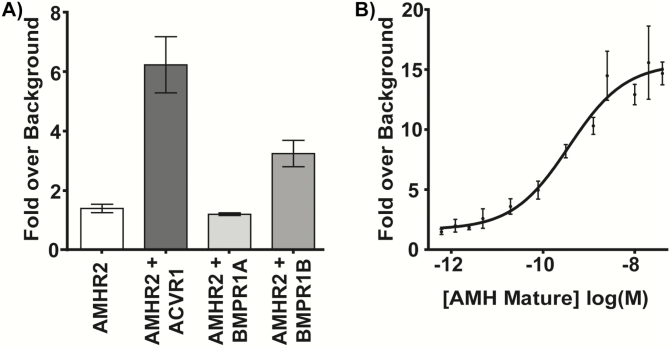
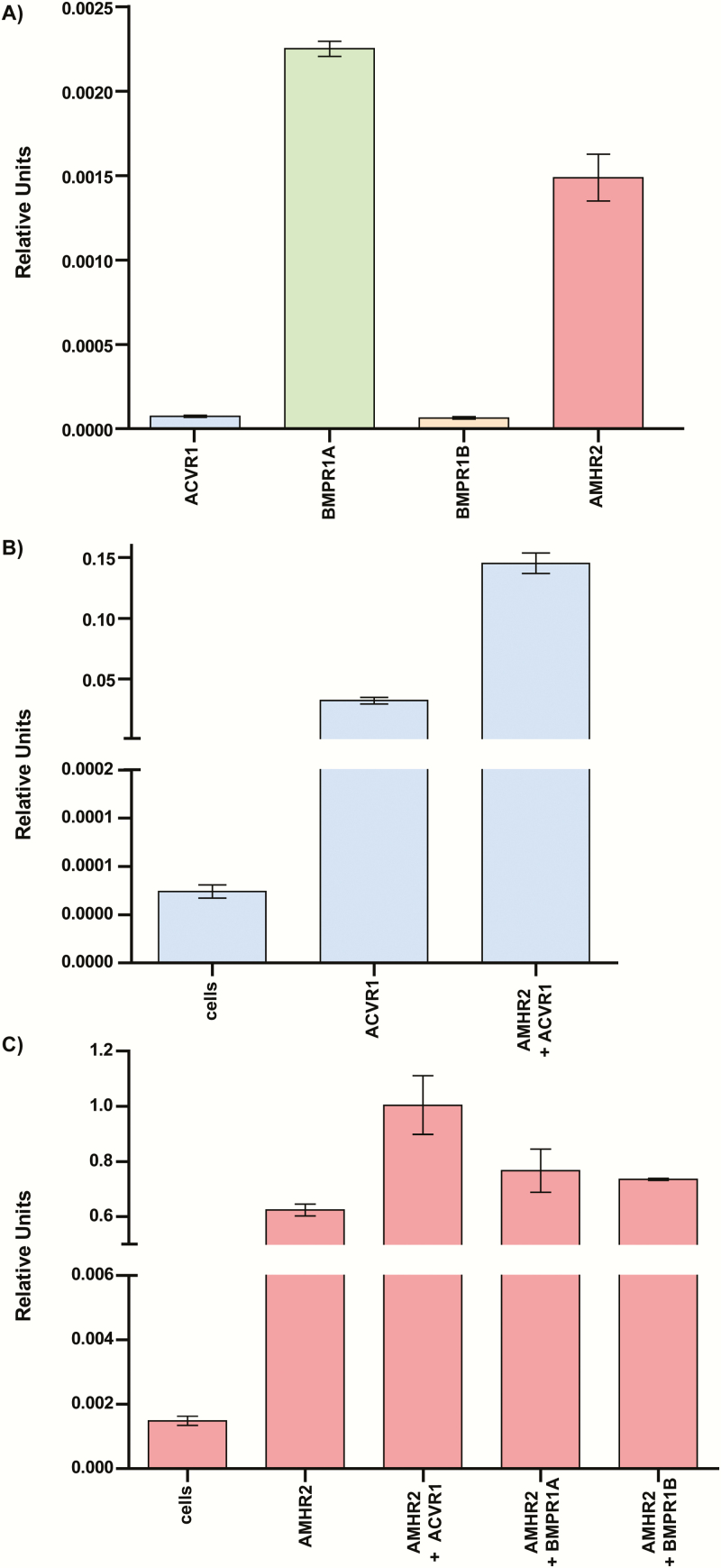
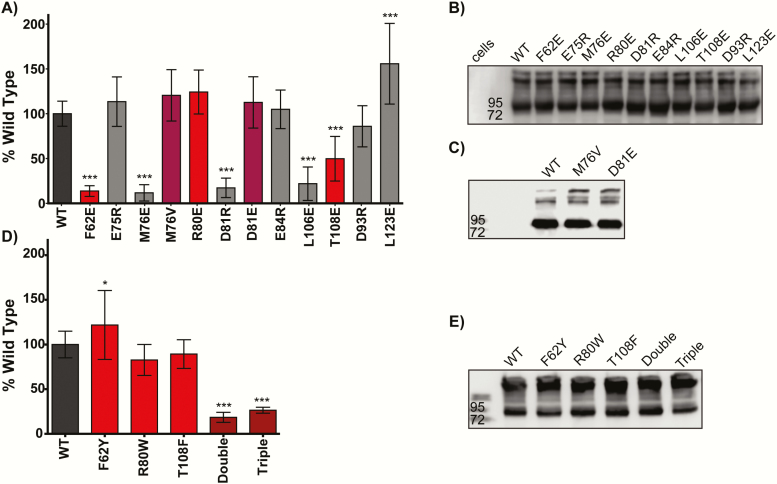
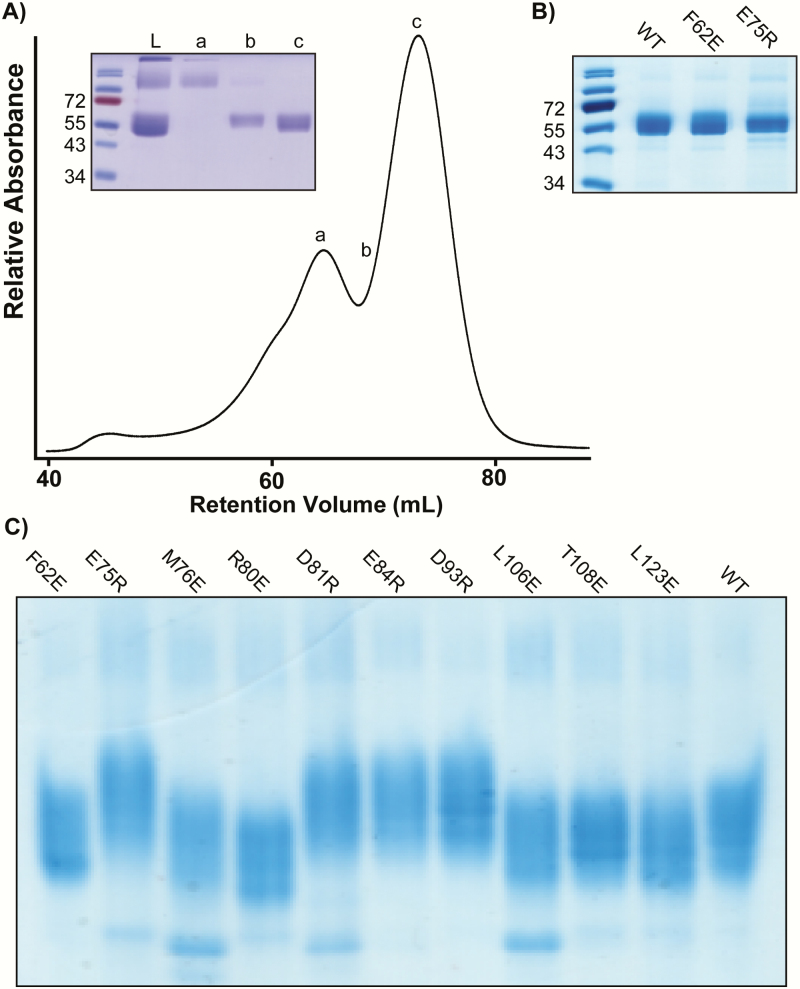
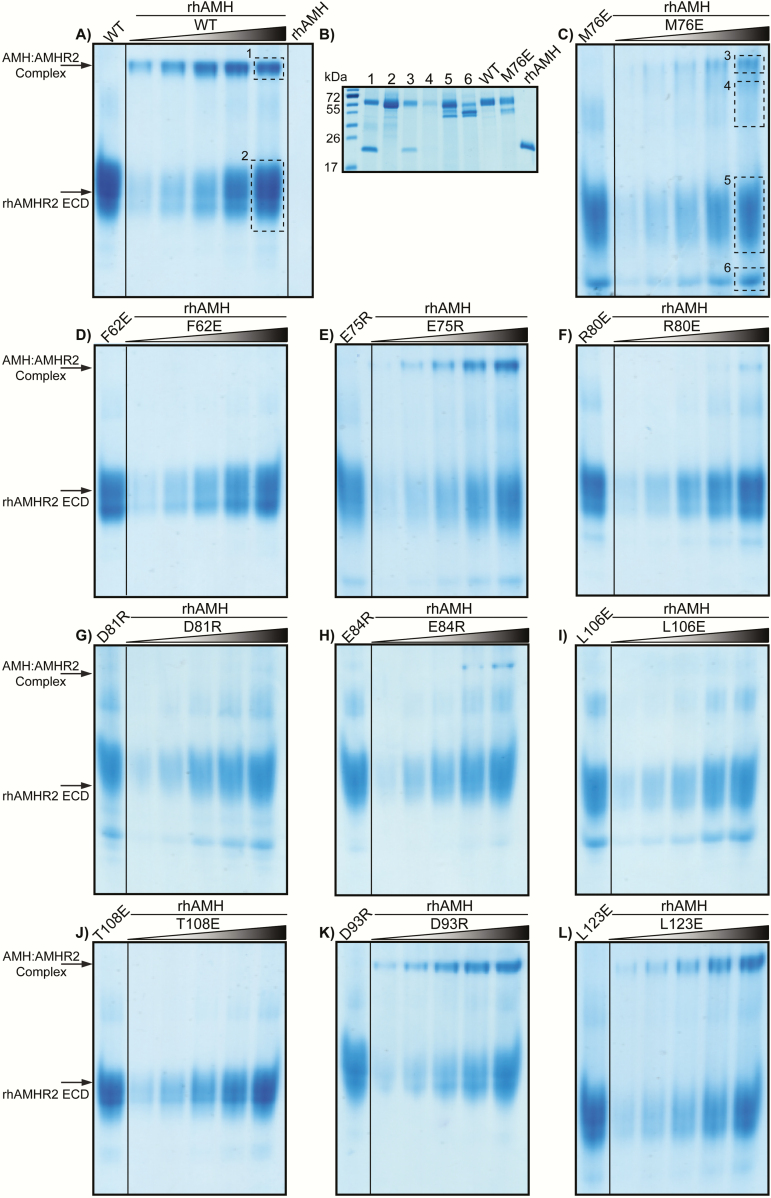
Anti-Müllerian hormone (AMH) or Müllerian inhibiting substance is a unique member of the TGF-β family responsible for development and differentiation of the reproductive system. AMH signals through its own dedicated type II receptor, anti-Müllerian hormone receptor type II (AMHR2), providing an exclusive ligand-receptor pair within the broader TGF-β family. In this study, we used previous structural information to derive a model of AMH bound to AMHR2 to guide mutagenesis studies to identify receptor residues important for AMH signaling. Nonconserved mutations were introduced in AMHR2 and characterized in an AMH-responsive cell-based luciferase assay and native PAGE. Collectively, our results identified several residues important for AMH signaling within the putative ligand binding interface of AMHR2. Our results show that AMH engages AMHR2 at a similar interface to how activin and BMP class ligands bind the type II receptor, ACVR2B; however, there are significant molecular differences at the ligand interface of these 2 receptors, where ACVR2B is mostly hydrophobic and AMHR2 is predominately charged. Overall, this study shows that although the location of ligand binding on the receptor is similar to ACVR2A, ACVR2B, and BMPR2; AMHR2 uses unique ligand-receptor interactions to impart specificity for AMH.
抗缪勒管激素(AMH)或缪勒管抑制物质是 TGF-β 家族的一个独特成员,负责生殖系统的发育和分化。AMH 通过其自身专用的 II 型受体,抗缪勒管激素受体 II 型(AMHR2)发出信号,在更广泛的 TGF-β 家族中提供独特的配体-受体对。在这项研究中,我们利用以前的结构信息推导出 AMH 与 AMHR2 结合的模型,以指导突变研究,确定 AMH 信号传导中重要的受体残基。在 AMH 反应性细胞内荧光素酶测定和天然 PAGE 中,我们对 AMHR2 中的非保守突变进行了鉴定和表征。总的来说,我们的结果确定了 AMHR2 中配体结合界面内几个对 AMH 信号传导很重要的残基。我们的结果表明,AMH 与 AMHR2 的结合方式与激活素和 BMP 类配体与 II 型受体 ACVR2B 的结合方式相似;然而,这两个受体的配体界面存在显著的分子差异,ACVR2B 主要是疏水性的,而 AMHR2 主要是带电荷的。总的来说,这项研究表明,尽管配体结合的位置与 ACVR2A、ACVR2B 和 BMPR2 相似;但 AMHR2 利用独特的配体-受体相互作用赋予 AMH 特异性。