B-216, Chromosome Biology Lab (CBL), Indian Institute of Science Education and Research (IISER), Dr Homi Bhabha Road, Pashan, Pune 411008, India.
Center for BioSystems Science and Engineering, Indian Institute of Science, Bengaluru 560012, India.
Hum Mol Genet. 2020 Jun 27;29(10):1673-1688. doi: 10.1093/hmg/ddaa076.
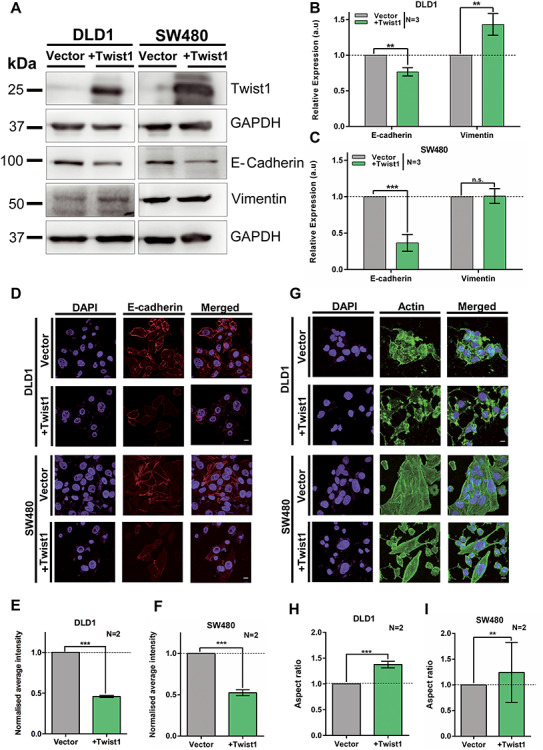
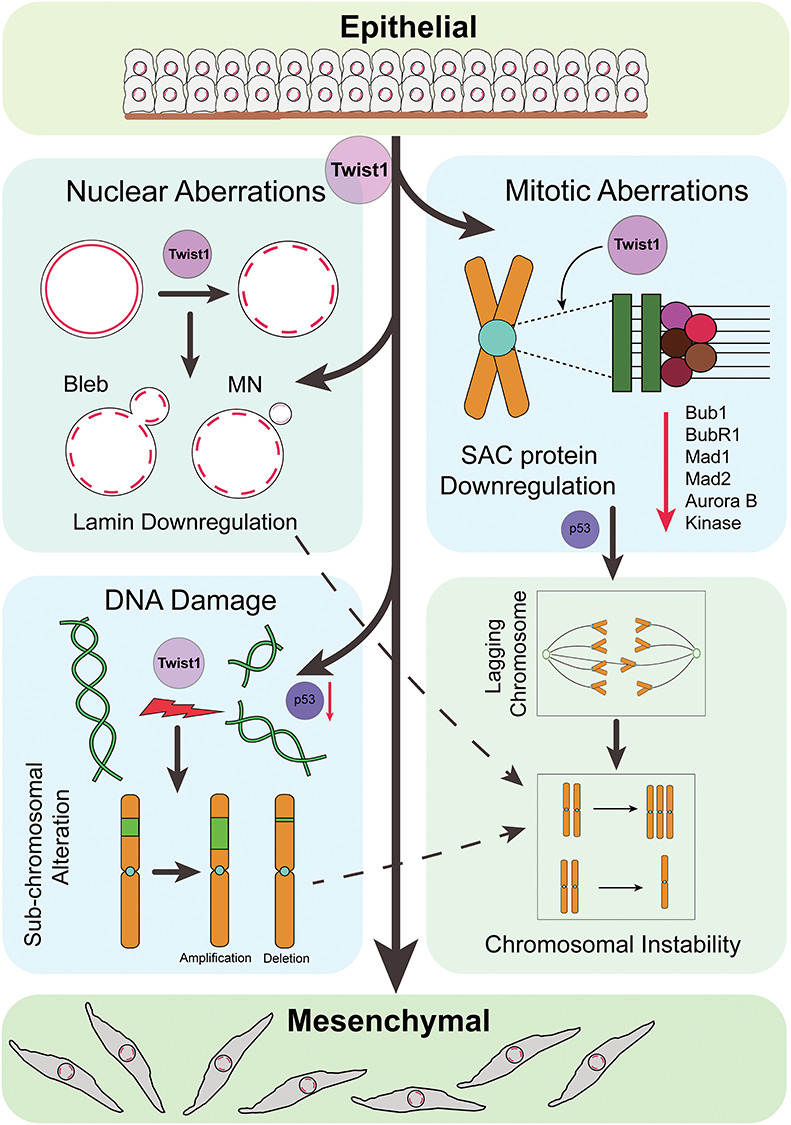
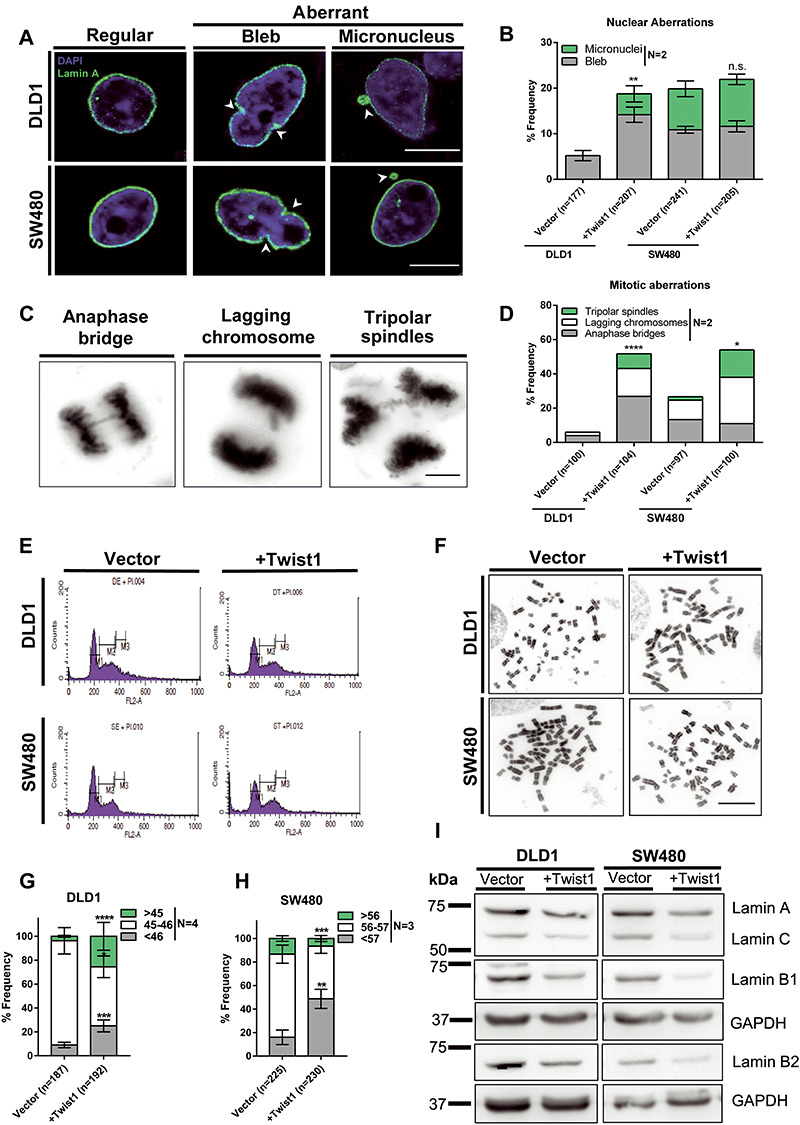
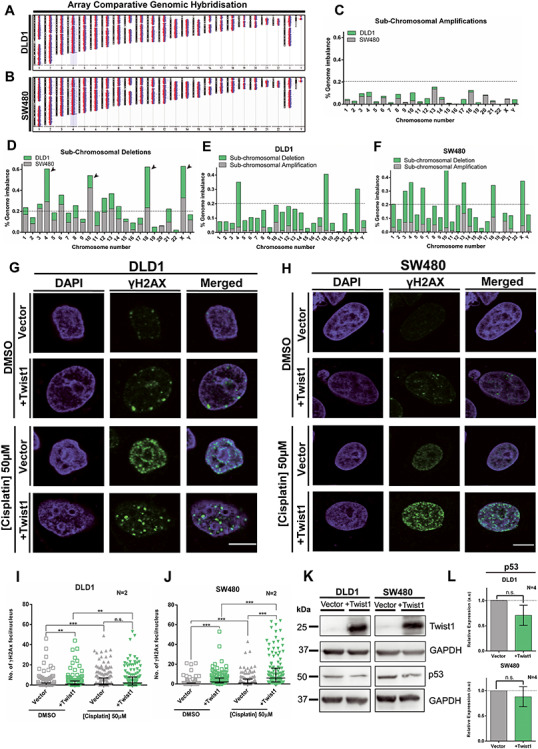
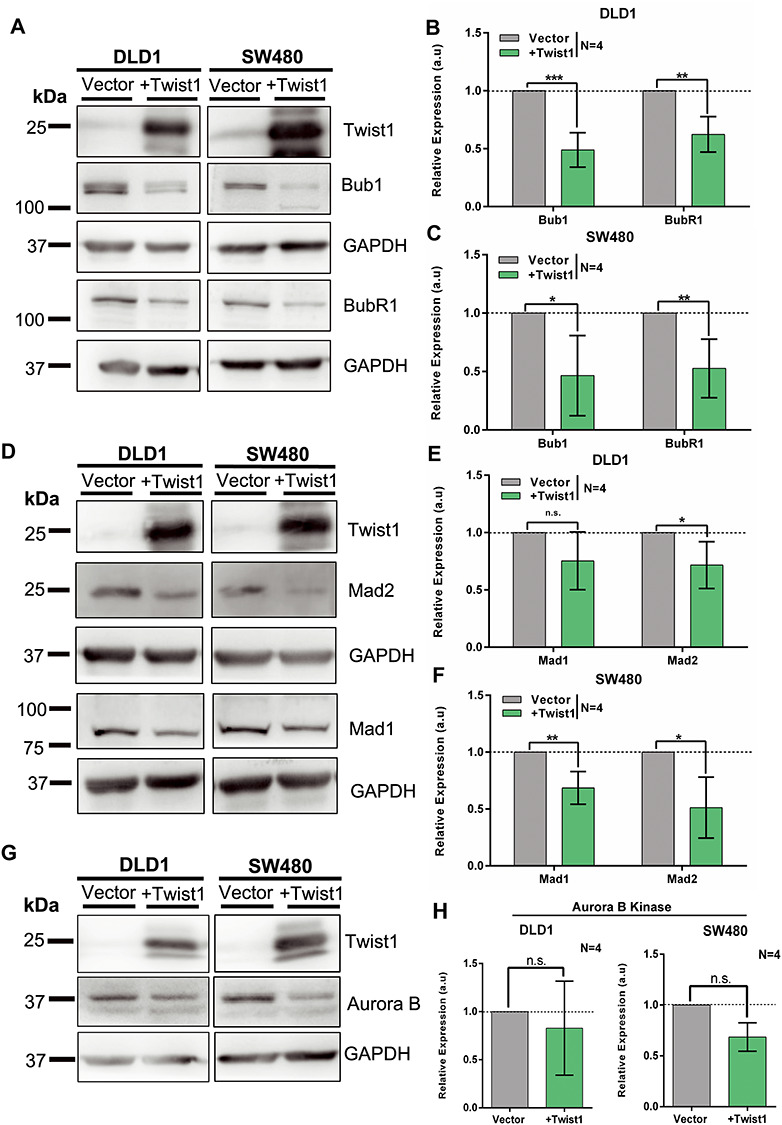
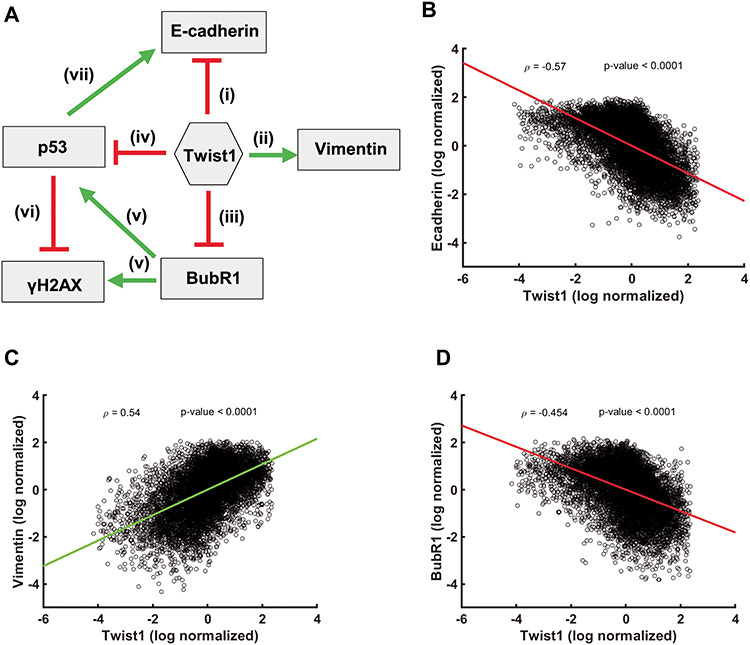
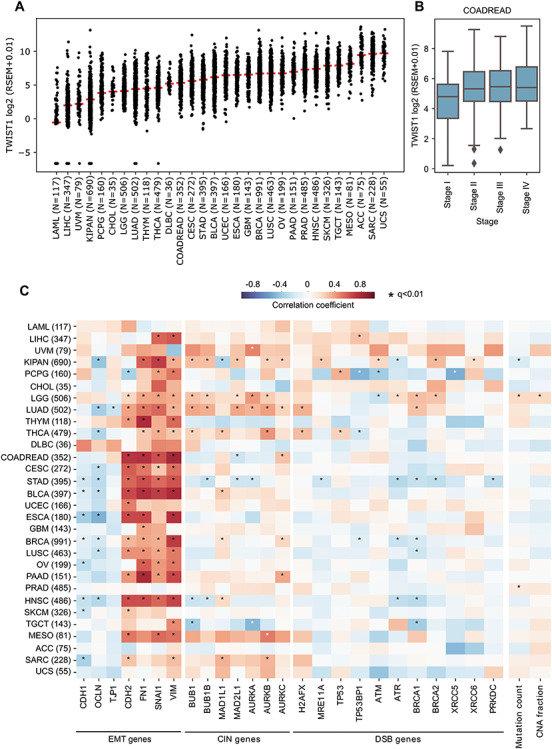
Twist1 is a basic helix-loop-helix transcription factor, essential during early development in mammals. While Twist1 induces epithelial-to-mesenchymal transition (EMT), here we show that Twist1 overexpression enhances nuclear and mitotic aberrations. This is accompanied by an increase in whole chromosomal copy number gains and losses, underscoring the role of Twist1 in inducing chromosomal instability (CIN) in colorectal cancer cells. Array comparative genomic hybridization (array CGH) analysis further shows sub-chromosomal deletions, consistent with an increased frequency of DNA double strand breaks (DSBs). Remarkably, Twist1 overexpression downmodulates key cell cycle checkpoint factors-Bub1, BubR1, Mad1 and Mad2-that regulate CIN. Mathematical simulations using the RACIPE tool show a negative correlation of Twist1 with E-cadherin and BubR1. Data analyses of gene expression profiles of patient samples from The Cancer Genome Atlas (TCGA) reveal a positive correlation between Twist1 and mesenchymal genes across cancers, whereas the correlation of TWIST1 with CIN and DSB genes is cancer subtype-specific. Taken together, these studies highlight the mechanistic involvement of Twist1 in the deregulation of factors that maintain genome stability during EMT in colorectal cancer cells. Twist1 overexpression enhances genome instability in the context of EMT that further contributes to cellular heterogeneity. In addition, these studies imply that Twist1 downmodulates nuclear lamins that further alter spatiotemporal organization of the cancer genome and epigenome. Notwithstanding their genetic background, colorectal cancer cells nevertheless maintain their overall ploidy, while the downstream effects of Twist1 enhance CIN and DNA damage enriching for sub-populations of aggressive cancer cells.
Twist1 是一种基本的螺旋-环-螺旋转录因子,在哺乳动物的早期发育中至关重要。虽然 Twist1 诱导上皮-间充质转化(EMT),但我们在这里表明,Twist1 的过表达会增强核和有丝分裂异常。这伴随着全染色体拷贝数增益和损失的增加,突出了 Twist1 在诱导结直肠癌细胞中的染色体不稳定性(CIN)中的作用。阵列比较基因组杂交(array CGH)分析进一步显示亚染色体缺失,与 DNA 双链断裂(DSBs)的频率增加一致。值得注意的是,Twist1 的过表达下调了调节 CIN 的关键细胞周期检查点因子-Bub1、BubR1、Mad1 和 Mad2。使用 RACIPE 工具进行的数学模拟显示 Twist1 与 E-钙粘蛋白和 BubR1 呈负相关。对来自癌症基因组图谱(TCGA)的患者样本的基因表达谱进行数据分析显示,在跨癌症的 Twist1 与间充质基因之间存在正相关,而 TWIST1 与 CIN 和 DSB 基因的相关性是癌症亚型特异性的。总之,这些研究强调了 Twist1 在 EMT 过程中调节维持基因组稳定性的因子的失调中的机制作用在结直肠癌细胞中。Twist1 的过表达增强了 EMT 背景下的基因组不稳定性,进一步导致细胞异质性。此外,这些研究表明,Twist1 下调核纤层蛋白,进一步改变癌症基因组和表观基因组的时空组织。尽管存在遗传背景,但结直肠癌细胞仍然保持其整体倍性,而 Twist1 的下游效应增强了 CIN 和 DNA 损伤,使侵袭性癌细胞的亚群富集。