Roscher Mareike, Bakos Gábor, Benešová Martina
German Cancer Research Center (DKFZ), Division of Radiooncology/Radiobiology, Im Neuenheimer Feld 280, 69120 Heidelberg, Germany.
German Cancer Research Center (DKFZ), Research Group Molecular Biology of Systemic Radiotherapy, Im Neuenheimer Feld 280, 69120 Heidelberg, Germany.
Pharmaceuticals (Basel). 2020 Apr 23;13(4):76. doi: 10.3390/ph13040076.
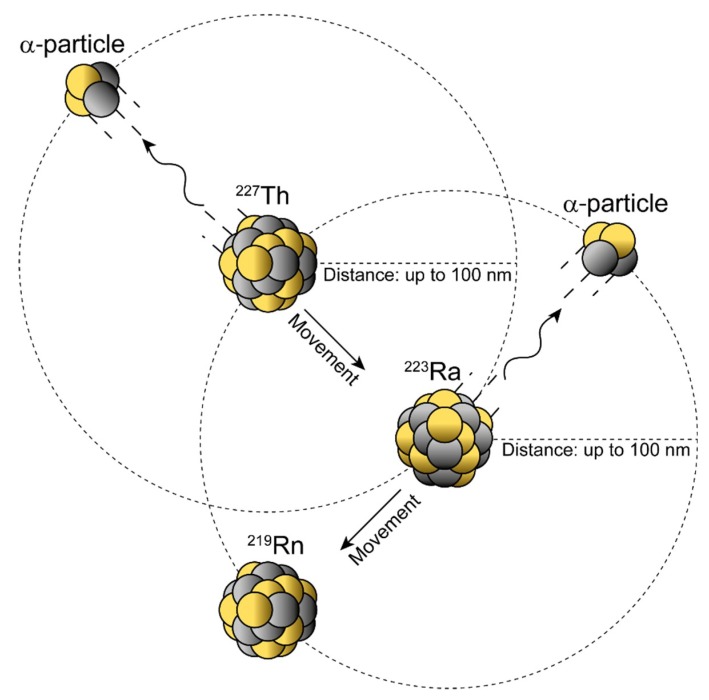
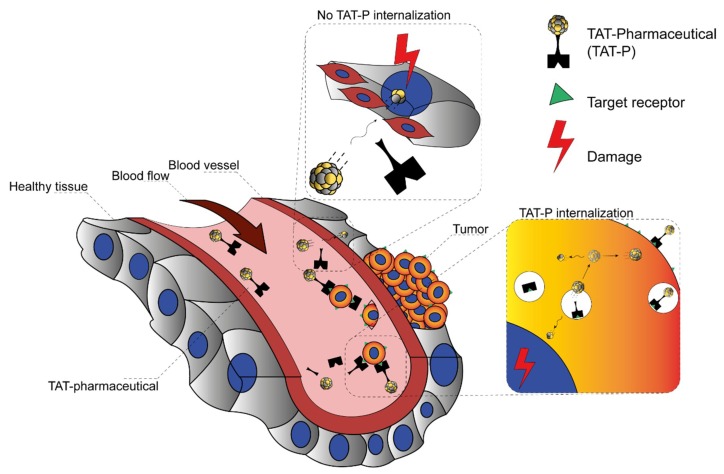
Atomic in vivo nanogenerators such as actinium-225, thorium-227, and radium-223 are of increasing interest and importance in the treatment of patients with metastatic cancer diseases. This is due to their peculiar physical, chemical, and biological characteristics, leading to astonishing responses in otherwise resistant patients. Nevertheless, there are still a few obstacles and hurdles to be overcome that hamper the broader utilization in the clinical setting. Next to the limited supply and relatively high costs, the in vivo complex stability and the fate of the recoiling daughter radionuclides are substantial problems that need to be solved. In radiobiology, the mechanisms underlying treatment efficiency, possible resistance mechanisms, and late side effect occurrence are still far from being understood and need to be unraveled. In this review, the current knowledge on the scientific and clinical background of targeted alpha therapies is summarized. Furthermore, open issues and novel approaches with a focus on the future perspective are discussed. Once these are unraveled, targeted alpha therapies with atomic in vivo nanogenerators can be tailored to suit the needs of each patient when applying careful risk stratification and combination therapies. They have the potential to become one of the major treatment pillars in modern cancer management.
诸如锕 - 225、钍 - 227和镭 - 223等体内原子纳米发电机在转移性癌症疾病患者的治疗中越来越受到关注且具有重要意义。这是由于它们独特的物理、化学和生物学特性,能在原本耐药的患者中引发惊人的反应。然而,仍有一些障碍需要克服,这阻碍了其在临床环境中的更广泛应用。除了供应有限和成本相对较高外,体内复合物稳定性以及反冲子放射性核素的归宿是需要解决的重大问题。在放射生物学中,治疗效率、可能的耐药机制以及晚期副作用发生的潜在机制仍远未被理解,需要加以阐明。在本综述中,总结了关于靶向α疗法的科学和临床背景的当前知识。此外,还讨论了以未来前景为重点的未解决问题和新方法。一旦这些问题得到解决,在进行仔细的风险分层和联合治疗时,利用体内原子纳米发电机的靶向α疗法就可以根据每位患者的需求进行定制。它们有可能成为现代癌症治疗的主要支柱之一。