Department of Materials Science and Engineering, Imperial College London, London, United Kingdom; The Forsyth Institute, Cambridge, MA United States.
Department of Materials Science and Engineering, Imperial College London, London, United Kingdom.
Acta Biomater. 2021 Jan 15;120:194-202. doi: 10.1016/j.actbio.2020.04.040. Epub 2020 Apr 25.
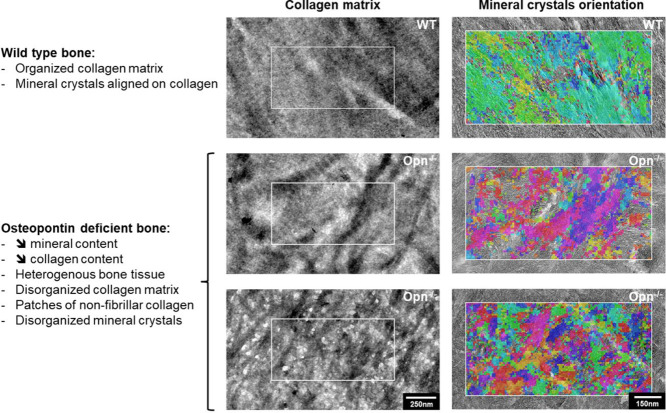
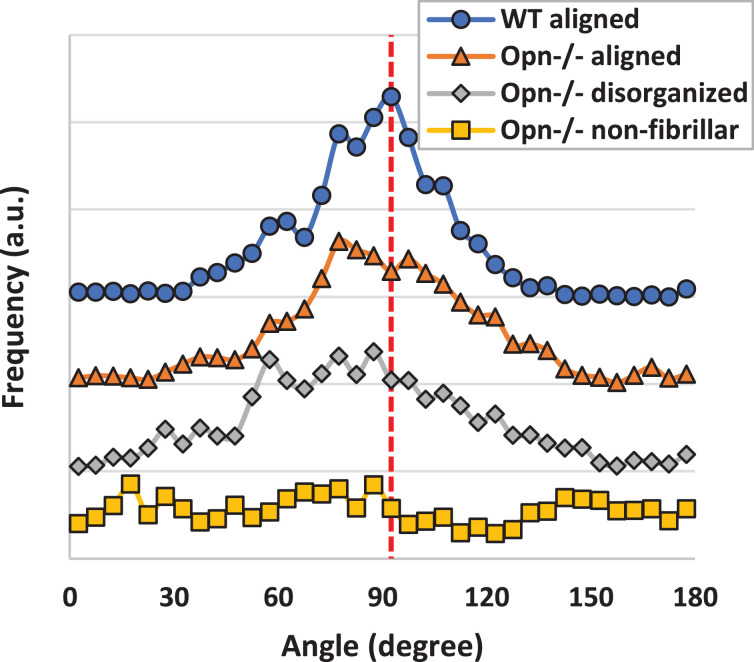
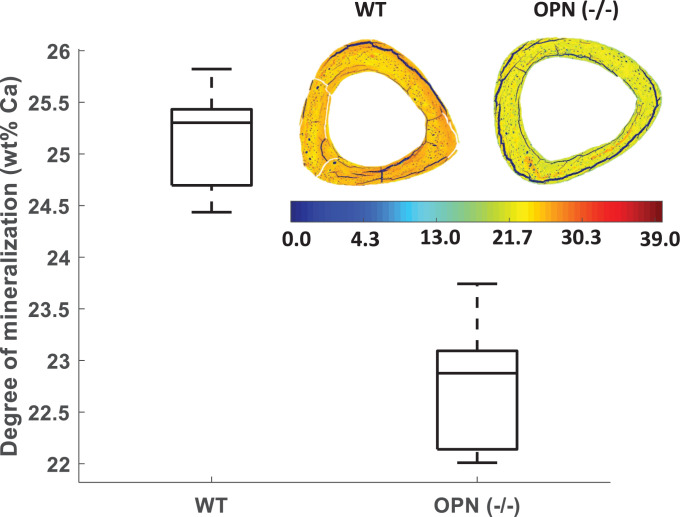
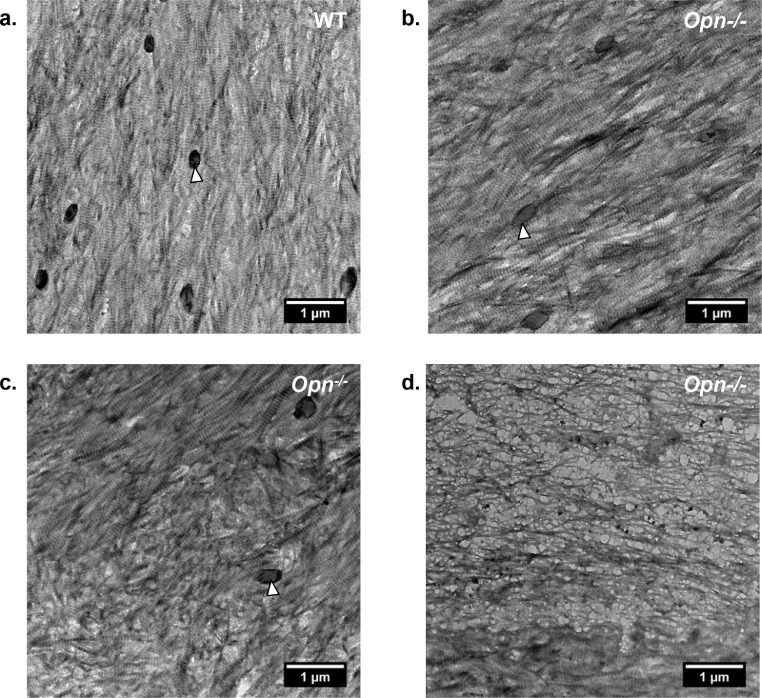
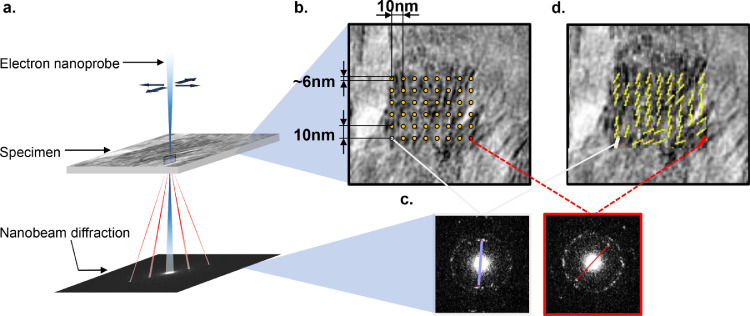
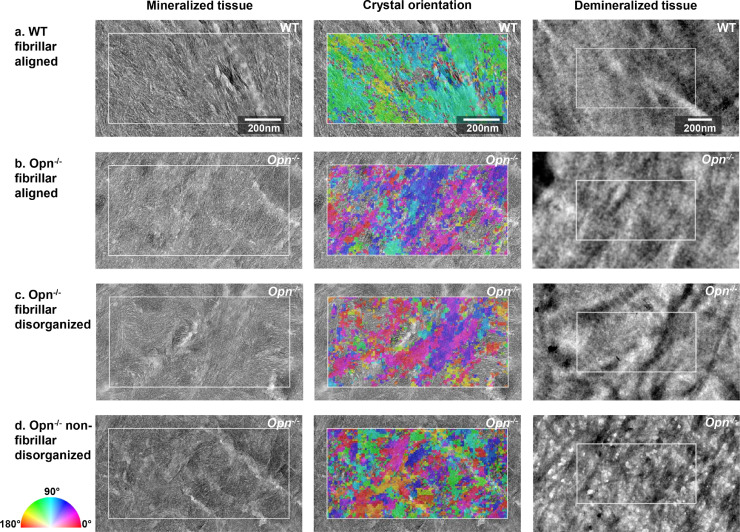
Osteopontin (OPN) is a non-collagenous protein involved in biomineralization of bone tissue. Beyond its role in biomineralization, we show that osteopontin is essential to the quality of collagen fibrils in bone. Transmission electron microscopy revealed that, in Opn tissue, the organization of the collagen fibrils was highly heterogeneous, more disorganized than WT bone and comprised of regions of both organized and disorganized matrix with a reduced density. The Opn bone tissue also exhibited regions in which the collagen had lost its characteristic fibrillar structure, and the crystals were disorganized. Using nanobeam electron diffraction, we show that damage to structural integrity of collagen fibrils in Opn bone tissue and their organization causes mineral disorganization, which could ultimately affect its mechanical integrity. STATEMENT OF SIGNIFICANCE: This study presents new evidence about the role of osteopontin (OPN) - a non-collagenous protein - on the structure and organization of the organic and mineral matrix in bone. In previous work, osteopontin has been suggested to regulate the nucleation and growth of bone mineral crystals and to form sacrificial bonds between mineralized collagen fibrils to enhance bone's toughness. Our findings show that OPN plays a crucial role before mineralization, during the formation of the collagen fibrils. OPN-deficient bones present a lower collagen content compared to wild type bone and, at the tissue level, collagen fibrils organization can be significantly altered in the absence of OPN. Our results suggest that OPN is critical for the formation and/or remodeling of bone collagen matrix. Our findings could lead to the development of new therapeutic strategies of bone diseases affecting collagen formation and remodeling.
骨桥蛋白(OPN)是一种参与骨组织生物矿化的非胶原蛋白。除了在生物矿化中的作用外,我们还表明骨桥蛋白对于骨胶原纤维的质量至关重要。透射电子显微镜显示,在 Opn 组织中,胶原纤维的组织非常不均匀,比 WT 骨更无序,由有序和无序基质的区域组成,密度降低。Opn 骨组织还表现出胶原失去其特征性纤维结构的区域,并且晶体无序。使用纳米束电子衍射,我们表明 Opn 骨组织中胶原纤维结构和组织的完整性受损会导致矿物质无序,这最终可能会影响其机械完整性。意义声明:本研究提供了关于骨桥蛋白(OPN)-一种非胶原蛋白-在骨的有机和矿物质基质的结构和组织中的作用的新证据。在以前的工作中,骨桥蛋白被认为可以调节骨矿物质晶体的成核和生长,并在矿化胶原纤维之间形成牺牲键,以增强骨的韧性。我们的发现表明,OPN 在矿化之前、在胶原纤维形成过程中起着至关重要的作用。与野生型骨相比,OPN 缺乏的骨骼的胶原蛋白含量较低,并且在没有 OPN 的情况下,胶原纤维的组织可以显著改变。我们的结果表明 OPN 对于骨胶原基质的形成和/或重塑至关重要。我们的发现可能导致影响胶原蛋白形成和重塑的骨疾病的新治疗策略的发展。