Department of Pharmacology, Graduate School of Biomedical & Health Sciences, Hiroshima University, Kasumi 1-2-3, Minami-ku, Hiroshima 734-8553, Japan.
Department of Pharmacology, Graduate School of Medicine, Dentistry and Pharmaceutical Sciences, Okayama University, Shikata, Okayama 700-8558, Japan.
Cells. 2020 Apr 25;9(5):1068. doi: 10.3390/cells9051068.
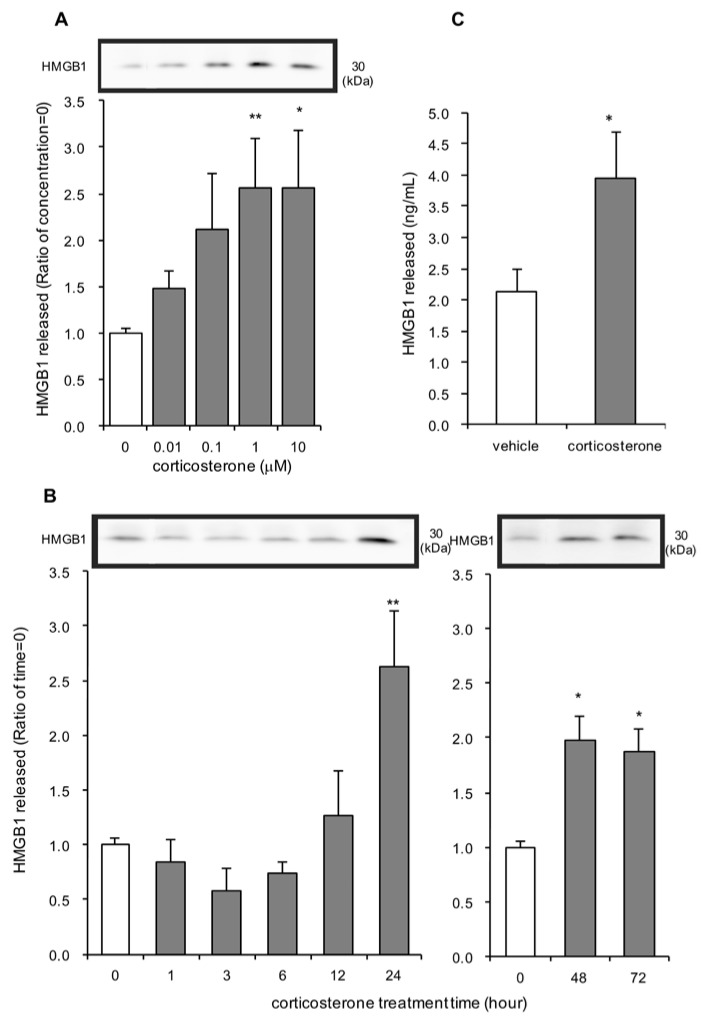
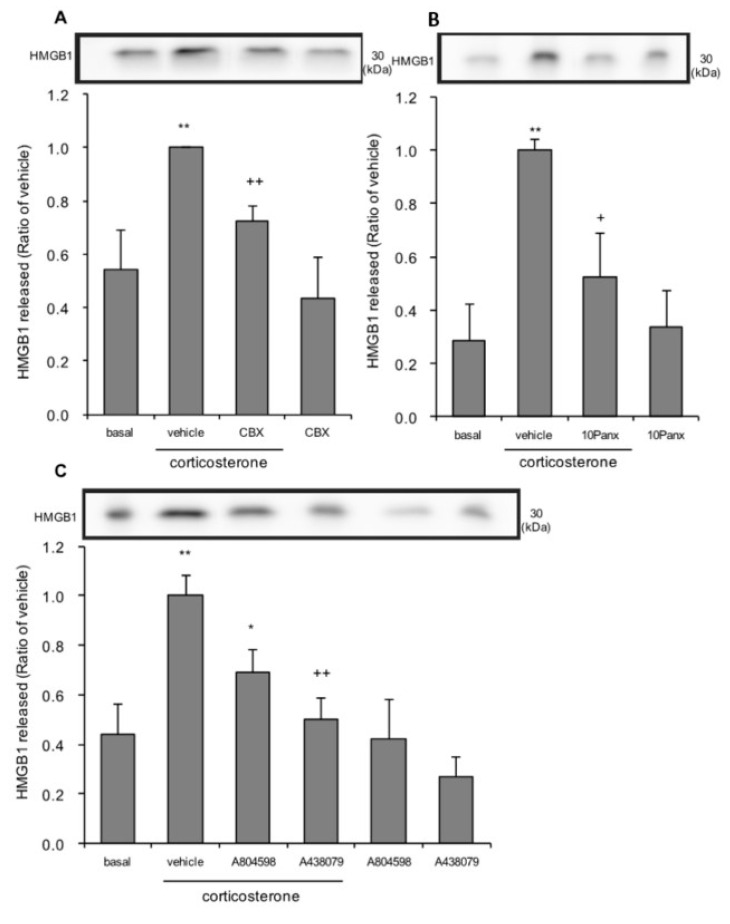
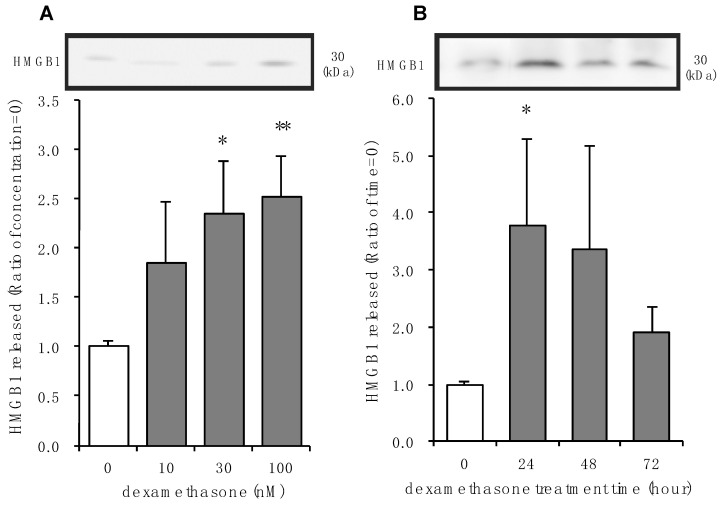
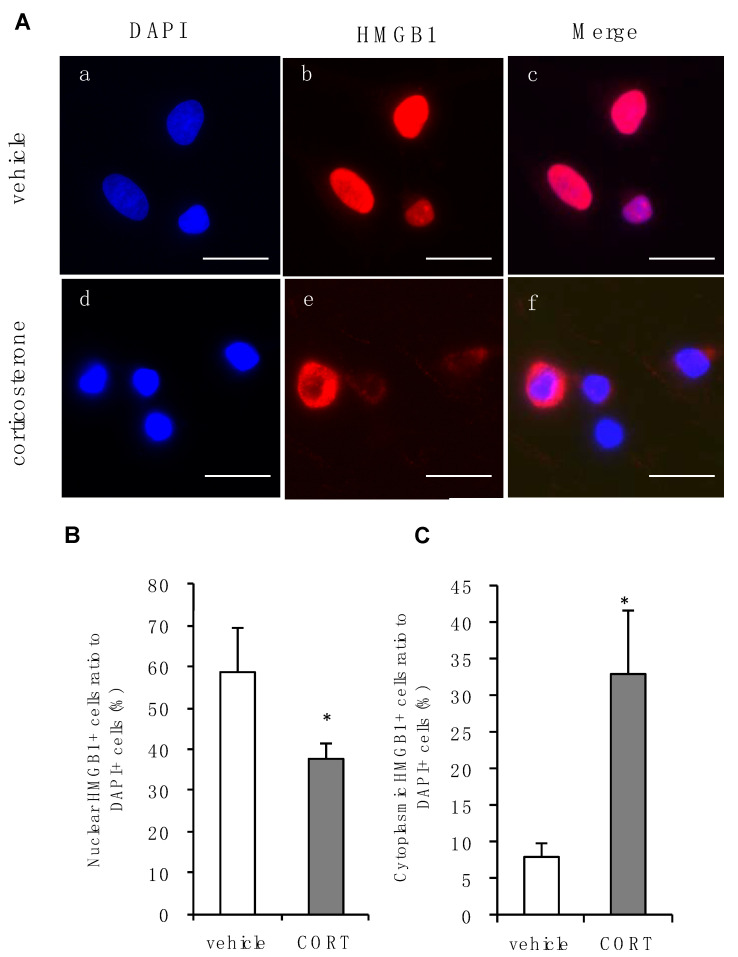
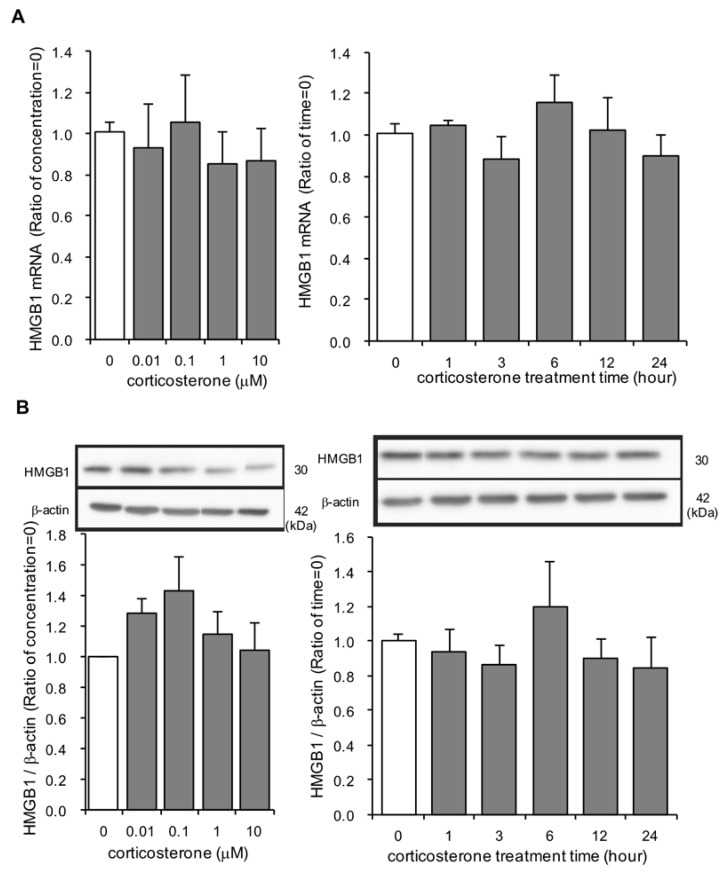
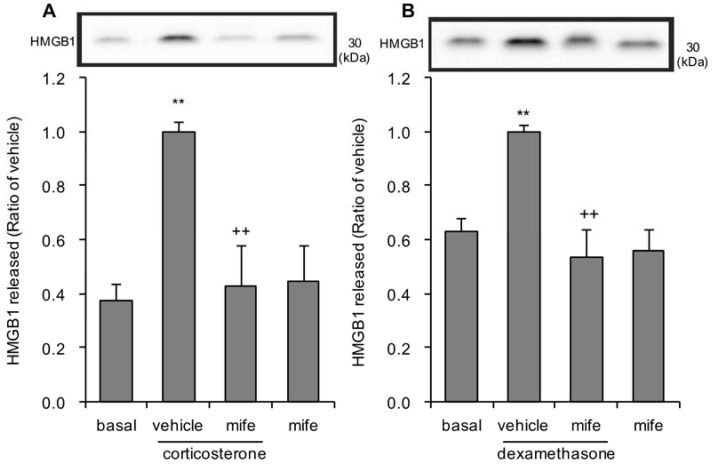
A major risk factor for major depressive disorder (MDD) is stress. Stress leads to the release of high-mobility group box-1 (HMGB1), which in turn leads to neuroinflammation, a potential pathophysiological basis of MDD. The mechanism underlying stress-induced HMGB1 release is not known, but stress-associated glucocorticoids could be involved. To test this, rat primary cultured cortical astrocytes, the most abundant cell type in the central nervous system (CNS), were treated with corticosterone and HMGB1 release was assessed by Western blotting and ELISA. Significant HMGB1 was released with treatment with either corticosterone or dexamethasone, a synthetic glucocorticoid. HMGB1 translocated from the nucleus to the cytoplasm following corticosterone treatment. HMGB1 release was significantly attenuated with glucocorticoid receptor blocking. In addition, inhibition of pannexin-1, and P2X7 receptors led to a significant decrease in corticosterone-induced HMGB1 release. Taken together, corticosterone stimulates astrocytic glucocorticoid receptors and triggers cytoplasmic translocation and extracellular release of nuclear HMGB1 through a mechanism involving pannexin-1 and P2X7 receptors. Thus, under conditions of stress, glucocorticoids induce astrocytic HMGB1 release, leading to a neuroinflammatory state that could mediate neurological disorders such as MDD.
重度抑郁症(MDD)的一个主要危险因素是压力。压力会导致高迁移率族蛋白 B1(HMGB1)的释放,进而导致神经炎症,这是 MDD 的一个潜在病理生理基础。压力诱导 HMGB1 释放的机制尚不清楚,但与压力相关的糖皮质激素可能与之相关。为了验证这一点,用皮质酮处理大鼠原代培养皮质星形胶质细胞,这是中枢神经系统(CNS)中最丰富的细胞类型,并通过 Western blot 和 ELISA 评估 HMGB1 的释放。用皮质酮或地塞米松(一种合成糖皮质激素)处理会显著释放 HMGB1。皮质酮处理后,HMGB1 从核内转移到细胞质。用糖皮质激素受体阻断可显著抑制 HMGB1 释放。此外,抑制连接蛋白-1 和 P2X7 受体可显著减少皮质酮诱导的 HMGB1 释放。总之,皮质酮刺激星形胶质细胞糖皮质激素受体,并通过涉及连接蛋白-1 和 P2X7 受体的机制触发核 HMGB1 的细胞质易位和细胞外释放。因此,在应激条件下,糖皮质激素诱导星形胶质细胞 HMGB1 释放,导致神经炎症状态,从而可能介导 MDD 等神经紊乱。