Department of Veterinary Diagnostic and Production Animal Medicine, College of Veterinary Medicine, Iowa State University, Ames, IA, USA.
Department of Veterinary Pathology, College of Veterinary Medicine, University of Baghdad, Baghdad, Iraq.
Cell Tissue Res. 2020 May;380(2):313-324. doi: 10.1007/s00441-020-03213-w. Epub 2020 Apr 29.
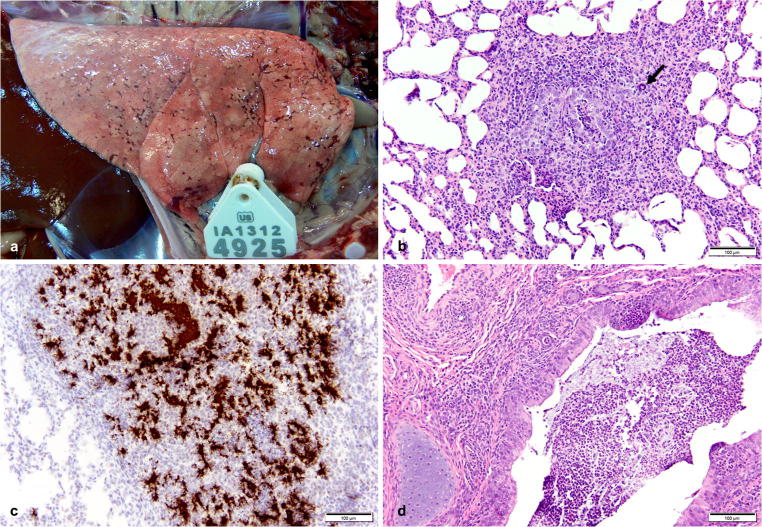
Many animal models have been established for respiratory syncytial virus (RSV) infection of infants with the purpose of studying the pathogenesis, immunological response, and pharmaceutical testing and the objective of finding novel therapies and preventive measures. This review centers on a neonatal lamb model of RSV infection that has similarities to RSV infection of infants. It includes a comprehensive description of anatomical and immunological similarities between ovine and human lungs along with comparison of pulmonary changes and immune responses with RSV infection. These features make the newborn lamb an effective model for investigating key aspects of RSV infection in infants. The importance of RSV lamb model application in preclinical therapeutic trials and current updates on new studies with the RSV-infected neonatal lamb are also highlighted.
许多动物模型已经建立,用于研究呼吸道合胞病毒(RSV)感染婴儿的发病机制、免疫反应和药物测试,并旨在寻找新的治疗方法和预防措施。本综述主要介绍了一种类似于 RSV 感染婴儿的新生羔羊 RSV 感染模型。它包括对绵羊和人类肺部的解剖学和免疫学相似性的全面描述,以及与 RSV 感染相关的肺部变化和免疫反应的比较。这些特征使新生羔羊成为研究 RSV 感染婴儿关键方面的有效模型。本文还强调了 RSV 羔羊模型在临床前治疗试验中的应用的重要性,以及关于感染 RSV 的新生羔羊的新研究的最新进展。