Department of Cellular Biology, University of Georgia, Athens, GA.
Departments of Cell Biology and Biophysics, University of Texas Southwestern Medical Center, Dallas, TX.
J Cell Biol. 2020 Jun 1;219(6). doi: 10.1083/jcb.202001122.
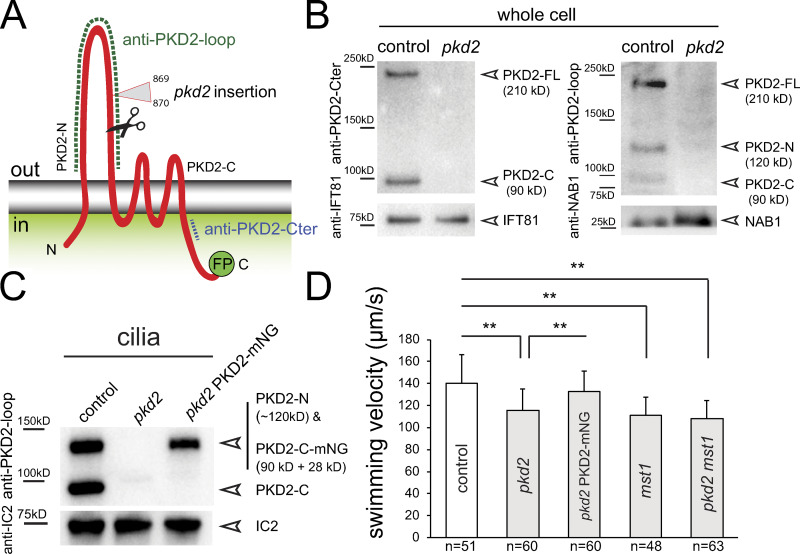
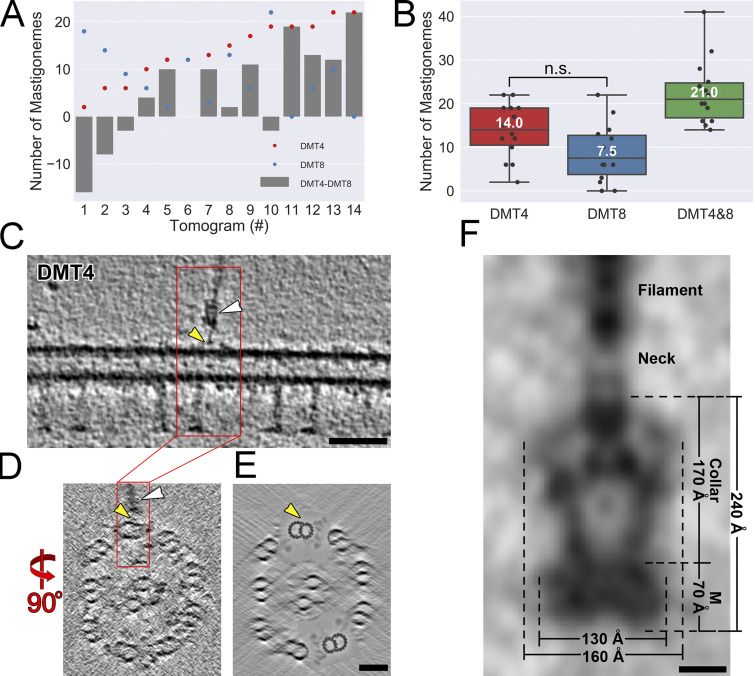
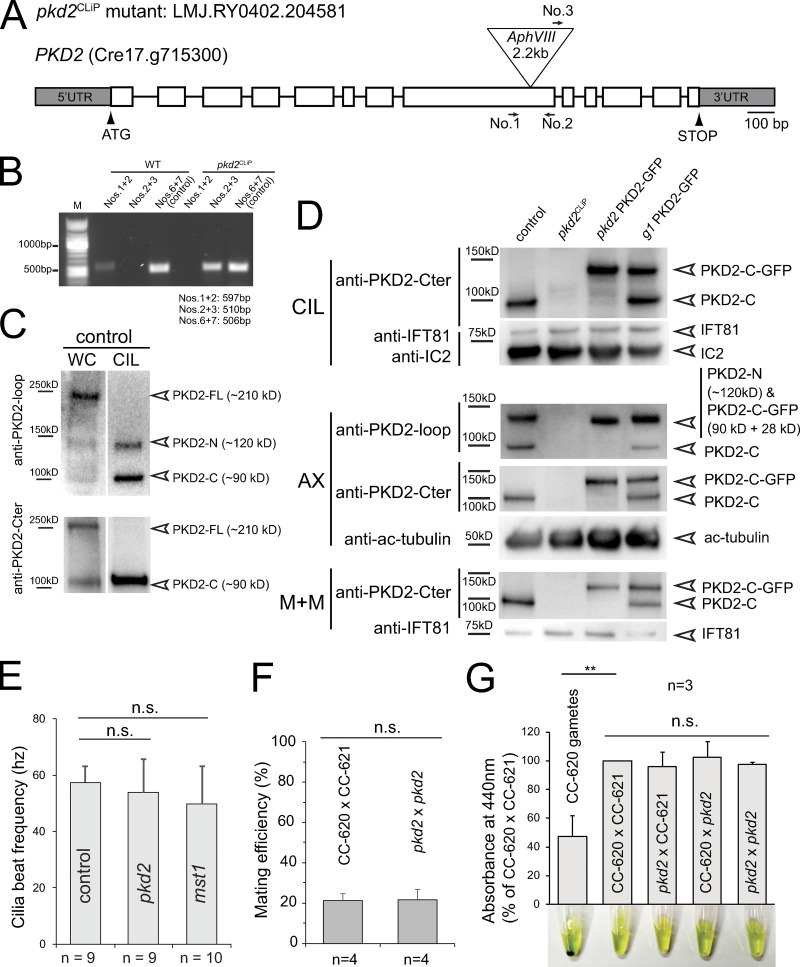
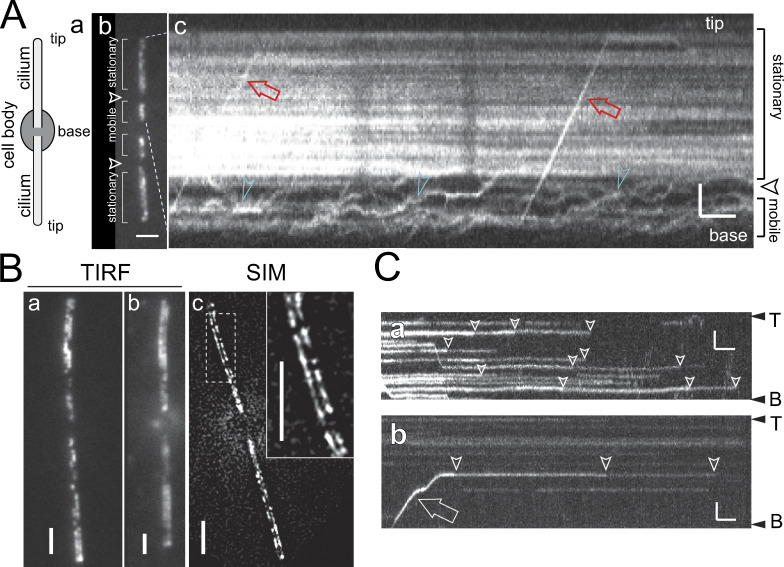
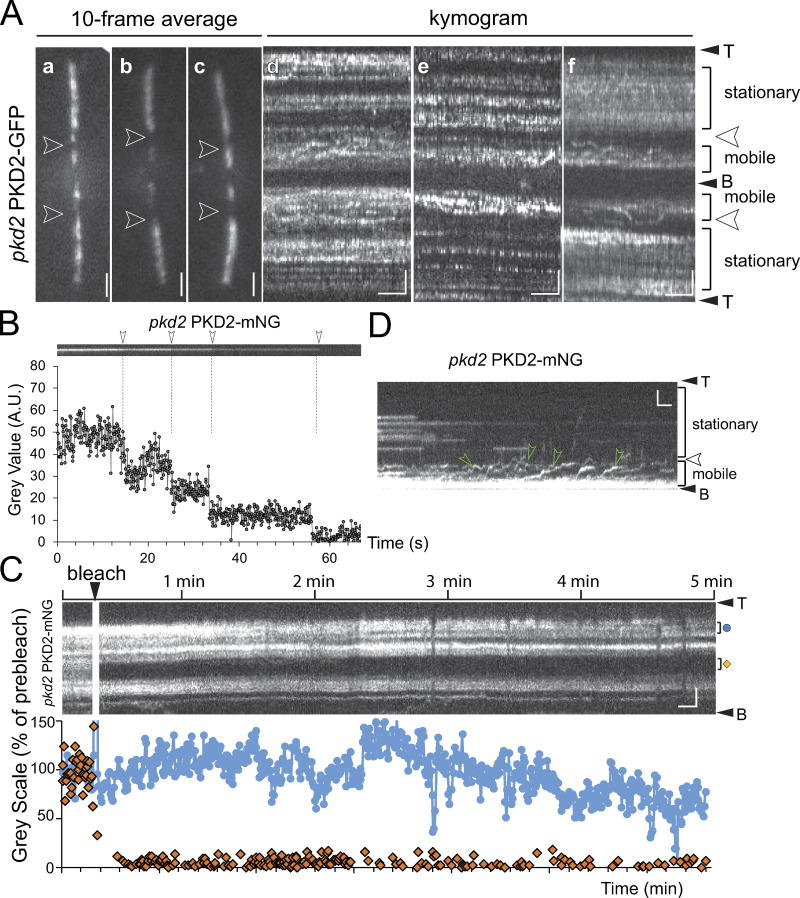
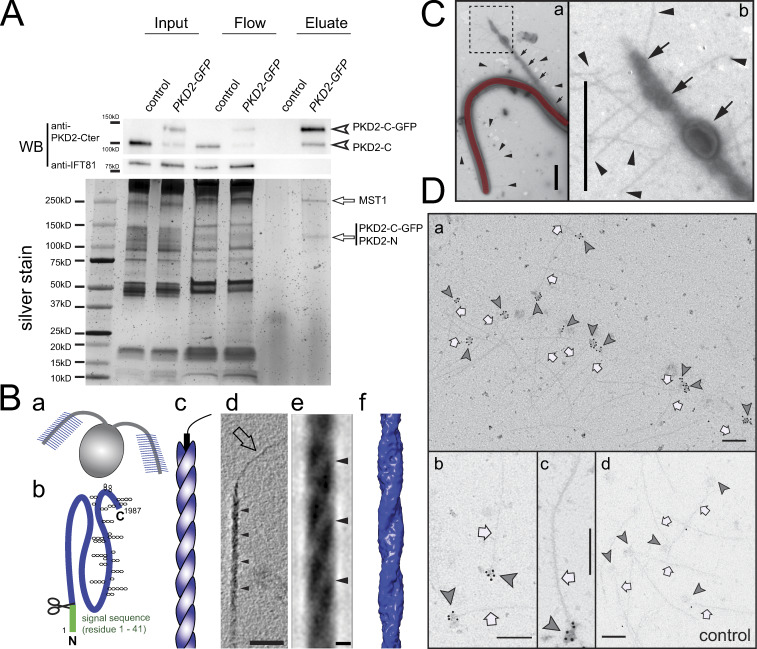
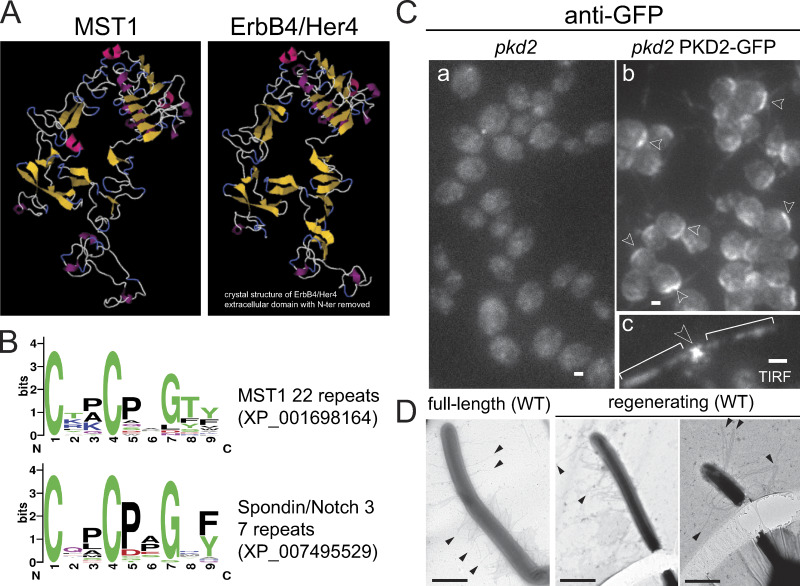
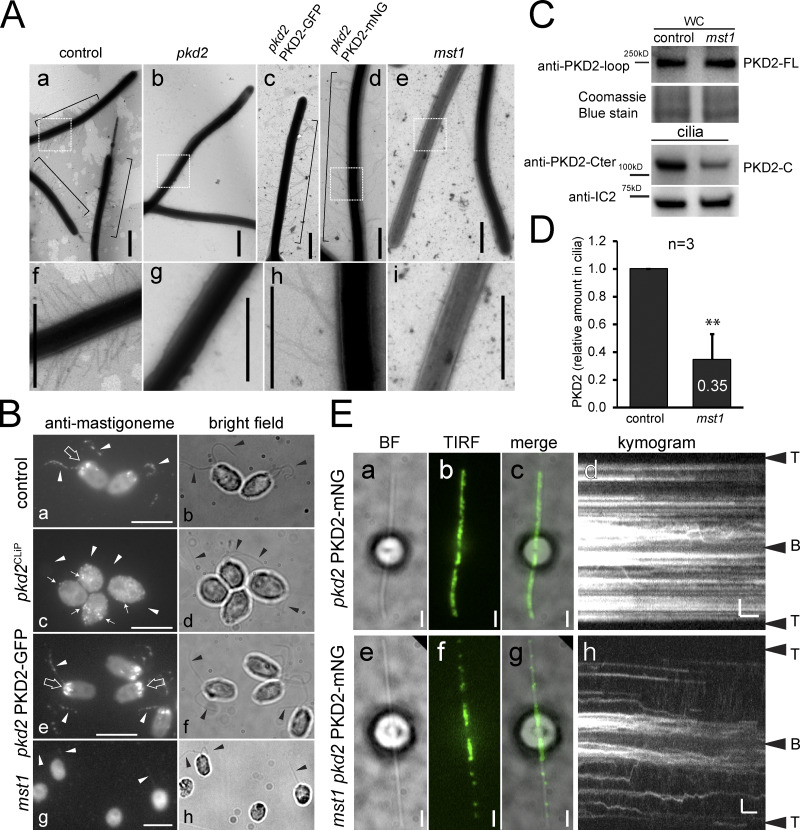
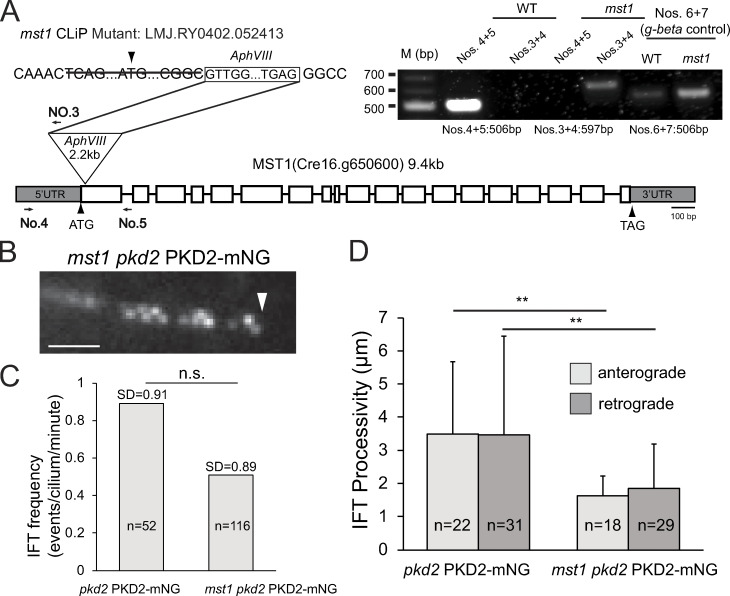
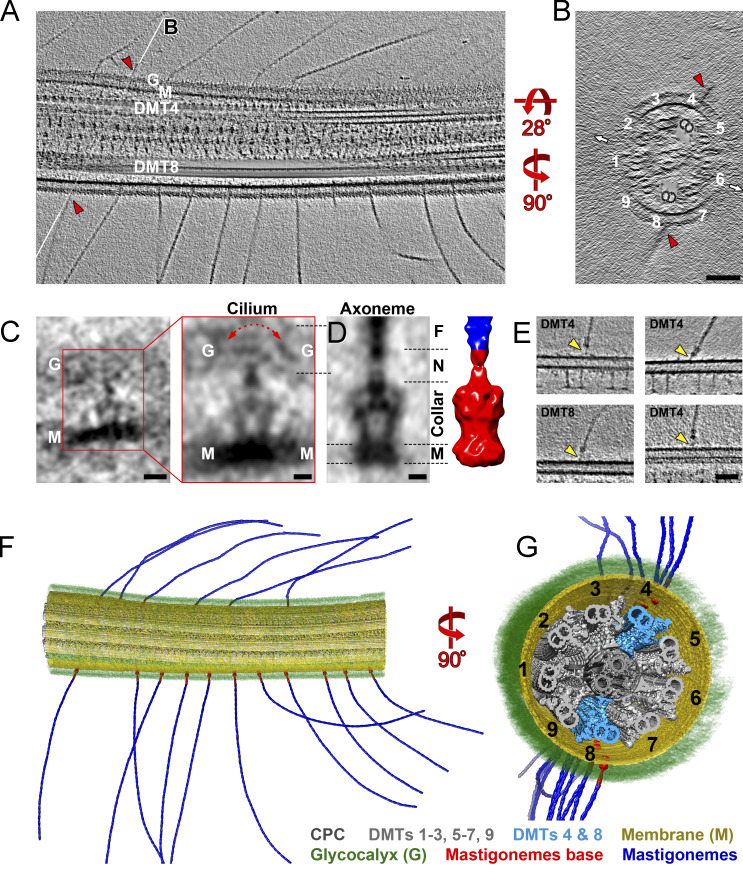
Mutations in the channel protein PKD2 cause autosomal dominant polycystic kidney disease, but the function of PKD2 in cilia remains unclear. Here, we show that PKD2 targets and anchors mastigonemes, filamentous polymers of the glycoprotein MST1, to the extracellular surface of Chlamydomonas cilia. PKD2-mastigoneme complexes physically connect to the axonemal doublets 4 and 8, positioning them perpendicular to the plane of ciliary beating. pkd2 mutant cilia lack mastigonemes, and mutant cells swim with reduced velocity, indicating a motility-related function of the PKD2-mastigoneme complex. Association with both the axoneme and extracellular structures supports a mechanosensory role of Chlamydomonas PKD2. We propose that PKD2-mastigoneme arrays, on opposing sides of the cilium, could perceive forces during ciliary beating and transfer these signals to locally regulate the response of the axoneme.
PKD2 基因突变会导致常染色体显性多囊肾病,但 PKD2 在纤毛中的功能仍不清楚。在这里,我们表明 PKD2 将微绒毛蛋白 MST1 的丝状聚合物mastigonemes 靶向并锚定到衣藻纤毛的细胞外表面。PKD2-mastigoneme 复合物与轴丝的二联体 4 和 8 物理连接,将它们定位成垂直于纤毛摆动的平面。pkd2 突变体纤毛缺乏微绒毛,突变细胞的游动速度降低,表明 PKD2-mastigoneme 复合物具有与运动相关的功能。与轴丝和细胞外结构的关联支持了衣藻 PKD2 的机械感受器作用。我们提出,纤毛两侧的 PKD2-mastigoneme 阵列可以在纤毛摆动过程中感知力,并将这些信号传递到局部调节轴丝的反应。