Department of Bioengineering, Rice University, Houston, TX 77030, USA.
Department of Molecular Physiology and Biophysics, Baylor College of Medicine, Houston, TX 77030, USA.
Mol Ther. 2020 Jun 3;28(6):1432-1441. doi: 10.1016/j.ymthe.2020.04.017. Epub 2020 Apr 19.
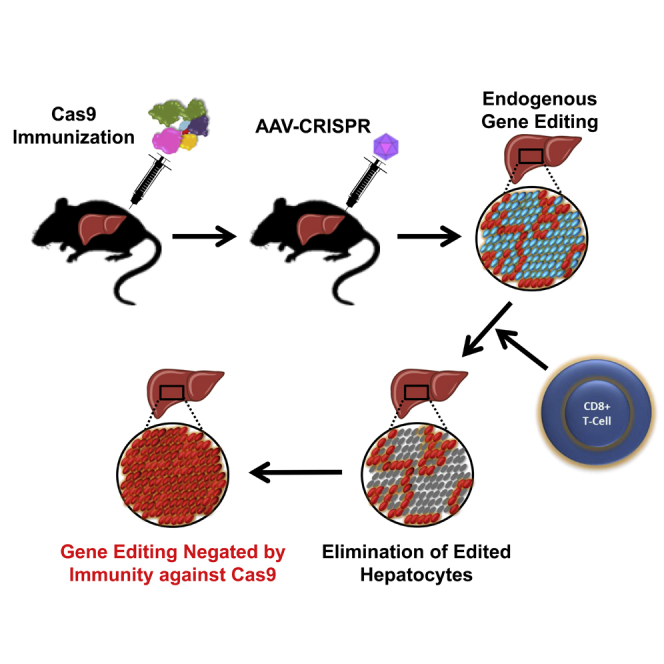
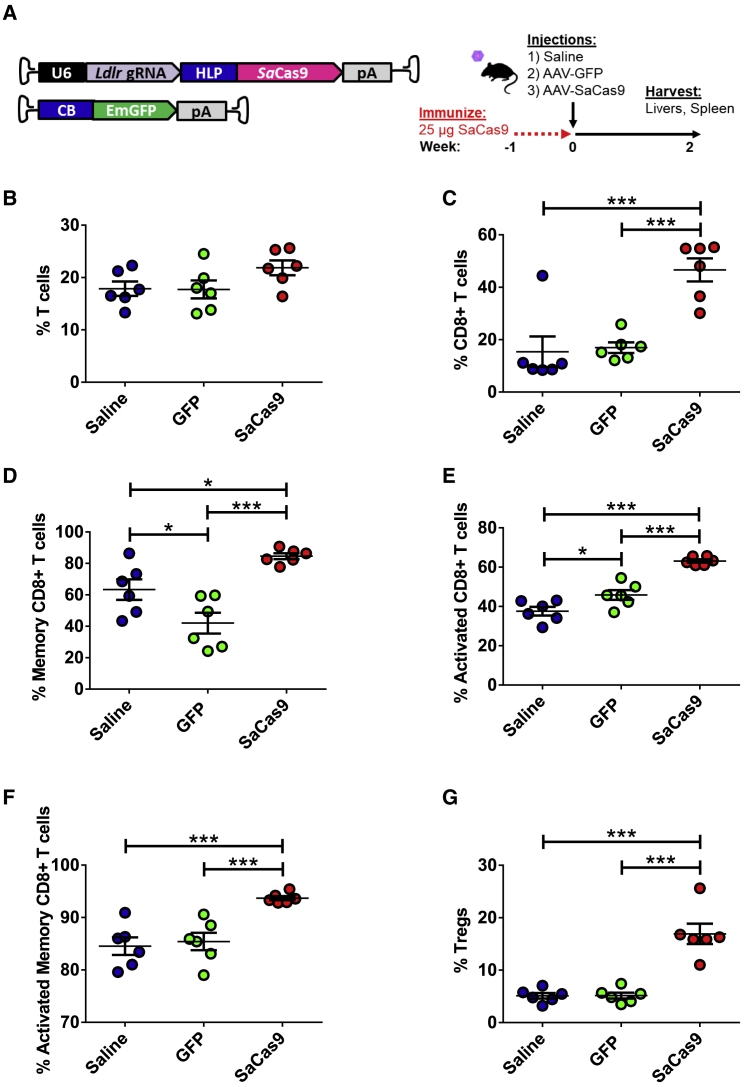
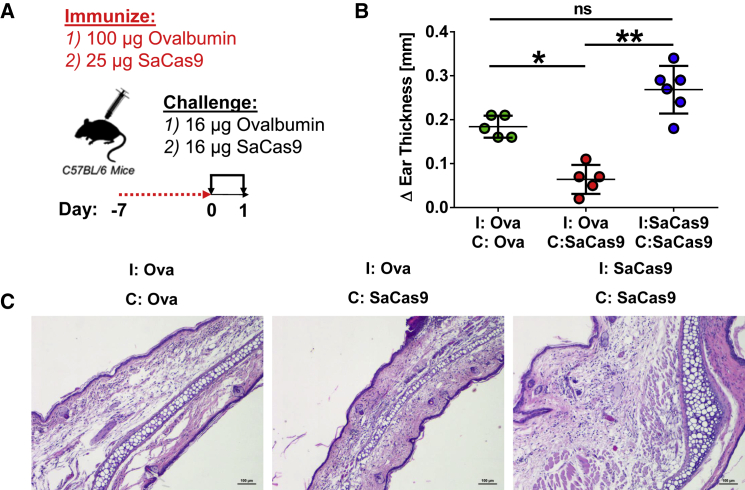
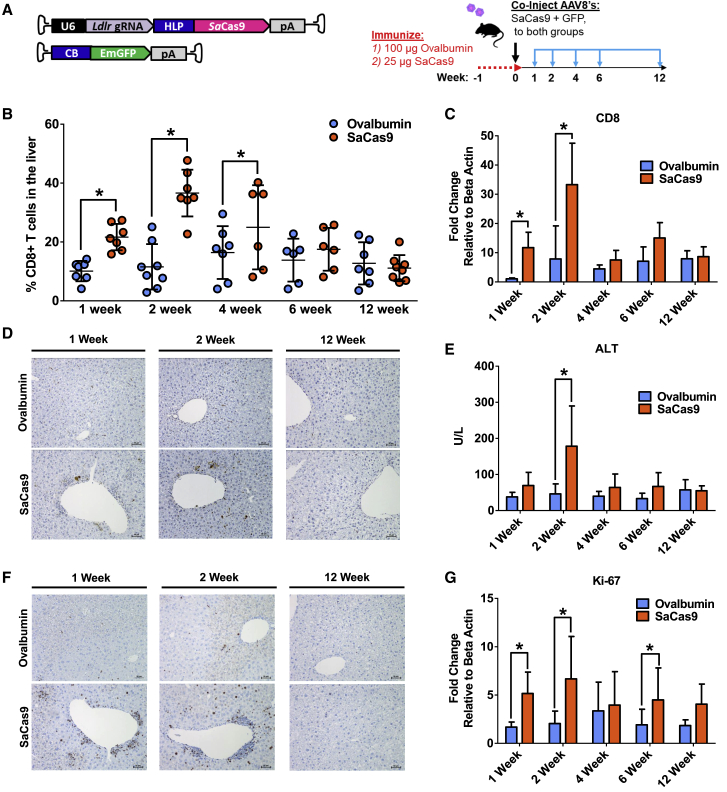
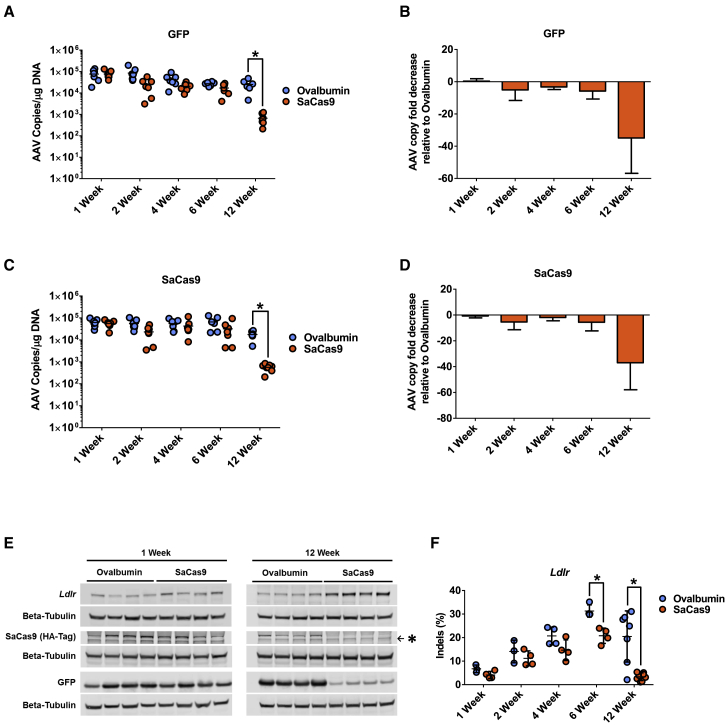
Adeno-associated viral (AAV) vectors are a leading candidate for the delivery of CRISPR-Cas9 for therapeutic genome editing in vivo. However, AAV-based delivery involves persistent expression of the Cas9 nuclease, a bacterial protein. Recent studies indicate a high prevalence of neutralizing antibodies and T cells specific to the commonly used Cas9 orthologs from Streptococcus pyogenes (SpCas9) and Staphylococcus aureus (SaCas9) in humans. We tested in a mouse model whether pre-existing immunity to SaCas9 would pose a barrier to liver genome editing with AAV packaging CRISPR-Cas9. Although efficient genome editing occurred in mouse liver with pre-existing SaCas9 immunity, this was accompanied by an increased proportion of CD8 T cells in the liver. This cytotoxic T cell response was characterized by hepatocyte apoptosis, loss of recombinant AAV genomes, and complete elimination of genome-edited cells, and was followed by compensatory liver regeneration. Our results raise important efficacy and safety concerns for CRISPR-Cas9-based in vivo genome editing in the liver.
腺相关病毒 (AAV) 载体是递送 CRISPR-Cas9 用于体内治疗性基因组编辑的主要候选者。然而,基于 AAV 的递送涉及 Cas9 核酸酶的持续表达,Cas9 核酸酶是一种细菌蛋白。最近的研究表明,在人类中,针对常用的来自酿脓链球菌(SpCas9)和金黄色葡萄球菌(SaCas9)的 Cas9 同源物,存在高比例的中和抗体和针对 Cas9 的 T 细胞。我们在小鼠模型中测试了预先存在的针对 SaCas9 的免疫是否会成为 AAV 包装的 CRISPR-Cas9 进行肝脏基因组编辑的障碍。尽管在预先存在 SaCas9 免疫的小鼠肝脏中发生了有效的基因组编辑,但这伴随着肝脏中 CD8 T 细胞比例的增加。这种细胞毒性 T 细胞反应的特征是肝细胞凋亡、重组 AAV 基因组的丢失和基因组编辑细胞的完全消除,并伴有代偿性肝再生。我们的研究结果为基于 CRISPR-Cas9 的体内肝脏基因组编辑的疗效和安全性提出了重要的问题。