The 3rd Medical Center of Chinese PLA General Hospital, Beijing, China.
Section of Pulmonary and Critical Care and Sleep Medicine, Dept of Medicine, Yale University School of Medicine, New Haven, CT, USA.
Eur Respir Rev. 2020 Apr 29;29(156). doi: 10.1183/16000617.0143-2019. Print 2020 Jun 30.
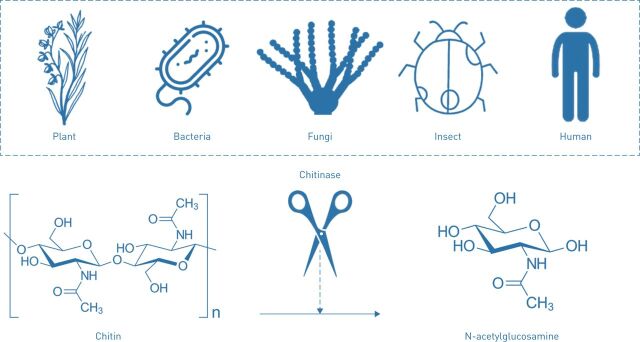
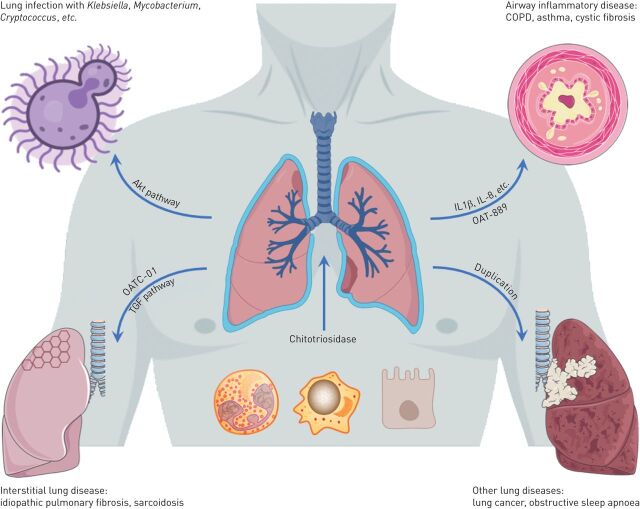
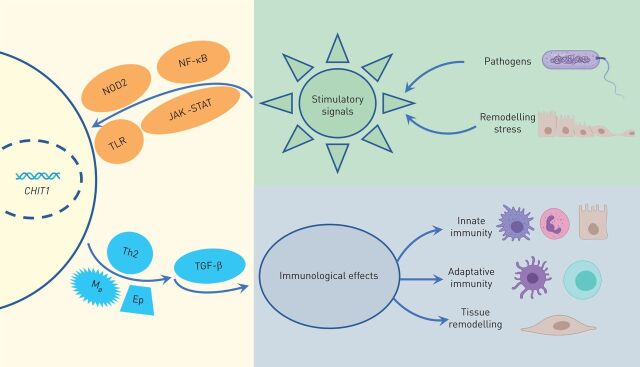
Chitotriosidase (CHIT1) is a highly conserved and regulated chitinase secreted by activated macrophages; it is a member of the 18-glycosylase family (GH18). CHIT1 is the most prominent chitinase in humans, can cleave chitin and participates in the body's immune response and is associated with inflammation, infection, tissue damage and remodelling processes. Recently, CHIT1 has been reported to be involved in the molecular pathogenesis of pulmonary fibrosis, bronchial asthma, COPD and pulmonary infections, shedding new light on the role of these proteins in lung pathophysiology. The potential roles of CHIT1 in lung diseases are reviewed in this article.
几丁质酶 1(CHIT1)是一种由活化巨噬细胞分泌的高度保守且受调控的几丁质酶,属于 18-糖苷酶家族(GH18)。CHIT1 是人类最主要的几丁质酶,能够裂解几丁质并参与机体的免疫反应,与炎症、感染、组织损伤和重塑过程有关。最近,CHIT1 被报道参与了肺纤维化、支气管哮喘、COPD 和肺部感染的分子发病机制,这为这些蛋白质在肺病理生理学中的作用提供了新的视角。本文就 CHIT1 在肺部疾病中的潜在作用进行综述。