Department of Cardiology, Faculty of Medicine, Atılım University, Medicana International Ankara Hospital; Ankara-Turkey.
Department of Cardiology, Faculty of Medicine, Ankara Yıldırım Beyazıt University, Ankara City Hospital; Ankara-Turkey.
Anatol J Cardiol. 2020 Apr;23(5):288-296. doi: 10.14744/AnatolJCardiol.2020.03942.
Transcatheter aortic valve implantation (TAVI) is an established alternative to surgical aortic valve replacement. Our study aimed to evaluate the implementation of TAVI at our large-volume center, having an all-comer patient population with short and long-term follow-ups.
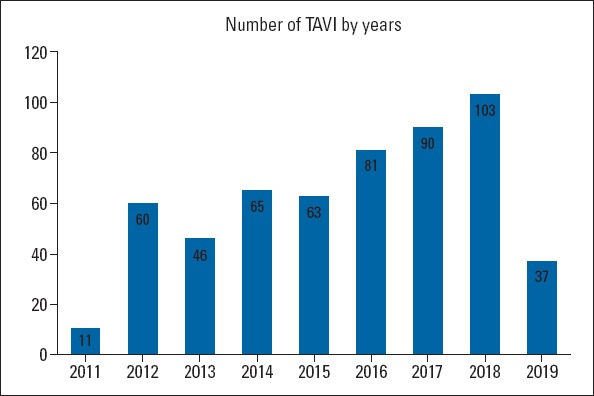
This retrospective, single-center analysis included 556 consecutive patients with symptomatic severe aortic stenosis (AS) who underwent TAVI between July 2011 and December 2019.
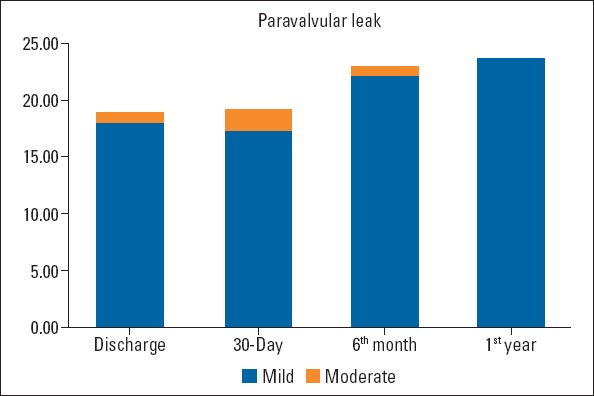
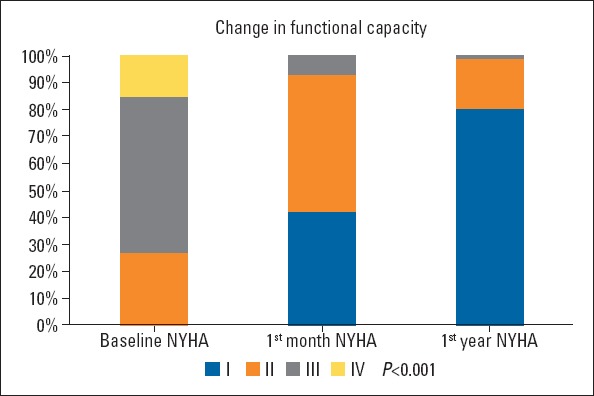
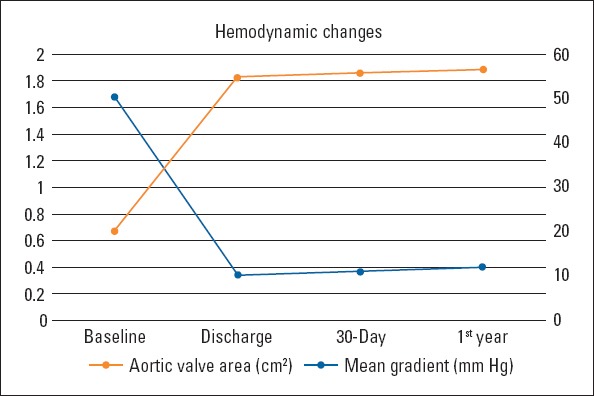
The mean age of the entire population was 77.6±7.9 years, and 54.9% were women. The Society of Thoracic Surgeons (STS) mean score of the cohort was 6.0%±3.5%. The balloon-expandable valve (Sapien XT, Sapien 3; Edwards Lifesciences, Irvine, California) was the most frequently used valves in this cohort (94.6%). Transfemoral access was used in 96.3% of patients. Implantation success was achieved in 96.6% of cases. During the TAVI procedure, 7.2% of patients required permanent pacemaker implantation, with 37.5% in the Lotus valve group needing the most permanent pacemakers. The mean length of hospital stay for the entire cohort was 4.5±2.3 days. Overall, 22 (3.9%) in-hospital deaths occurred before hospital discharge. The mean follow-up period was 15.1±14.9 months for all patients, and a significant improvement was noted in all echocardiographic parameters and functional capacity. Paravalvular leak (PVL) was documented in 18.9% patients, mild in 17.9%, and moderate in 1% at discharge. No cases with severe PVL, necessitating additional procedures. The multiple logistic regression analysis revealed that sex, STS score, baseline SYNTAX score, bicuspid valve morphology, common femoral artery diameter, and post-TAVI PVL were independent predictors of overall mortality.
To our knowledge, this study, which is the largest single-center real-world experience of TAVI in Turkey, demonstrated low complication rates with favorable short- and mid-term THV performance in patients undergoing TAVI. (Anatol J Cardiol 2020; 23: 288-96).
经导管主动脉瓣植入术(TAVI)是一种成熟的外科主动脉瓣置换术替代方法。本研究旨在评估我们大容量中心实施 TAVI 的情况,该中心拥有接受短期和长期随访的所有患者人群。
这项回顾性、单中心分析纳入了 2011 年 7 月至 2019 年 12 月期间接受 TAVI 的 556 例症状性严重主动脉瓣狭窄(AS)连续患者。
整个人群的平均年龄为 77.6±7.9 岁,54.9%为女性。该队列的胸外科医生协会(STS)平均评分 6.0%±3.5%。球囊扩张瓣膜(Sapien XT、Sapien 3;爱德华兹生命科学公司,加利福尼亚州欧文)是该队列中最常使用的瓣膜(94.6%)。经股动脉入路在 96.3%的患者中使用。96.6%的病例实现了植入成功。在 TAVI 过程中,7.2%的患者需要植入永久性起搏器,其中 Lotus 瓣膜组有 37.5%的患者需要最多的永久性起搏器。整个队列的平均住院时间为 4.5±2.3 天。总体而言,22 例(3.9%)在院死亡发生在出院前。所有患者的平均随访时间为 15.1±14.9 个月,所有超声心动图参数和功能能力均显著改善。18.9%的患者出院时存在瓣周漏(PVL),轻度 17.9%,中度 1%。无需要额外手术的严重 PVL 病例。多变量逻辑回归分析显示,性别、STS 评分、基线 SYNTAX 评分、二叶式主动脉瓣形态、股总动脉直径和 TAVI 后 PVL 是全因死亡率的独立预测因素。
据我们所知,这是土耳其最大的单中心真实世界 TAVI 经验研究,表明 TAVI 患者的并发症发生率低,短期和中期 THV 性能良好。(安纳托利亚心脏病学杂志 2020;23:288-96)