Galić Stipe, Kovačević Marin, Lasić Ivan, Brkić Hrvoje, Faj Dario
University Clinical Hospital Mostar, Mostar, Bosnia and Herzegovina, Croatia.
Faculty of Medicine, Osijek, Croatia.
J Med Phys. 2020 Jan-Mar;45(1):36-43. doi: 10.4103/jmp.JMP_51_19. Epub 2020 Mar 13.
Introduction of dual-layer multileaf collimator (MLC) radiotherapy linear accelerators into clinical practice is an important development in advanced external beam radiotherapy. A method of delivering comparable high-resolution fluences with a single-layer MLC is presented.
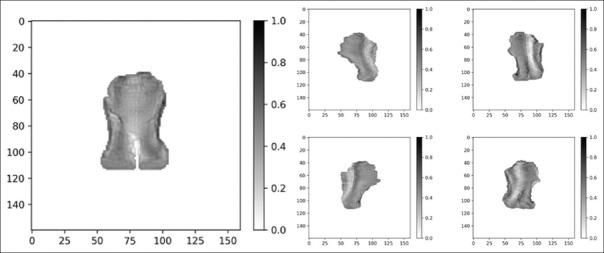
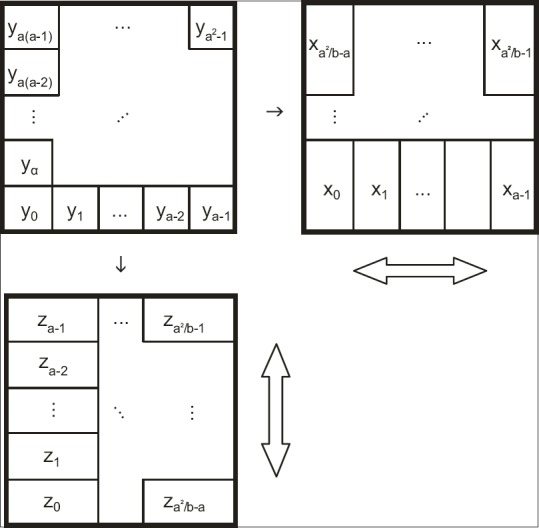
The aims of this study are to present new algorithms and approaches to define high-resolution hypermodulated fluences, obtain orthogonal decomposition of fluences, and deliver them on a linear accelerator with single MLC from two perpendicular collimator settings.
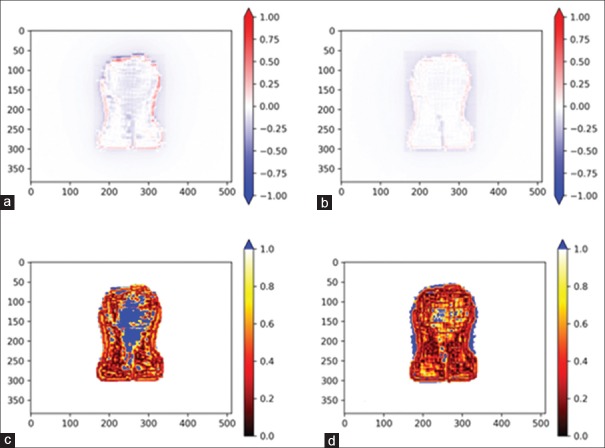
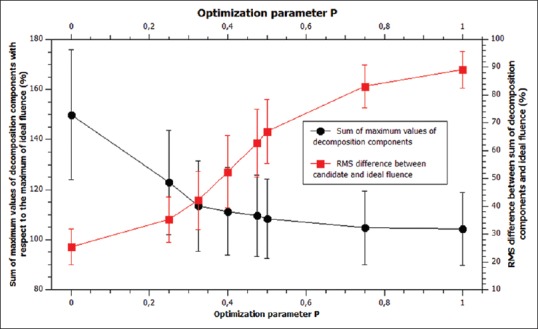
High-resolution fluences were defined using Monte Carlo (MC) calculation. A novel use of a limited-memory, bounded, Broyden-Fletcher-Goldfarb-Shanno algorithm was used to decompose such fluences to ones deliverable with a pair of fields with mutually orthogonal collimator settings. Such a technique, here named cross motion leaf calculator (XMLC), is compared against single sliding window (SSW) technique typically used in intensity-modulated radiation therapy (IMRT). An electronic portal imaging device (EPID) is used, and the results were compared with gamma analysis. Furthermore, MC was used to determine dose distributions for computed tomography images of ten head-and-neck cancer patients.
Gamma analysis (3%, 3 mm) against ideal fluence is considerably more favorable to XMLC (94% ± 4%) versus SSW (76% ± 5%). Furthermore, the dose-volume histogram (DVH) analysis showed that XMLC enables delivery of fluences superior to that of IMRT and these results in clinically relevant enhancements in DVH results.
At the time of writing of this study, there were more than 12,000 medical linear accelerators in clinical use, and XMLC can prove itself useful wherever linac is equipped with MLC but cannot delivery latest techniques, such as volumetric modulated arc therapy.
双层多叶准直器(MLC)放射治疗直线加速器引入临床实践是先进外照射放疗的一项重要进展。本文介绍了一种使用单层MLC实现可比高分辨率注量的方法。
本研究的目的是提出新的算法和方法来定义高分辨率超调制注量,获得注量的正交分解,并在具有单个MLC的直线加速器上从两个垂直的准直器设置来实现这些注量。
使用蒙特卡罗(MC)计算定义高分辨率注量。一种新颖的有限内存、有界的布罗伊登-弗莱彻-戈德法布-肖诺算法被用于将此类注量分解为可通过一对具有相互正交准直器设置的射野来实现的注量。这种技术,在这里命名为交叉运动叶片计算器(XMLC),与调强放射治疗(IMRT)中通常使用的单滑动窗口(SSW)技术进行了比较。使用电子射野成像装置(EPID),并将结果与伽马分析进行比较。此外,使用MC来确定十名头颈部癌患者计算机断层扫描图像的剂量分布。
与理想注量的伽马分析(3%,3毫米)显示,与SSW(76%±5%)相比,XMLC(94%±4%)明显更具优势。此外,剂量体积直方图(DVH)分析表明,XMLC能够实现优于IMRT的注量,并且这些结果在DVH结果中带来了临床相关的改善。
在撰写本研究时,临床使用的医用直线加速器超过12000台,并且无论直线加速器配备了MLC但无法实现最新技术(如容积调强弧形治疗)的地方,XMLC都能证明自身有用。