Diabetes Center, Department of Internal Medicine, Amsterdam University Medical Centers, Location VUMC, De Boelelaan 1117, 1081 HV, Amsterdam, The Netherlands.
Section of Endocrinology, Department of Pediatrics and Division of Nephrology, Department of Medicine, University of Colorado School of Medicine, Aurora, CO, USA.
J Nephrol. 2020 Oct;33(5):965-975. doi: 10.1007/s40620-020-00738-9. Epub 2020 Apr 30.
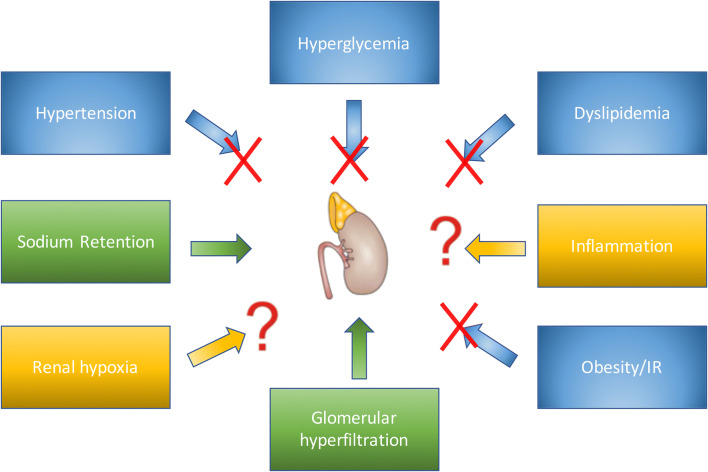
Glucagon-like peptide (GLP)-1 receptor agonists are the cornerstone in the treatment of hyperglycemia in many people suffering from type 2 diabetes (T2D). These drugs have potent glucose-lowering actions and, additionally, lower body weight through satiety induction while reducing blood pressure and dyslipidemia. Partly through these actions, GLP-1 receptor agonism was shown to reduce cardiovascular disease (CVD) in people with T2D with previous CVD or at high-risk thereof. In these cardiovascular safety trials, in secondary or exploratory analyses, GLP-1 receptor agonists were also shown to reduce macro-albuminuria, an accepted surrogate marker for diabetic kidney disease (DKD), a condition that still represents a major unmet medical need. In this review we will discuss the evidence which suggests renoprotection induced by GLP-1 receptor agonists and the potential mechanisms that may be involved. These include mitigation of hyperglycemia, overweight and insulin resistance, systemic and glomerular hypertension, dyslipidemia, sodium retention, inflammation and renal hypoxia. The recently initiated large-sized FLOW trial investigating the effects of semaglutide on hard renal outcomes in patients with DKD will provide clarity whether GLP-1 receptor agonists may reduce the burden of DKD in addition to their other beneficial metabolic and cardiovascular effects.
胰高血糖素样肽-1(GLP-1)受体激动剂是治疗许多 2 型糖尿病(T2D)患者高血糖的基石。这些药物具有强大的降血糖作用,此外,通过诱导饱腹感降低体重,同时降低血压和血脂异常。部分通过这些作用,GLP-1 受体激动剂被证明可降低有既往心血管疾病(CVD)或有高 CVD 风险的 T2D 患者的 CVD。在这些心血管安全性试验中,在次要或探索性分析中,GLP-1 受体激动剂也显示可减少大白蛋白尿,这是糖尿病肾病(DKD)的公认替代标志物,是一种仍存在重大未满足医疗需求的疾病。在这篇综述中,我们将讨论提示 GLP-1 受体激动剂具有肾保护作用的证据,以及可能涉及的潜在机制。这些机制包括减轻高血糖、超重和胰岛素抵抗、全身和肾小球高血压、血脂异常、钠潴留、炎症和肾缺氧。最近启动的大型 FLOW 试验研究了司美格鲁肽对 DKD 患者硬肾结局的影响,将明确 GLP-1 受体激动剂除了具有其他有益的代谢和心血管作用外,是否还可减轻 DKD 的负担。