Vall d'Hebron University Hospital, Vall d'Hebron Institute of Oncology, Universitat Autònoma de Barcelona, Barcelona, Spain.
Massachusetts General Hospital and Harvard Medical School, Boston, MA.
J Clin Oncol. 2020 Aug 10;38(23):2620-2627. doi: 10.1200/JCO.19.02727. Epub 2020 May 4.
Anaplastic thyroid carcinoma is an aggressive malignancy that is almost always fatal and lacks effective systemic treatment options for patients with -wild type disease. As part of a phase I/II study in patients with advanced/metastatic solid tumors, patients with anaplastic thyroid carcinoma were treated with spartalizumab, a humanized monoclonal antibody against the programmed death-1 (PD-1) receptor.
We enrolled patients with locally advanced and/or metastatic anaplastic thyroid carcinoma in a phase II cohort of the study. Patients received 400 mg spartalizumab intravenously, once every 4 weeks. The overall response rate was determined according to RECIST v1.1.
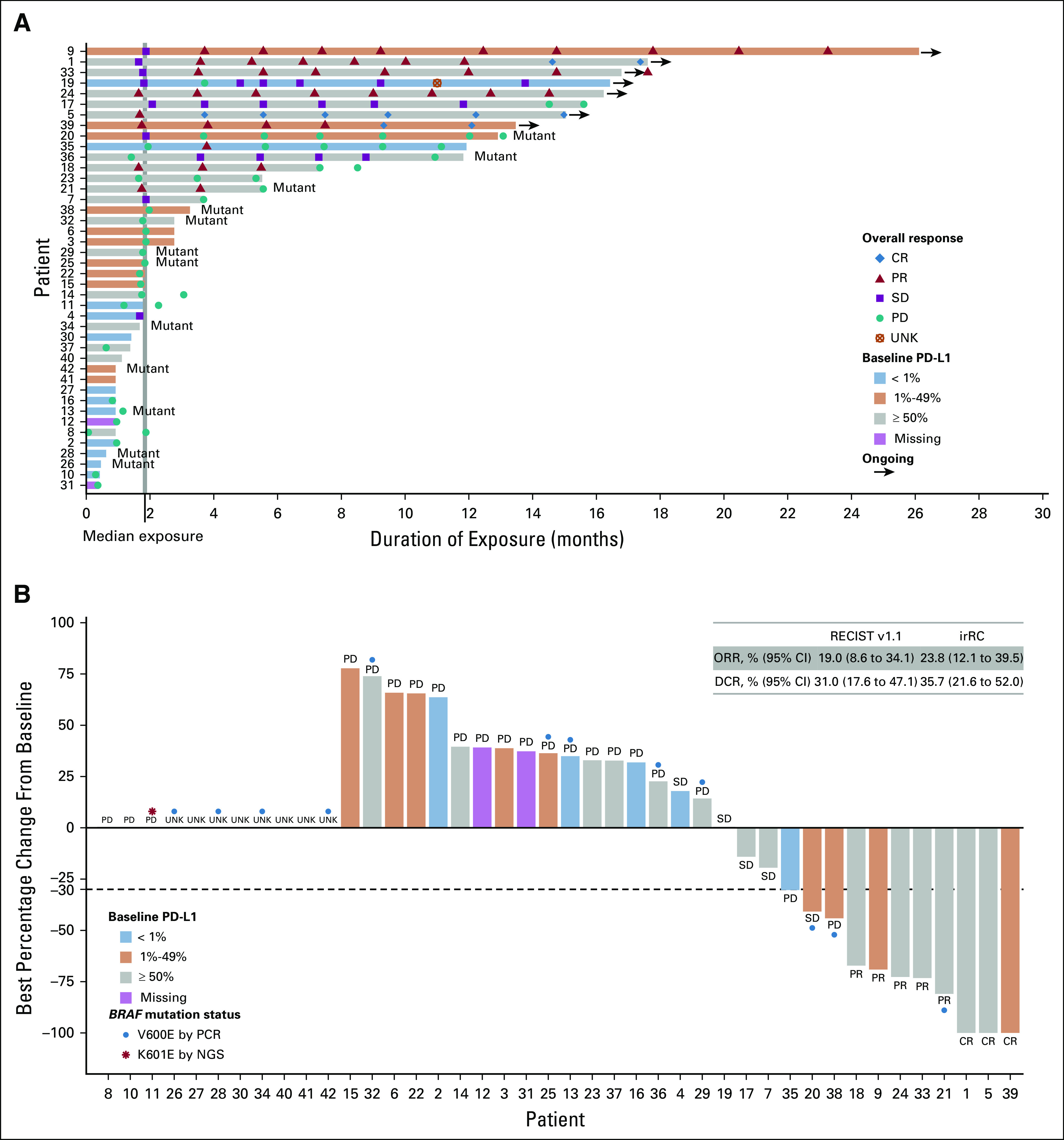
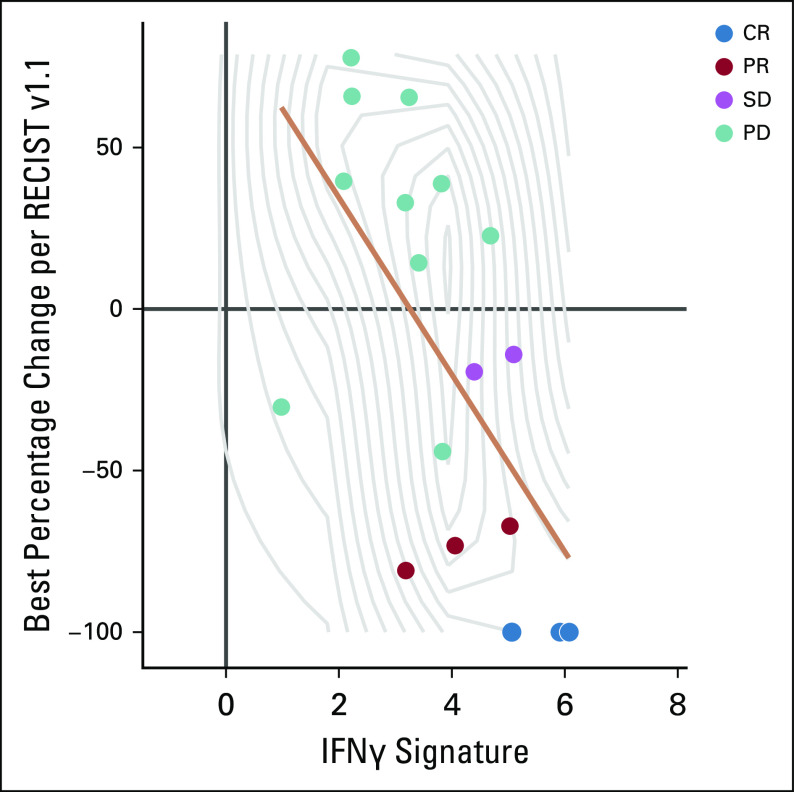
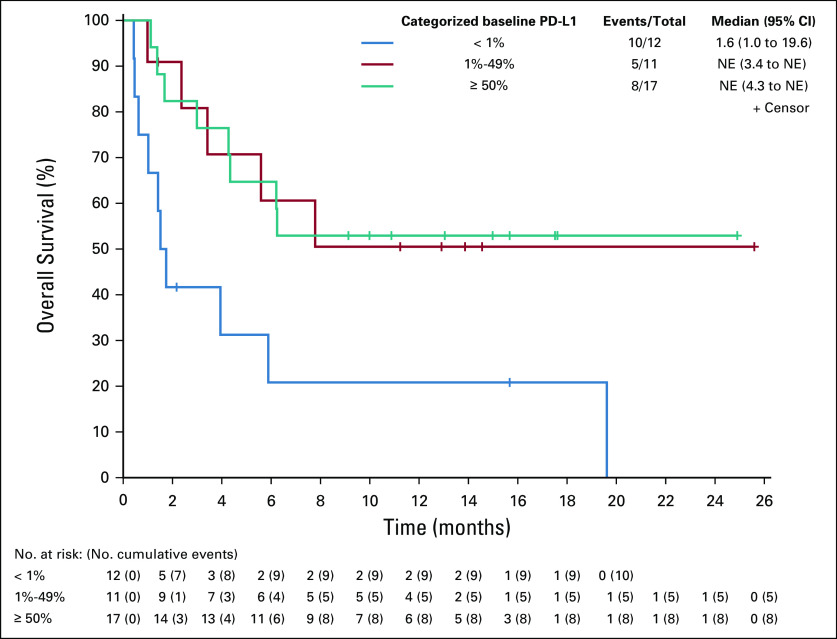
Forty-two patients were enrolled. Adverse events were consistent with those previously observed with PD-1 blockade. Most common treatment-related adverse events were diarrhea (12%), pruritus (12%), fatigue (7%), and pyrexia (7%). The overall response rate was 19%, including three patients with a complete response and five with a partial response. Most patients had baseline tumor biopsies positive for PD-L1 expression (n = 28/40 evaluable), and response rates were higher in PD-L1-positive (8/28; 29%) versus PD-L1-negative (0/12; 0%) patients. The highest rate of response was observed in the subset of patients with PD-L1 ≥ 50% (6/17; 35%). Responses were seen in both -nonmutant and -mutant patients and were durable, with a 1-year survival of 52.1% in the PD-L1-positive population.
To our knowledge, this is the first clinical trial to show responsiveness of anaplastic thyroid carcinoma to PD-1 blockade.
间变性甲状腺癌是一种侵袭性恶性肿瘤,几乎总是致命的,并且缺乏有效的全身治疗选择对于野生型疾病的患者。作为一项 I/II 期研究的一部分,该研究针对晚期/转移性实体瘤患者,接受了 spartalizumab(一种针对程序性死亡-1(PD-1)受体的人源化单克隆抗体)治疗。
我们招募了局部晚期和/或转移性间变性甲状腺癌患者参加该研究的 II 期队列。患者每 4 周接受一次静脉注射 400mg spartalizumab。根据 RECIST v1.1 确定总缓解率。
共招募了 42 名患者。不良事件与之前观察到的 PD-1 阻断一致。最常见的与治疗相关的不良事件是腹泻(12%)、瘙痒(12%)、疲劳(7%)和发热(7%)。总缓解率为 19%,包括 3 例完全缓解和 5 例部分缓解。大多数患者的基线肿瘤活检均为 PD-L1 表达阳性(n=40 例可评估),PD-L1 阳性(8/28;29%)患者的缓解率高于 PD-L1 阴性(0/12;0%)患者。在 PD-L1 ≥ 50%的患者亚组中观察到最高的缓解率(6/17;35%)。在非突变和突变患者中均观察到反应,并且具有持久性,PD-L1 阳性患者的 1 年生存率为 52.1%。
据我们所知,这是首次显示间变性甲状腺癌对 PD-1 阻断有反应的临床试验。