Dabrowski Wojciech, Siwicka-Gieroba Dorota, Robba Chiara, Badenes Rafael, Bialy Mateusz, Iwaniuk Paulina, Schlegel Todd T, Jaroszynski Andrzej
.Department of Anaesthesiology and Intensive Therapy Medical University of Lublin, 20-954 Lublin, Poland.
.Department of Anaesthesia and Intensive Care, Policlinico San Martino, 16100 Genova, Italy.
J Clin Med. 2020 Apr 30;9(5):1293. doi: 10.3390/jcm9051293.
Hyperosmotic therapy with mannitol is frequently used for treatment cerebral edema, and 320 mOsm/kg HO has been recommended as a high limit for therapeutic plasma osmolality. However, plasma hyperosmolality may impair cardiac function, increasing the risk of cardiac events. The aim of this study was to analyze the relation between changes in plasma osmolality and electrocardiographic variables and cardiac arrhythmia in patients treated for isolated traumatic brain injury (iTBI).
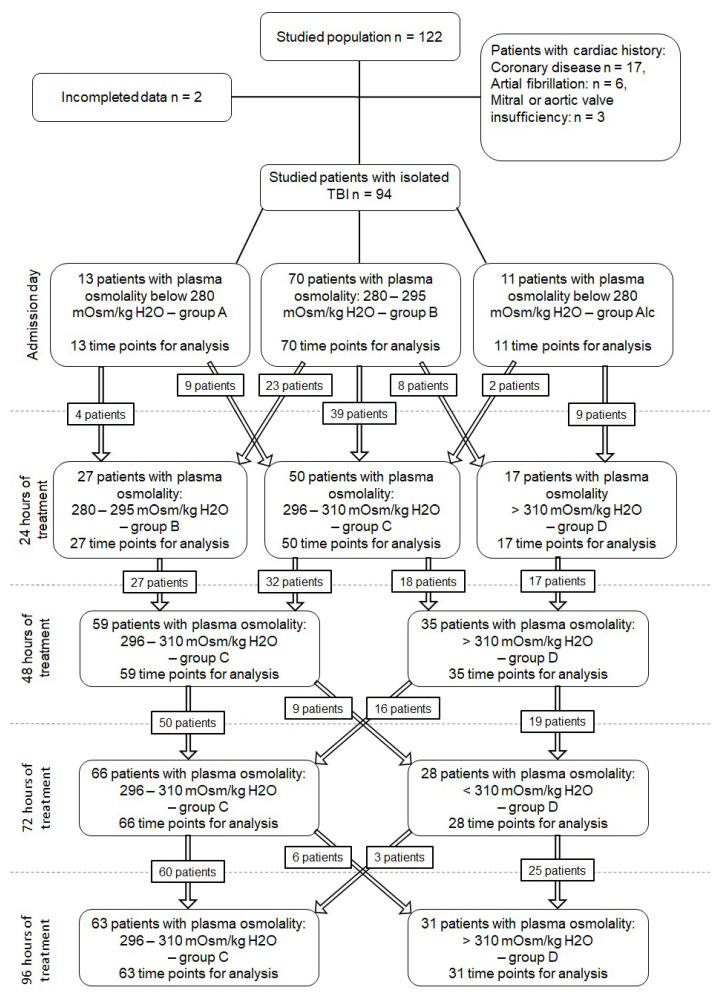
Adult iTBI patients requiring mannitol infusion following cerebral edema, and with a Glasgow Coma Score below 8, were included. Plasma osmolality was measured with Osmometr 800 CLG. Spatial QRS-T angle (spQRS-T), corrected QT interval (QTc) and STJ segment were calculated from digital resting 12-lead ECGs and analyzed in relation to four levels of plasma osmolality: A) <280 mOsm/kg HO; B) 280-295 mOsm/kg HO; C) 295-310 mOsm/kg HO; and D) >310 mOsm/kg HO. All parameters were measured during five consecutive days of treatment.
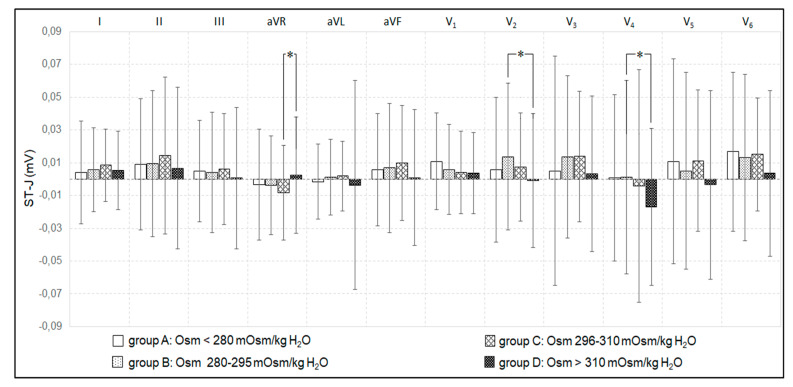
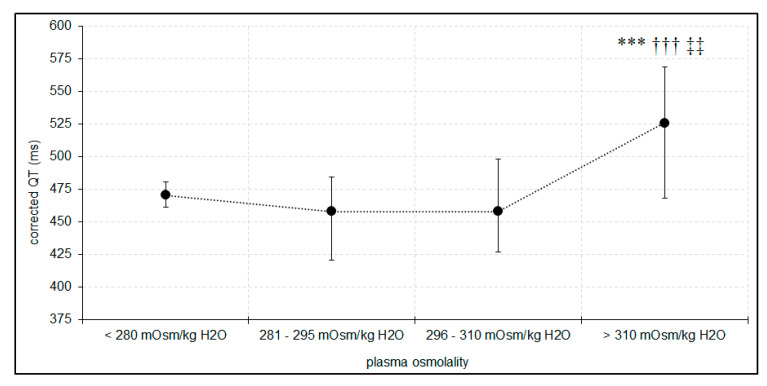
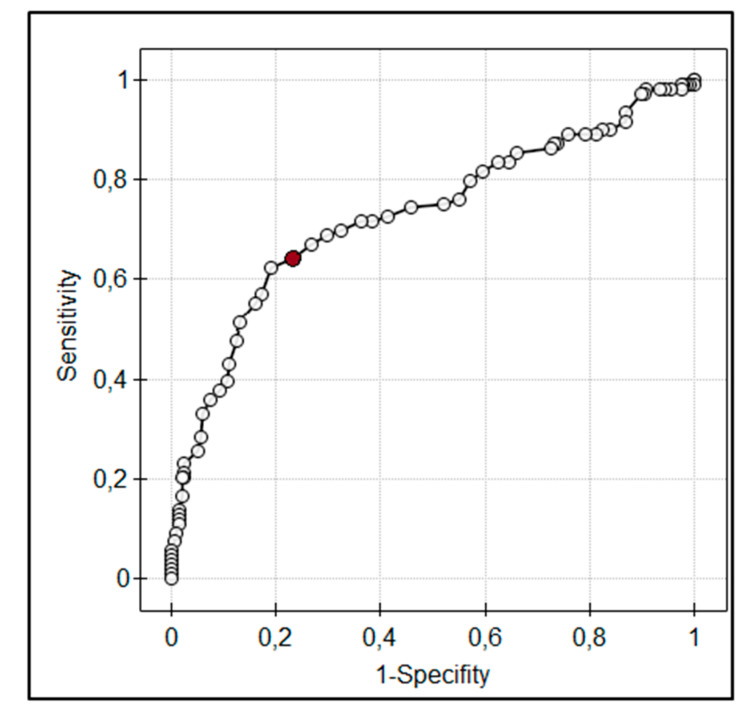
94 patients aged 18-64 were studied. Increased plasma osmolality correlated with prolonged QTc (p < 0.001), intensified disorders in STJ and increased the risk for cardiac arrhythmia. Moreover, plasma osmolality >313 mOms/kg HO significantly increased the risk of QTc prolongation >500 ms.
In patients treated for iTBI, excessively increased plasma osmolality contributes to electrocardiographic disorders including prolonged QTc, while also correlating with increased risk for cardiac arrhythmias.
甘露醇高渗疗法常用于治疗脑水肿,320 mOsm/kg HO被推荐为治疗性血浆渗透压的上限。然而,血浆高渗可能损害心脏功能,增加心脏事件的风险。本研究的目的是分析单纯性创伤性脑损伤(iTBI)患者血浆渗透压变化与心电图变量及心律失常之间的关系。
纳入因脑水肿需要输注甘露醇且格拉斯哥昏迷评分低于8分的成年iTBI患者。使用Osmometr 800 CLG测量血浆渗透压。从数字化静息12导联心电图计算空间QRS-T角(spQRS-T)、校正QT间期(QTc)和STJ段,并分析其与血浆渗透压四个水平的关系:A)<280 mOsm/kg HO;B)280-295 mOsm/kg HO;C)295-310 mOsm/kg HO;D)>310 mOsm/kg HO。所有参数在连续治疗的五天内测量。
研究了94例年龄在18-64岁之间的患者。血浆渗透压升高与QTc延长相关(p<0.001),STJ紊乱加剧,心律失常风险增加。此外,血浆渗透压>313 mOms/kg HO显著增加QTc延长>500 ms的风险。
在接受iTBI治疗的患者中,血浆渗透压过度升高会导致包括QTc延长在内的心电图紊乱,同时也与心律失常风险增加相关。