Institute of Chemical Industry of Forest Products, CAF, Nanjing, Jiangsu Province 210042, People's Republic of China.
Research Institute of Forestry New Technology, CAF, Beijing 100091, People's Republic of China.
Int J Nanomedicine. 2020 Apr 22;15:2733-2749. doi: 10.2147/IJN.S249773. eCollection 2020.
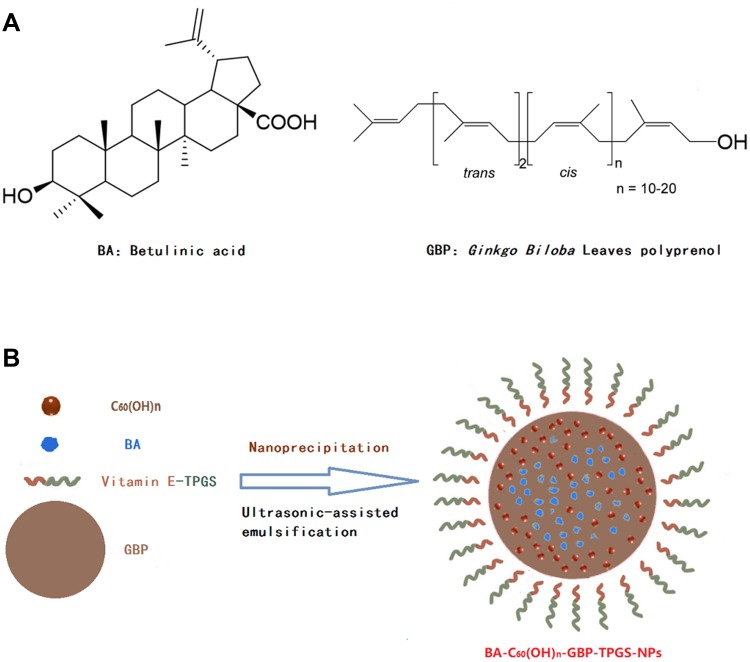
This study demonstrated an innovative formulation including the polyprenol (GBP) lipid and vitamin E-TPGS hybrid nanoparticles (NPs) which was aimed to control the transfer of betulinic acid (BA) and low-substituted hydroxyl fullerenol (C(OH)). Additionally, it developed BA-C(OH)n-GBP-TPGS-NPs delivery system and researched the anti-hepatocellular carcinoma (HCC) effects.
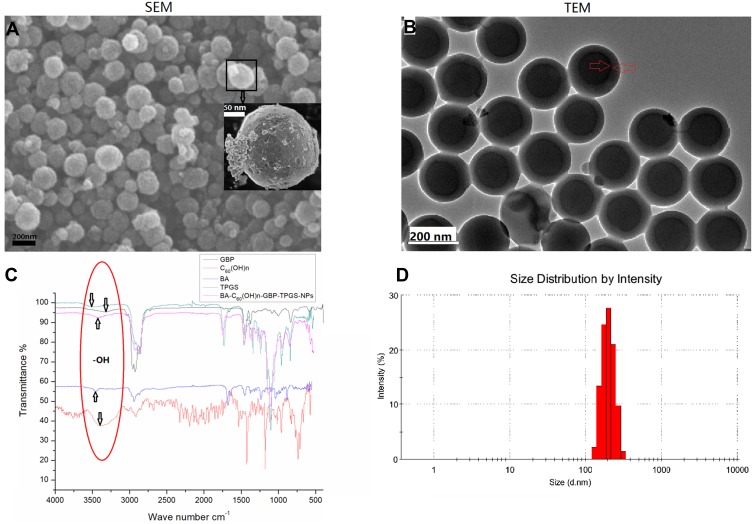
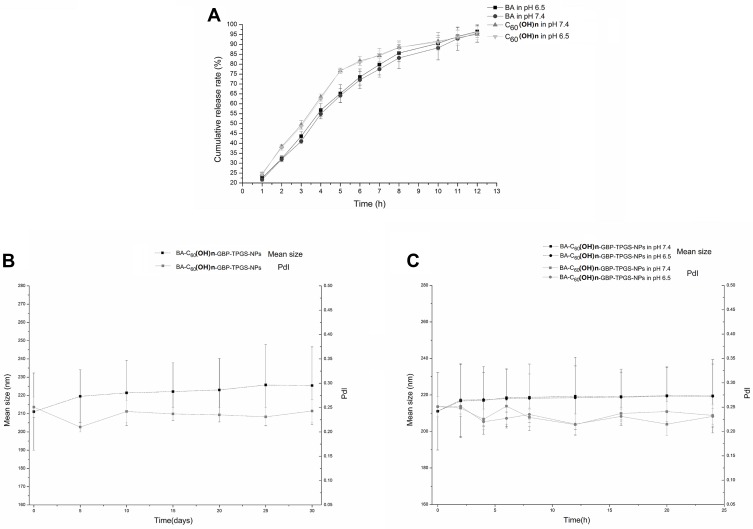
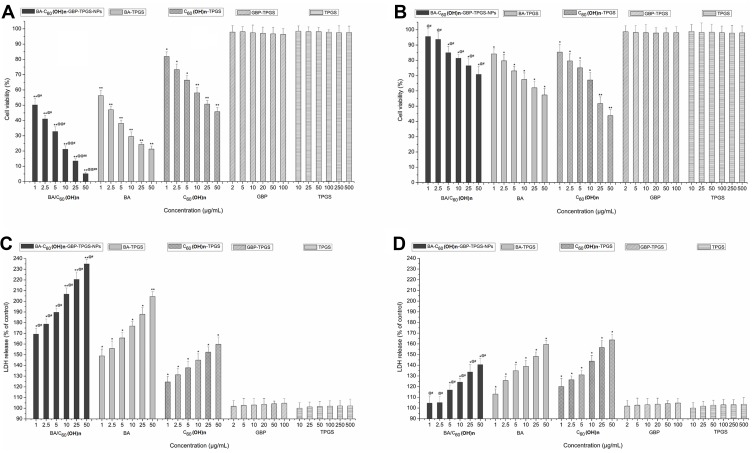
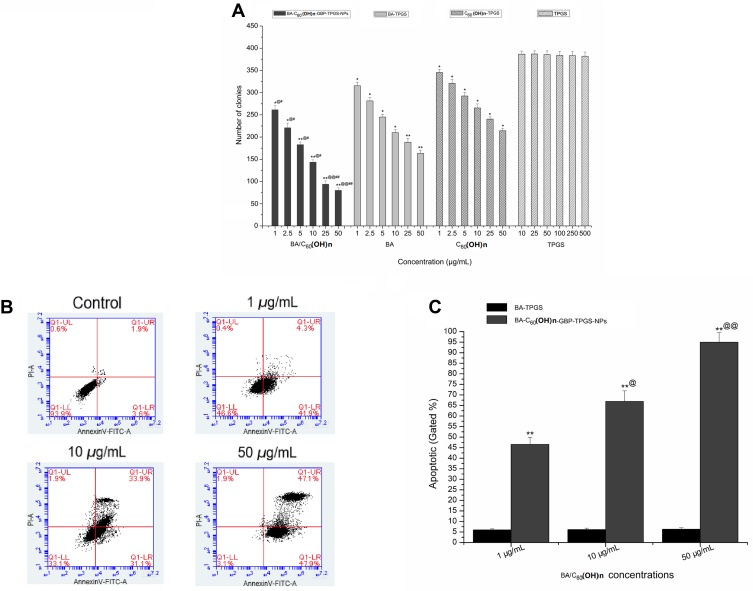
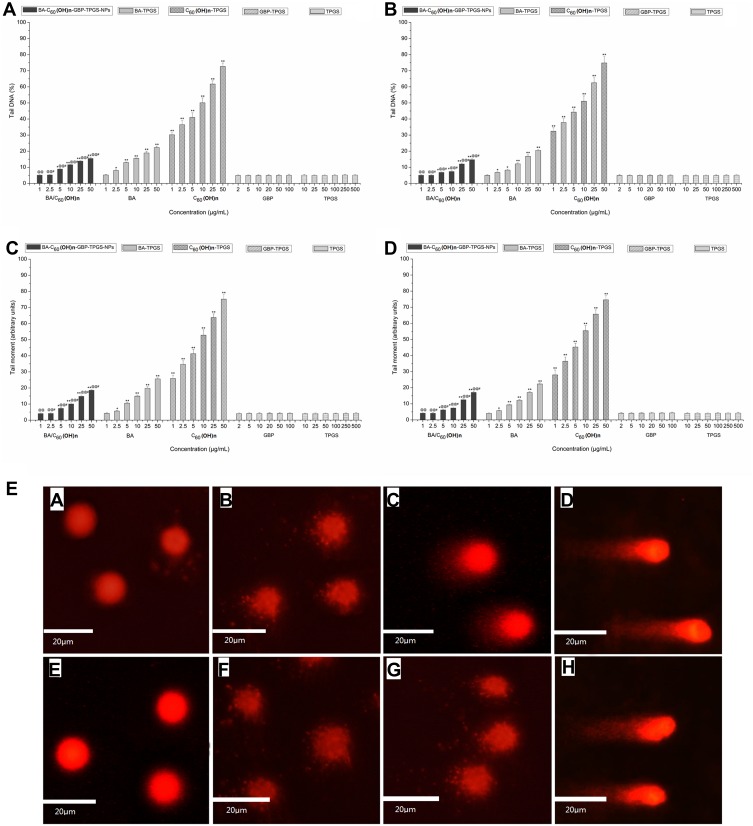
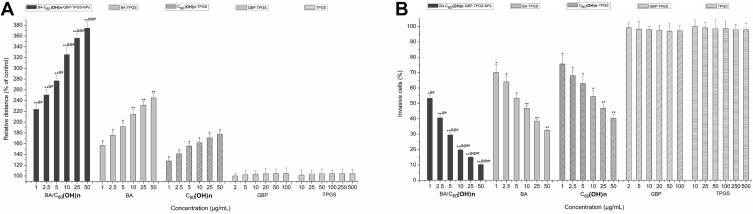
The NPs were prepared by nanoprecipitation with ultrasonic-assisted emulsification (UAE) method. It was characterized by scanning electronic microscopy (SEM), transmission electron microscopy (TEM), FTIR spectrum, size distribution and zeta potential. Physical and chemical properties were evaluated through measurement of drug release, stability studies, drug loading efficiency (DE) and encapsulation efficiency (EE). Biological activities were evaluated through measurement of MTT assay, lactate dehydrogenase leakage assay (LDH), cell proliferation assays, cell apoptosis analysis, comet assay, wound healing assay, cell invasion and Western blot analysis.
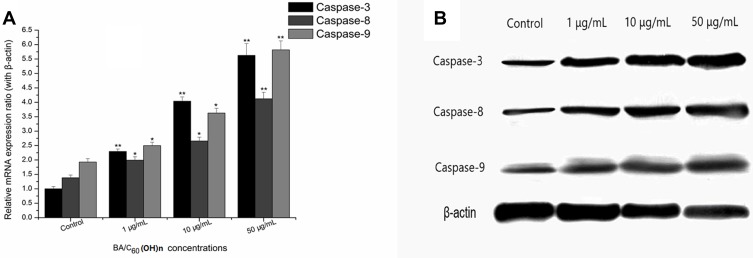
The NPs exhibited clear distribution characteristics, improved solubility and stability. BA and C(OH) for the NPs displayed a biphasic release pattern with sustained drug release properties. The mixture of C(OH) with different hydroxyl groups may have a certain effect on the stability of the NPs system itself. The NPs could effectively inhibit MHCC97H cell proliferation, migration and invasion in vitro. Combined use of C(OH) and BA in GBP lipids may improve the inhibit effect of C(OH) or BA against HCC cells and reduce cytotoxicity and genotoxicity of C(OH) for normal cells. We concluded that one of the important mechanisms of BA-C(OH)-GBP-TPGS-NPs inhibiting MHCC97H cells is achieved by up-regulating the expression of Caspase-3, Caspase-8 and Caspase-9.
本研究展示了一种创新的制剂,包括多萜醇(GBP)脂质和维生素 E-TPGS 混合纳米粒子(NPs),旨在控制白桦脂酸(BA)和低取代羟全氟化碳(C(OH))的传递。此外,还开发了 BA-C(OH)n-GBP-TPGS-NPs 递药系统,并研究了其抗肝癌(HCC)的作用。
采用纳米沉淀法,通过超声辅助乳化(UAE)法制备 NPs。采用扫描电子显微镜(SEM)、透射电子显微镜(TEM)、傅里叶变换红外光谱(FTIR 谱)、粒径分布和 Zeta 电位对其进行了表征。通过测定药物释放、稳定性研究、载药量(DE)和包封率(EE)对其物理化学性质进行了评价。通过 MTT 测定、乳酸脱氢酶漏出测定(LDH)、细胞增殖测定、细胞凋亡分析、彗星试验、划痕愈合试验、细胞侵袭和 Western blot 分析对其生物活性进行了评价。
NPs 显示出明显的分布特征,提高了溶解度和稳定性。BA 和 C(OH)在 NPs 中呈现出两相释放模式,具有持续的药物释放特性。不同羟基的 C(OH)混合物可能对 NPs 系统本身的稳定性有一定的影响。NPs 能有效抑制 MHCC97H 细胞在体外的增殖、迁移和侵袭。在 GBP 脂质中联合使用 C(OH)和 BA 可能会提高 C(OH)或 BA 对 HCC 细胞的抑制作用,同时降低 C(OH)对正常细胞的细胞毒性和遗传毒性。我们得出结论,BA-C(OH)-GBP-TPGS-NPs 抑制 MHCC97H 细胞的一个重要机制是通过上调 Caspase-3、Caspase-8 和 Caspase-9 的表达来实现的。