Velázquez-Morales José Vicente, Santillán-Flores Marco Antonio, Gallegos-Sánchez Jaime, Cuca-García Juan Manuel, Navarro-Maldonado María Del Carmen, Rojas-Martínez Reyna Isabel, Cortez-Romero César
Colegio de Postgraduados, Programa de Ganadería, Montecillo, Texcoco, México.
Instituto Nacional de Investigaciones Forestales, Agrícolas y Pecuarias, Centro Nacional de Investigación Disciplinaria en Microbiología Animal, Ciudad de México, México.
Anim Reprod. 2019 Nov 18;16(4):930-937. doi: 10.21451/1984-3143-AR2018-0147.
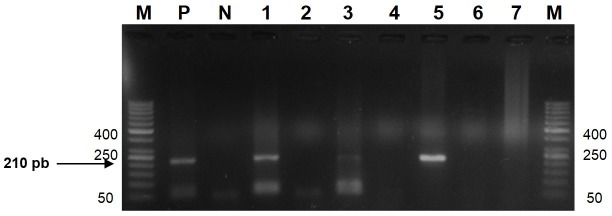
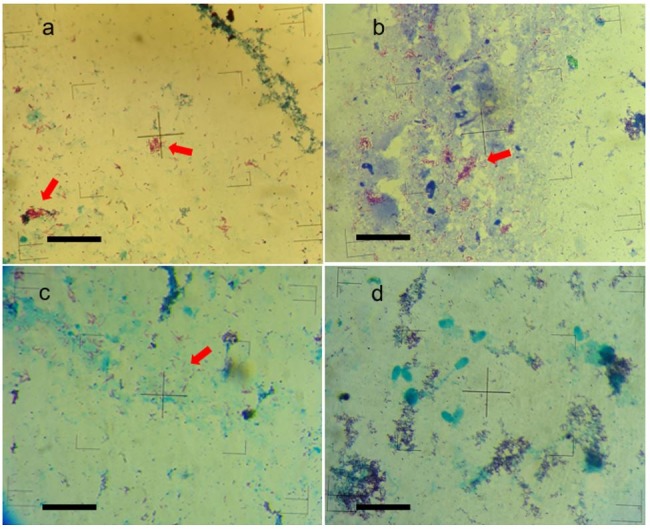
subsp. (MAP) is the causative agent of paratuberculosis (PTB), disease that causes a syndrome of bad nutrient absorption, weight loss and eventually death. The intestine is the main target organ where the infection develops; however, there is evidence of infection by MAP in extra-intestine sites of sheep, including mesenteric nodes and semen. The aim of the study was to identify the presence of MAP in reproductive tissue and semen of infected Pelibuey rams in clinical state of PTB. Seven rams were used in clinical PTB state and a non-infected ram by MAP of the Pelibuey breed, confirmed by serology, nPCR and bacteriological culture, with average weight and age of 57.23 ± 1.73 kg and 2.91 ± 0.17 years, respectively. The presence of MAP was identified in different tissue samples: spleen (1/7, 14.3% and 2/7, 28.6%), small intestine (3/7, 42.9% and 4/7, 57.1%) and mesenteric lymph nodes (3/7, 42.9% and 3/7, 42.9%), with nPCR and culture, respectively. It was also identified in epididymis tissue (1/7, 14.3%), Cowper gland (2/7, 28.6%) and prostate (1/7, 14.3%), using nPCR, although without detection in culture. It was identified in testicular tissue in 42.8% (3/7; culture or nPCR technique), but in 28.6% (2/7) with both techniques. Finally, the presence of MAP was identified in 42.9% (3/7) of semen samples with nPCR; however, it was not detected through culture. In conclusion, the presence of MAP was identified in lymphatic, digestive tissue, and semen; the presence of MAP was reported for the first time in epididymis, Cowper gland, prostate and testicles of infected Pelibuey rams.
副结核亚种(MAP)是副结核病(PTB)的病原体,该疾病会导致营养吸收不良、体重减轻并最终死亡的综合征。肠道是感染发生的主要靶器官;然而,有证据表明绵羊的肠外部位,包括肠系膜淋巴结和精液中存在MAP感染。本研究的目的是确定处于PTB临床状态的感染佩利布埃公羊的生殖组织和精液中是否存在MAP。使用了7只处于PTB临床状态的公羊以及1只经血清学、巢式PCR(nPCR)和细菌培养确认未感染MAP的佩利布埃品种公羊,其平均体重和年龄分别为57.23±1.73千克和2.91±0.17岁。通过nPCR和培养分别在不同组织样本中鉴定出了MAP的存在:脾脏(1/7,14.3%和2/7,28.6%)、小肠(3/7,42.9%和4/7,57.1%)和肠系膜淋巴结(3/7,42.9%和3/7,42.9%)。使用nPCR在附睾组织(1/7,14.3%)、尿道球腺(2/7,28.6%)和前列腺(1/7,14.3%)中也鉴定出了MAP,尽管培养未检测到。通过培养或nPCR技术在42.8%(3/7)的睾丸组织中鉴定出了MAP,但两种技术同时检测到的比例为28.(2/7)。最后,通过nPCR在42.9%(3/7)的精液样本中鉴定出了MAP的存在;然而,培养未检测到。总之,在淋巴、消化组织和精液中鉴定出了MAP的存在;首次报道了在感染的佩利布埃公羊的附睾、尿道球腺、前列腺和睾丸中存在MAP。