Department of Neurology, Washington University School of Medicine, St. Louis, Missouri, USA.
Division of Child Neurology & Metabolic Medicine, University Children's Hospital, Heidelberg, Germany.
J Inherit Metab Dis. 2020 Sep;43(5):1121-1130. doi: 10.1002/jimd.12247. Epub 2020 May 14.
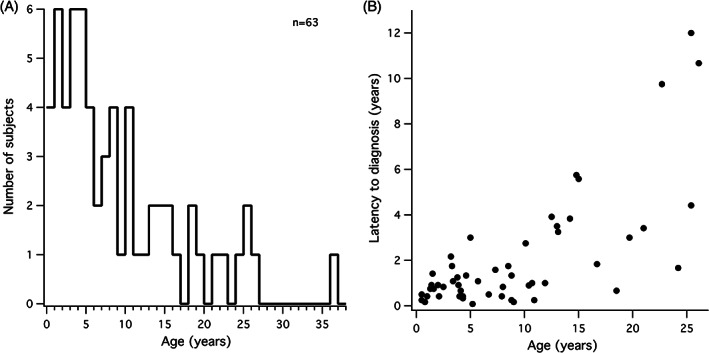
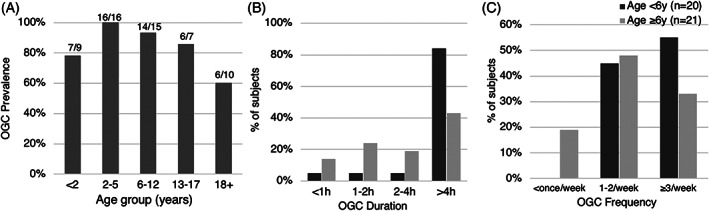
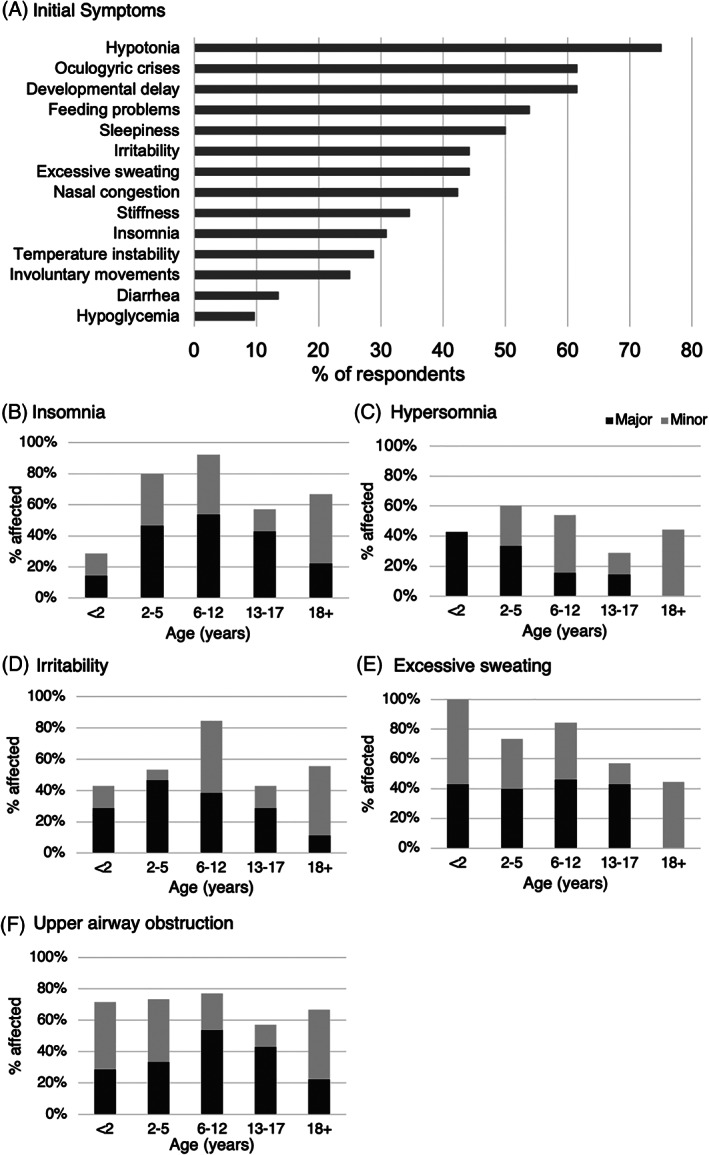
Aromatic l-amino acid decarboxylase deficiency (AADCD) is a rare, autosomal recessive neurodevelopmental disorder characterized by impaired synthesis of dopamine, noradrenaline, adrenaline and serotonin, leading to a complex syndrome of motor, behavioral, and autonomic symptoms. This retrospective study assessed the symptoms and developmental outcome of a large international cohort of patients with AADCD via physician and/or caregiver responses to a detailed, standardized questionnaire. Sixty-three patients (60% female; ages 6 months-36 years, median 7 years; 58 living) from 23 individual countries participated. Common symptoms at onset (median age 3 months, range 0-12 months) were hypotonia, developmental delay, and/or oculogyric crises. Oculogyric crises were present in 97% of patients aged 2 to 12 years, occurred in the majority of patients in all age groups, and tended to be most severe during early childhood. Prominent non-motor symptoms were sleep disturbance, irritable mood, and feeding difficulties. The majority of subjects (70%) had profound motor impairment characterized by absent head control and minimal voluntary movement, while 17% had mild motor impairment and were able to walk independently. Dopamine agonists were the medications most likely to produce some symptomatic benefit, but were associated with dose-limiting side effects (dyskinesia, insomnia, irritability, vomiting) that led to discontinuation 25% of the time. The age distribution of our cohort (70% of subjects under age 13 years) and the observation of a greater proportion of patients with a more severe disease phenotype in the younger compared to the older patients, both suggest a significant mortality risk during childhood for patients with severe disease.
芳香族 L-氨基酸脱羧酶缺乏症(AADCD)是一种罕见的常染色体隐性神经发育障碍,其特征是多巴胺、去甲肾上腺素、肾上腺素和血清素的合成受损,导致运动、行为和自主症状的复杂综合征。这项回顾性研究通过医生和/或照顾者对详细的标准化问卷的回答,评估了来自 23 个国家的 63 名 AADCD 患者的症状和发育结果。63 名患者(58 名存活,58 名女性,60%;年龄 6 个月至 36 岁,中位数为 7 岁)参与了这项研究。发病时常见的症状(中位数年龄为 3 个月,范围为 0-12 个月)包括肌张力减退、发育迟缓,和/或眼球震颤危象。2 至 12 岁的患者中有 97%存在眼球震颤危象,且在所有年龄组的大多数患者中发生,且在幼儿期往往最为严重。突出的非运动症状包括睡眠障碍、情绪烦躁和喂养困难。大多数患者(70%)有严重的运动障碍,表现为头部控制缺失和最小的自主运动,而 17%有轻度运动障碍,可以独立行走。多巴胺激动剂是最有可能产生一些症状改善的药物,但与剂量限制的副作用(运动障碍、失眠、烦躁、呕吐)相关,导致 25%的患者停药。我们的队列的年龄分布(70%的患者年龄在 13 岁以下)和观察到年龄较小的患者比年龄较大的患者具有更严重的疾病表型的比例更高,这两者都表明严重疾病的患儿存在重大死亡风险。