Department of Pathology, Nanfang Hospital, Southern Medical University, Guangzhou, China.
Department of Pathology, School of Basic Medical Sciences, Southern Medical University, Guangzhou, China.
J Exp Clin Cancer Res. 2020 May 5;39(1):76. doi: 10.1186/s13046-020-01578-y.
GLYR1 has a high mutation frequency in microsatellite instability colorectal cancer (MSI CRC) and is presumed to be a novel tumor suppressor. However, the role of GLYR1 in tumors has never been studied. In particular, the downregulation of GLYR1 in MSI CRC is worthy of further investigation.
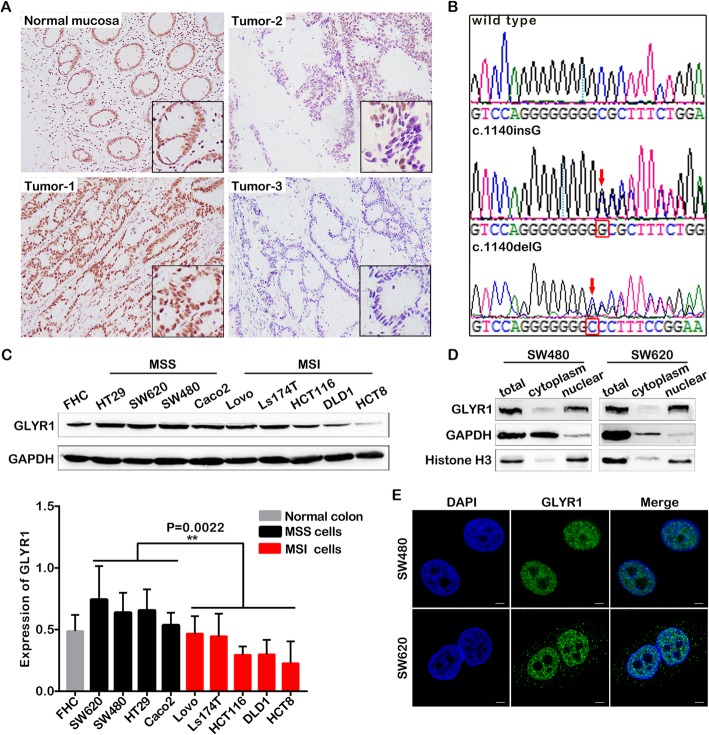
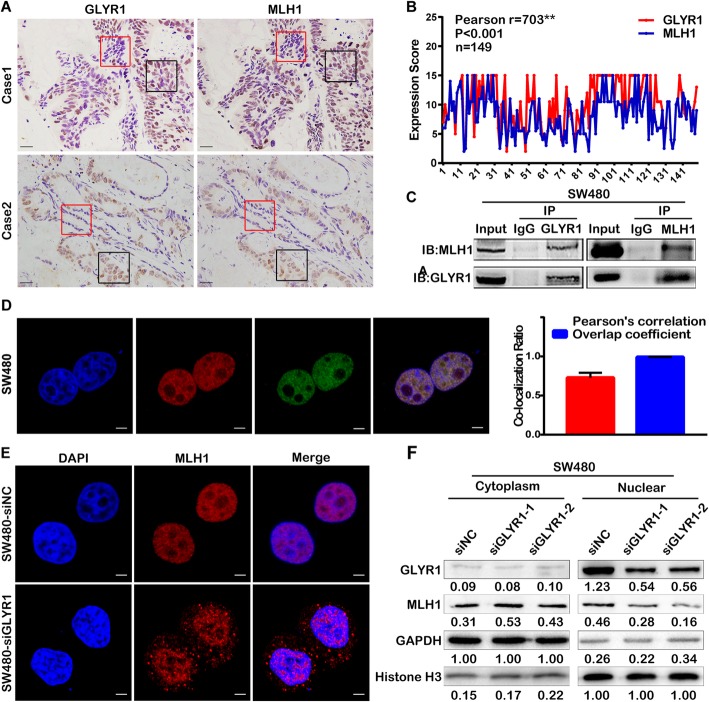
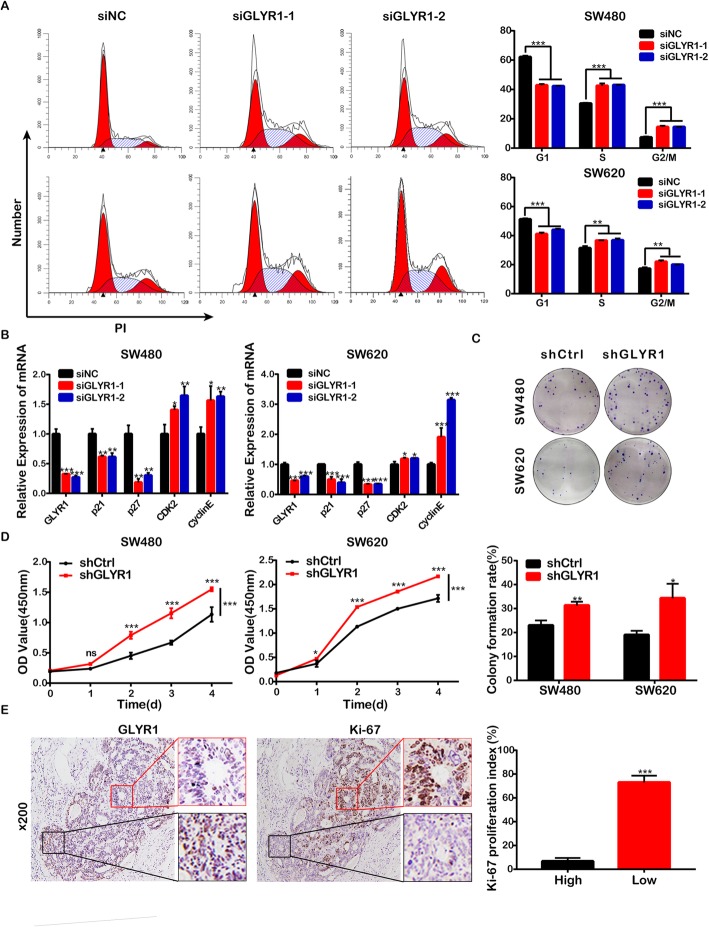
Western blot and immunohistochemistry analyses were used to detect GLYR1 protein expression in CRC tissues and cell lines, and the clinical significance of GLYR1 was also analyzed. The relationship between GLYR1 and MLH1 was validated by immunofluorescence, immunoprecipitation and bioinformatics analyses. Western blotting, qRT-PCR, CCK-8 assays, colony formation assays, flow cytometry and Hoechst 33258 staining assays were used to assess the effect of GLYR1 on the cell cycle progression, proliferation, differentiation and apoptosis of CRC cells in vitro. The related mechanisms were initially investigated by Western blotting.
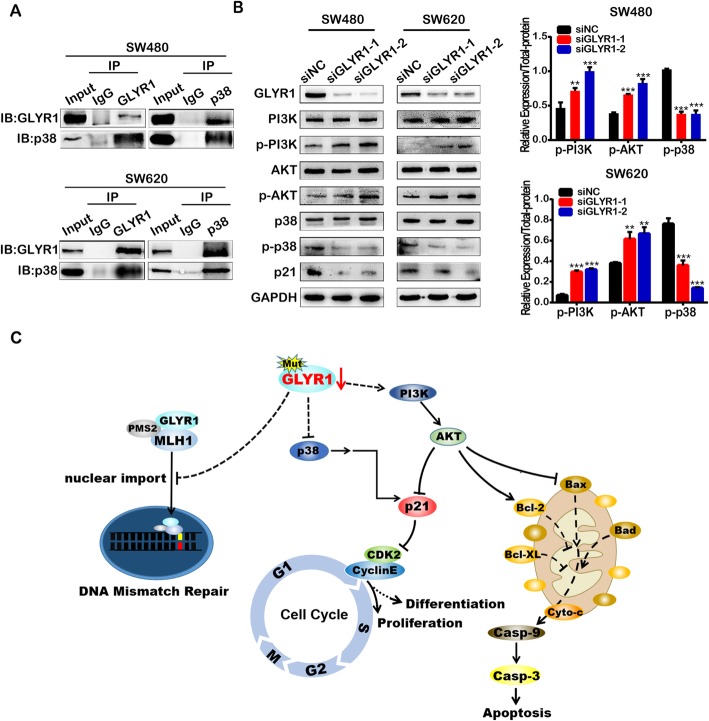
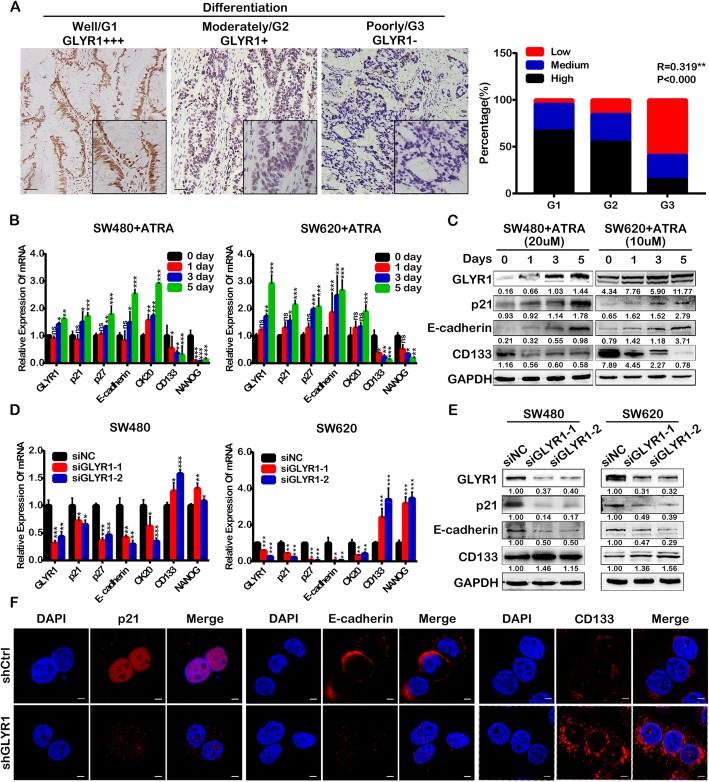
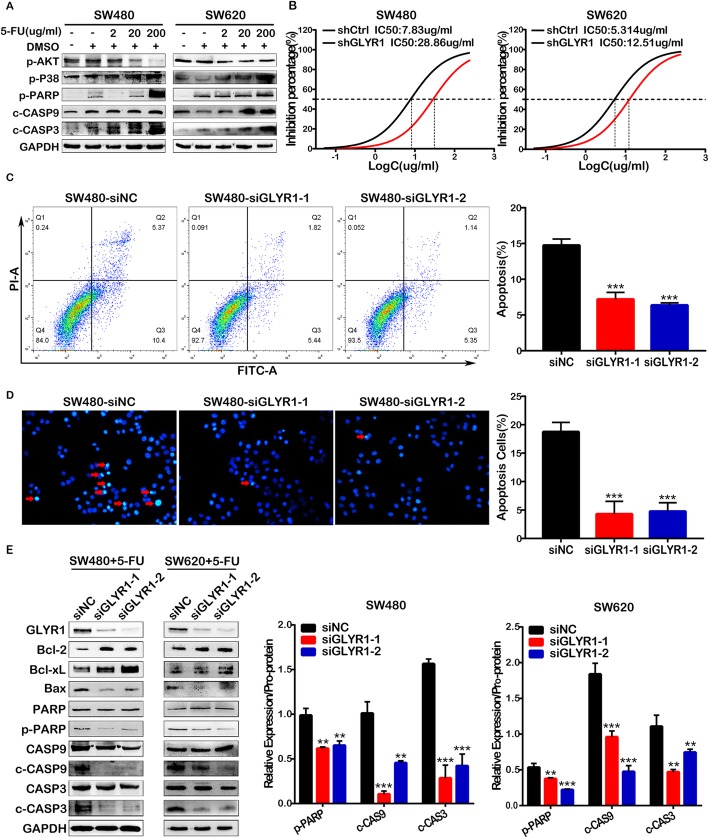
GLYR1 was significantly downregulated in MSI CRC and its expression was negatively correlated with tumor size and positively correlated with tumor differentiation in CRC patients. In addition, GLYR1 interacted with MLH1 to regulate its nuclear import and expression. Moreover, downregulation of GLYR1 accelerated G1/S phase transition, promoted proliferation and inhibited differentiation of SW480 and SW620 cells in vitro. Furthermore, downregulation of GLYR1 decreased the sensitivity to 5-fluorouracil (5-FU) by inhibiting the mitochondrial apoptosis pathway in CRC cells. Inhibition of the p38 mitogen-activated protein kinase (p38MAPK) and activation of the phosphatidyl 3-kinase/protein kinase B (PI3K/Akt) signaling pathways were involved in the mechanism by which GLYR1 downregulated p21.
Ours is the first study to elucidate the role of GLYR1 in tumors and provide evidence for GLYR1 as a biological marker that reflects the degree of malignancy and sensitivity to 5-FU in MSI CRC.
GLYR1 在微卫星不稳定结直肠癌(MSI CRC)中具有较高的突变频率,被认为是一种新的肿瘤抑制因子。然而,GLYR1 在肿瘤中的作用从未被研究过。特别是,MSI CRC 中 GLYR1 的下调值得进一步研究。
使用 Western blot 和免疫组织化学分析检测 CRC 组织和细胞系中 GLYR1 蛋白的表达,并分析 GLYR1 的临床意义。通过免疫荧光、免疫沉淀和生物信息学分析验证 GLYR1 与 MLH1 的关系。Western blot、qRT-PCR、CCK-8 测定、集落形成测定、流式细胞术和 Hoechst 33258 染色测定用于评估 GLYR1 对 CRC 细胞体外细胞周期进程、增殖、分化和凋亡的影响。通过 Western blot 初步研究了相关机制。
GLYR1 在 MSI CRC 中显著下调,其表达与肿瘤大小呈负相关,与 CRC 患者的肿瘤分化呈正相关。此外,GLYR1 与 MLH1 相互作用,调节其核内输入和表达。此外,下调 GLYR1 可加速 SW480 和 SW620 细胞体外 G1/S 期转变,促进增殖并抑制分化。此外,下调 GLYR1 通过抑制 CRC 细胞中线粒体凋亡途径降低对 5-氟尿嘧啶(5-FU)的敏感性。GLYR1 下调涉及 p38 丝裂原活化蛋白激酶(p38MAPK)抑制和磷脂酰肌醇 3-激酶/蛋白激酶 B(PI3K/Akt)信号通路激活,这是 GLYR1 下调 p21 的机制之一。
这是首次阐明 GLYR1 在肿瘤中的作用,并为 GLYR1 作为反映 MSI CRC 恶性程度和对 5-FU 敏感性的生物学标志物提供证据。