QIMR Berghofer Medical Research Institute, 300 Herston Road, Herston, Brisbane QLD 4006, Australia.
Radiation Biology Research Center, Institute for Radiological Research, Chang Gung Memorial Hospital/Chang Gung University, Taoyuan 333, Taiwan.
Theranostics. 2020 Apr 6;10(12):5259-5275. doi: 10.7150/thno.42705. eCollection 2020.
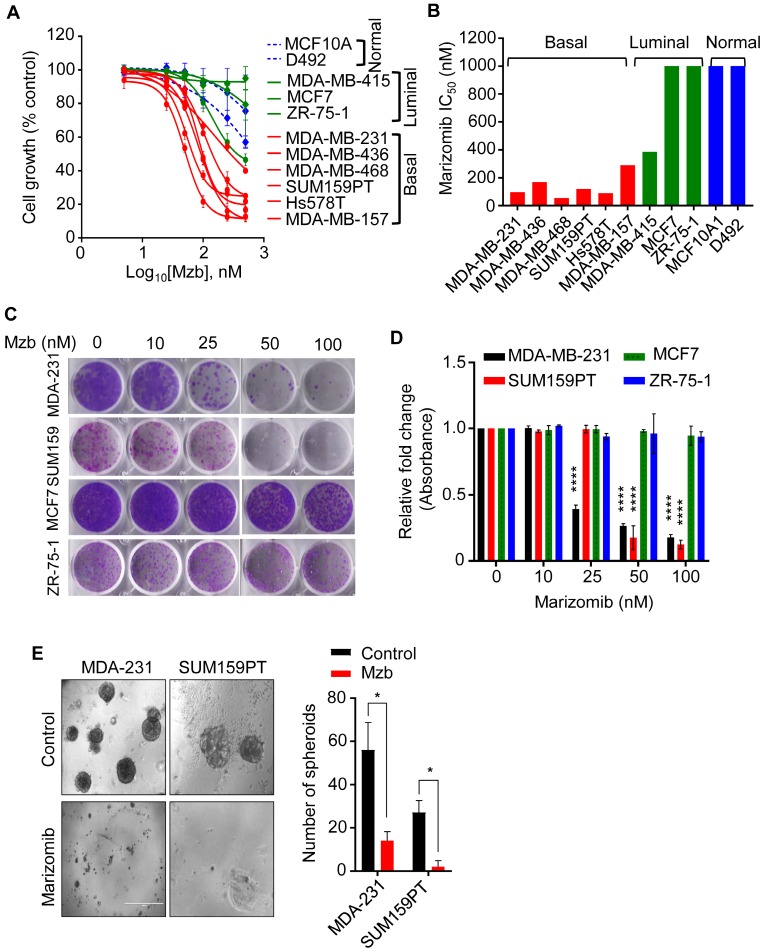
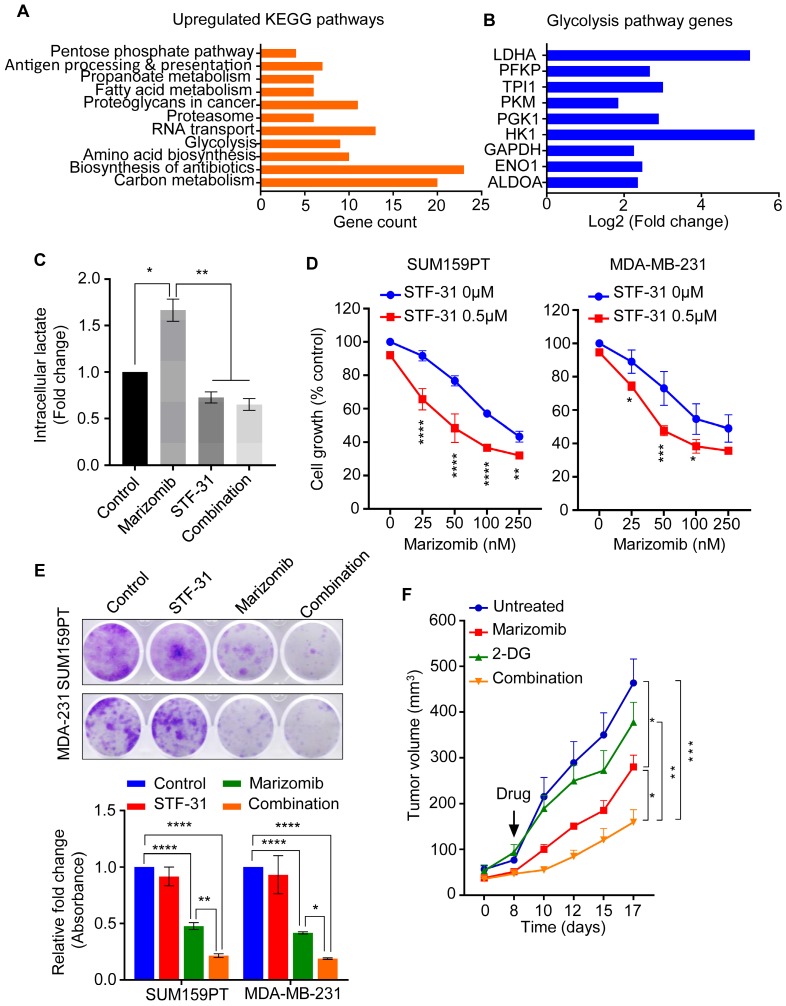
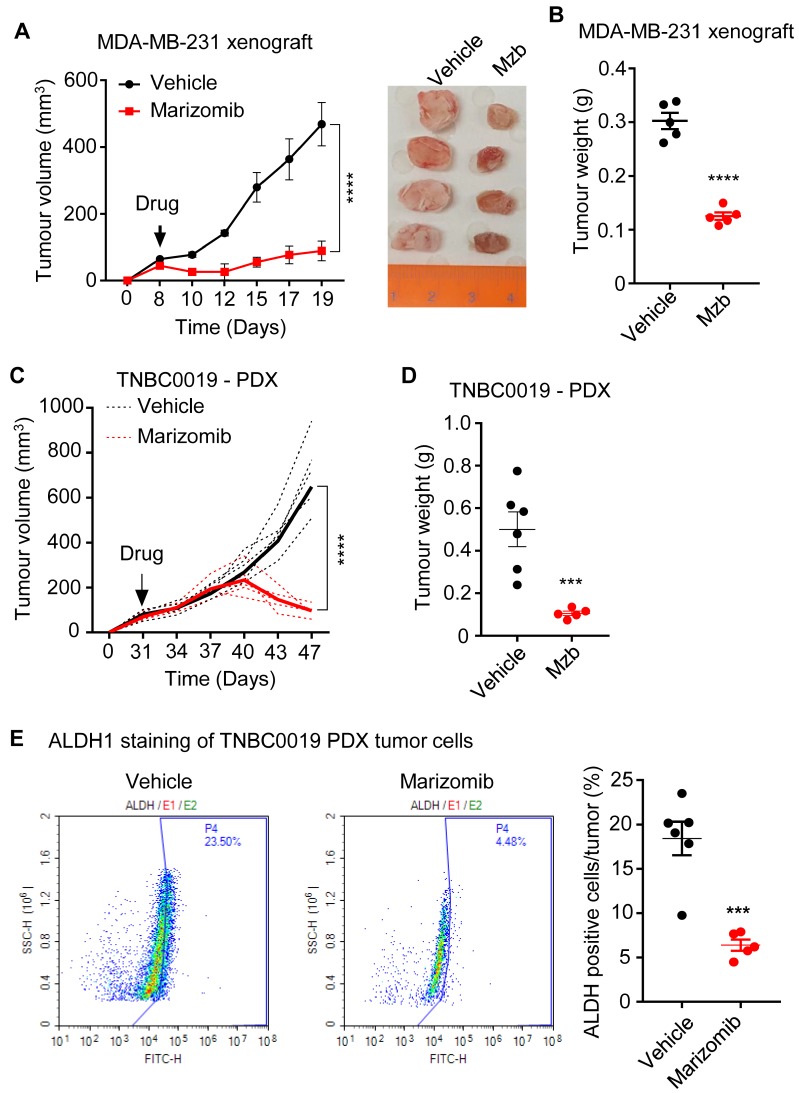
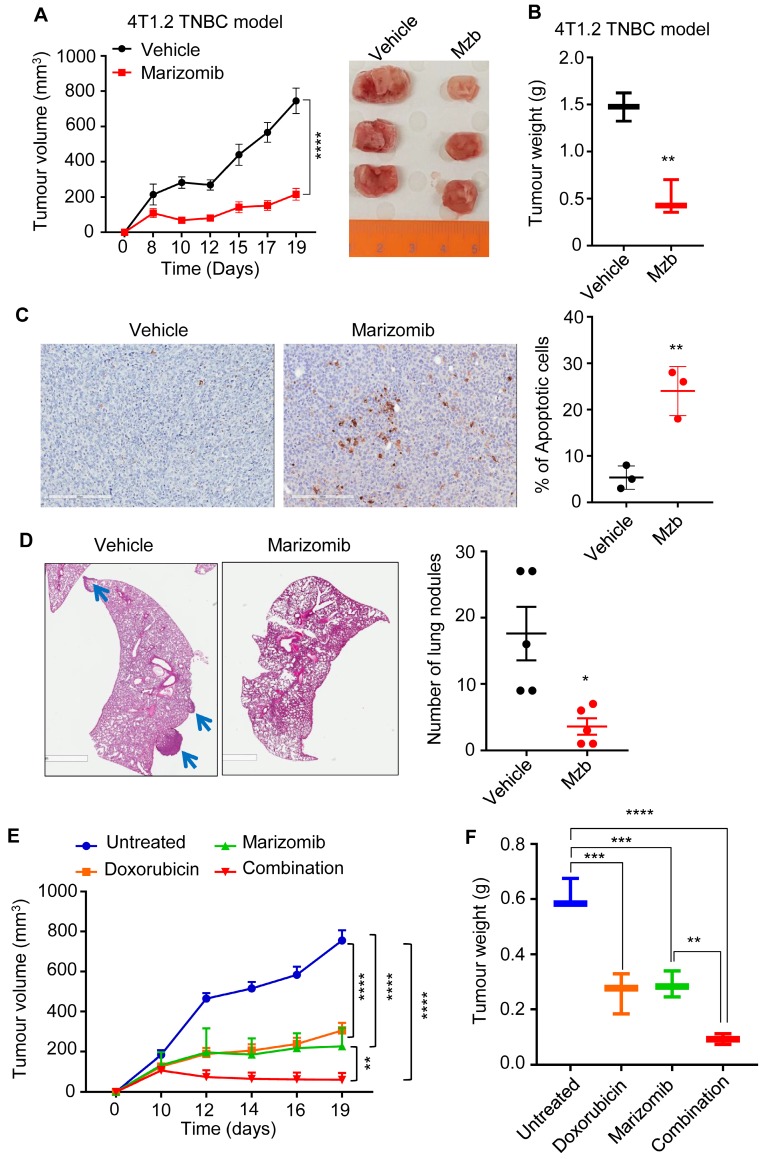
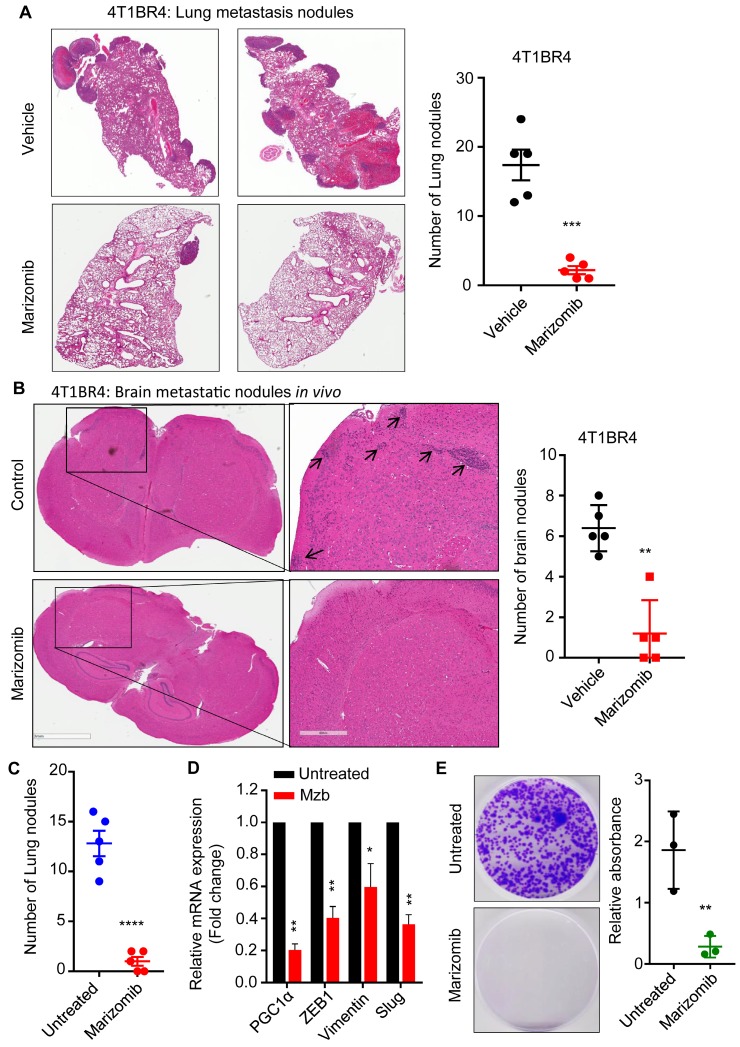
: Lacking effective targeted therapies, triple-negative breast cancer (TNBCs) is highly aggressive and metastatic disease, and remains clinically challenging breast cancer subtype to treat. Despite the survival dependency on the proteasome pathway genes, FDA-approved proteasome inhibitors induced minimal clinical response in breast cancer patients due to weak proteasome inhibition. Hence, developing effective targeted therapy using potent proteasome inhibitor is required. : We evaluated anti-cancer activity of a potent proteasome inhibitor, marizomib, using breast cancer lines and using 4T1.2 murine syngeneic model, MDA-MB-231 xenografts, and patient-derived tumor xenografts. Global proteome profiling, western blots, and RT-qPCR were used to investigate the mechanism of action for marizomib. Effect of marizomib on lung and brain metastasis was evaluated using syngeneic 4T1BR4 murine TNBC model . : We show that marizomib inhibits multiple proteasome catalytic activities and induces a better anti-tumor response in TNBC cell lines and patient-derived xenografts alone and in combination with the standard-of-care chemotherapy. Mechanistically, we show that marizomib is a dual inhibitor of proteasome and oxidative phosphorylation (OXPHOS) in TNBCs. Marizomib reduces lung and brain metastases by reducing the number of circulating tumor cells and the expression of genes involved in the epithelial-to-mesenchymal transition. We demonstrate that marizomib-induced OXPHOS inhibition upregulates glycolysis to meet the energetic demands of TNBC cells and combined inhibition of glycolysis with marizomib leads to a synergistic anti-cancer activity. : Our data provide a strong rationale for a clinical evaluation of marizomib in primary and metastatic TNBC patients.
缺乏有效的靶向治疗方法,三阴性乳腺癌(TNBC)是一种侵袭性和转移性很强的疾病,仍然是临床上具有挑战性的乳腺癌亚型。尽管生存依赖于蛋白酶体途径基因,但由于蛋白酶体抑制作用较弱,FDA 批准的蛋白酶体抑制剂在乳腺癌患者中诱导的临床反应极小。因此,需要开发使用有效蛋白酶体抑制剂的有效靶向治疗方法。
我们使用乳腺癌细胞系和 4T1.2 鼠同源模型、MDA-MB-231 异种移植瘤和患者来源的肿瘤异种移植瘤评估了一种有效的蛋白酶体抑制剂马利佐米的抗癌活性。使用全球蛋白质组谱分析、蛋白质印迹和 RT-qPCR 来研究马利佐米的作用机制。使用同源 4T1BR4 鼠 TNBC 模型评估马利佐米对肺和脑转移的影响。
我们表明,马利佐米抑制多种蛋白酶体催化活性,并单独或与标准护理化疗联合在 TNBC 细胞系和患者来源的异种移植瘤中诱导更好的抗肿瘤反应。在机制上,我们表明马利佐米是 TNBC 中蛋白酶体和氧化磷酸化(OXPHOS)的双重抑制剂。马利佐米通过减少循环肿瘤细胞的数量和参与上皮间质转化的基因的表达来减少肺和脑转移。我们证明,马利佐米诱导的 OXPHOS 抑制通过上调糖酵解来满足 TNBC 细胞的能量需求,并且与马利佐米联合抑制糖酵解会导致协同的抗癌活性。
我们的数据为马利佐米在原发性和转移性 TNBC 患者中的临床评估提供了强有力的依据。