Komeili Movahhed Tahereh, Moslehi Azam, Golchoob Mohammad, Ababzadeh Shima
Cellular & Molecular Research Center, Qom University of Medical Sciences, Qom, Iran.
Student Research Committee, Qom University of Medical Sciences, Qom, Iran.
Iran J Basic Med Sci. 2019 Jul;22(7):736-744. doi: 10.22038/ijbms.2019.33553.8012.
Non-alcoholic steatohepatitis (NASH) is defined by steatosis and inflammation in the hepatocytes, which can progress to cirrhosis and possibly hepatocellular carcinoma. However, current treatments are not entirely effective. Allantoin is one of the principal compounds in many plants and an imidazoline I receptor agonist as well. Allantoin has positive effects on glucose metabolism and inflammation. In this study, the effects of allantoin on the NASH induced animals and the pathways involved have been evaluated.
C57/BL6 male mice received saline and allantoin as the control groups. In the next group, NASH was induced by the methionine-choline-deficient diet (MCD) for eight weeks. In the NASH+allantoin group, allantoin was injected four weeks in the mice feeding on an MCD diet. Histopathological evaluations, serum analysis, ELISA assay, and real-time RT-PCR were performed.
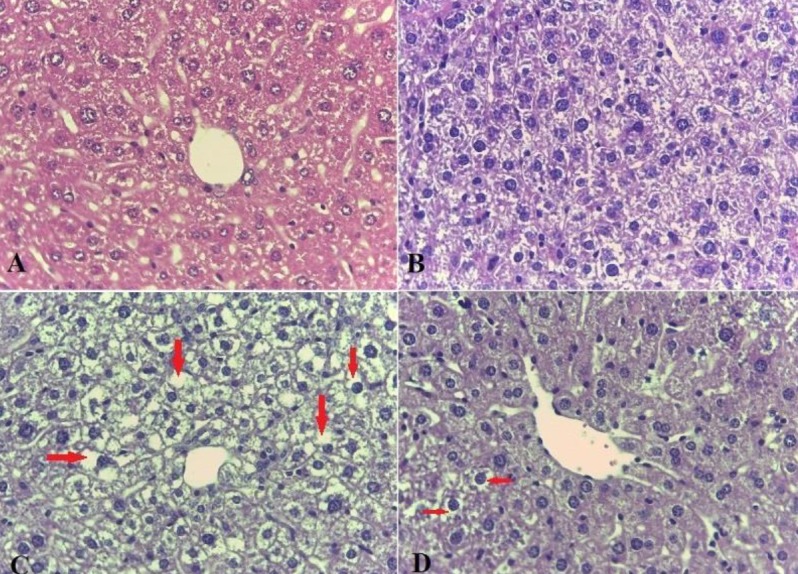
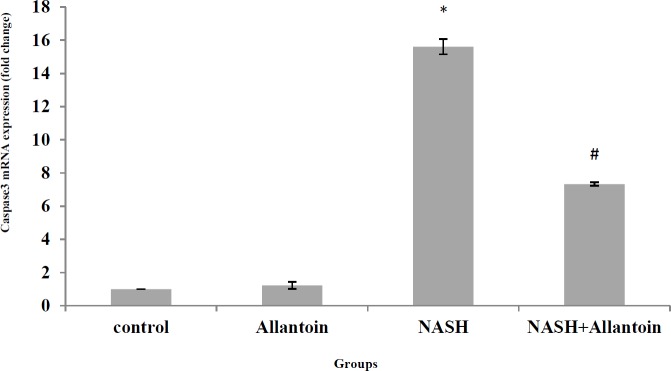
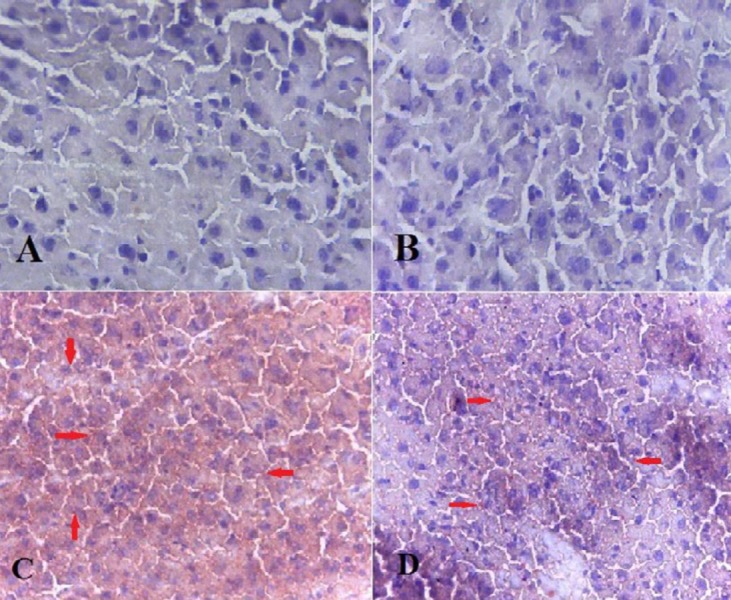
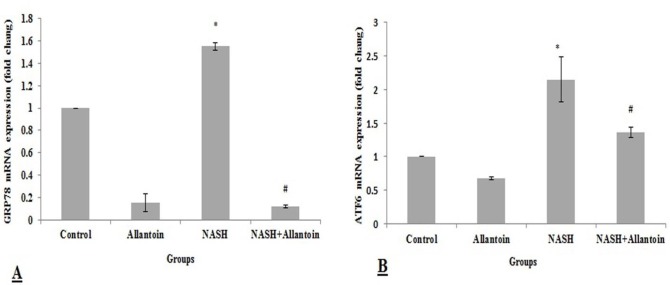
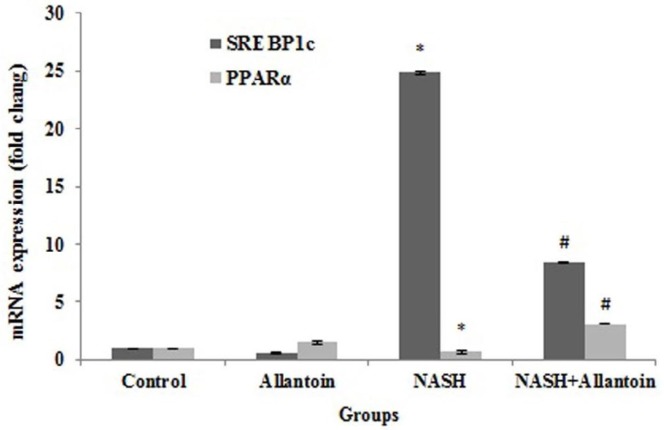
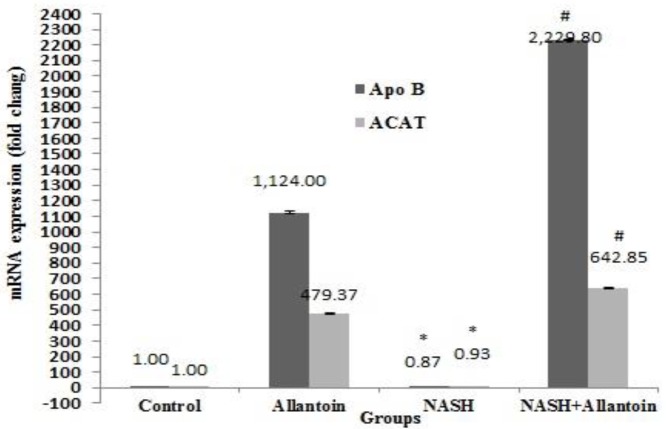
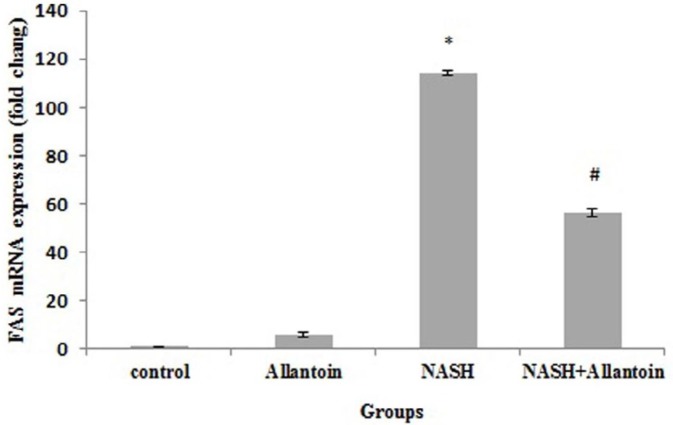
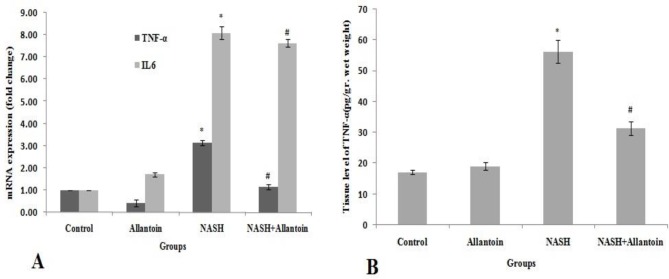
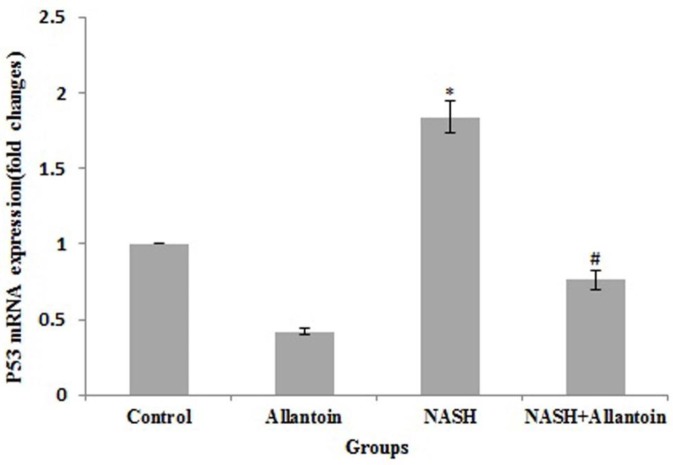
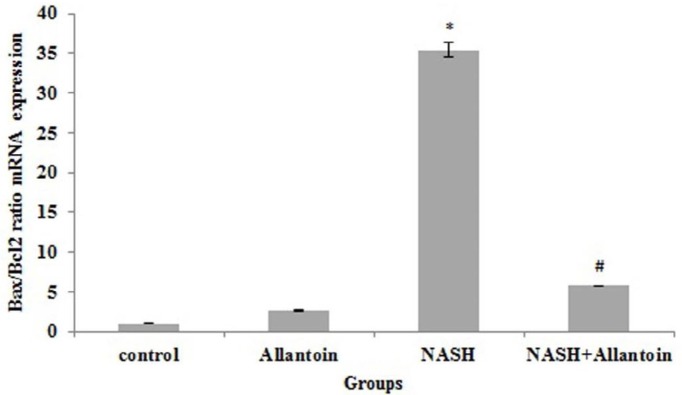
Allantoin administration decreased serum alanine aminotransferase (ALT), cholesterol, low-density lipoprotein (LDL), hepatic lipid accumulation, and liver tumor necrosis factor (TNFα) level. Also, treatment with allantoin down-regulated the gene expression of glucose-regulated protein 78 (GRP78), activating transcription factor 6 (AFT6), TNFα, sterol regulatory element binding proteins 1c (SREBP1c), fatty acid synthase (FAS), Bax/Bcl2 ratio, caspase3, and P53. On the other hand, peroxisome proliferator-activated receptor alpha (PPARα), apolipoprotein B (Apo B), and acetyl-coenzyme acetyltransferase 1 (ACAT1) gene expression increased after allantoin injection.
This study indicated that allantoin could improve animal induced NASH by changes in the expression of endoplasmic reticulum stress-related genes and apoptotic pathways.
非酒精性脂肪性肝炎(NASH)的定义为肝细胞中的脂肪变性和炎症,其可进展为肝硬化并可能发展为肝细胞癌。然而,目前的治疗方法并不完全有效。尿囊素是许多植物中的主要化合物之一,也是一种咪唑啉I受体激动剂。尿囊素对葡萄糖代谢和炎症具有积极作用。在本研究中,评估了尿囊素对NASH诱导动物的影响及其涉及的途径。
C57/BL6雄性小鼠接受生理盐水和尿囊素作为对照组。在另一组中,通过蛋氨酸-胆碱缺乏饮食(MCD)诱导NASH八周。在NASH+尿囊素组中,在以MCD饮食喂养的小鼠中注射尿囊素四周。进行了组织病理学评估、血清分析、ELISA检测和实时RT-PCR。
给予尿囊素可降低血清丙氨酸转氨酶(ALT)、胆固醇、低密度脂蛋白(LDL)、肝脏脂质蓄积和肝脏肿瘤坏死因子(TNFα)水平。此外,尿囊素治疗下调了葡萄糖调节蛋白78(GRP78)、活化转录因子6(AFT6)、TNFα、固醇调节元件结合蛋白1c(SREBP1c)、脂肪酸合酶(FAS)、Bax/Bcl2比值、半胱天冬酶3和P53的基因表达。另一方面,注射尿囊素后过氧化物酶体增殖物激活受体α(PPARα)、载脂蛋白B(Apo B)和乙酰辅酶乙酰转移酶1(ACAT1)的基因表达增加。
本研究表明,尿囊素可通过内质网应激相关基因表达和凋亡途径的改变改善动物诱导的NASH。