Foundation for Research and Technology-Hellas (FORTH), Institute of Computer Science (ICS), Computational Bio-Medicine Laboratory (CBML), N.Plastira 100, Vassilika Vouton, Heraklion, GR-70013, Crete, Greece.
School of Medicine, University of Crete, Heraklion, Greece.
Eur Radiol Exp. 2020 May 7;4(1):28. doi: 10.1186/s41747-020-00154-5.
The inverse Laplace transform (ILT) is the most widely used method for T2 relaxometry data analysis. This study examines the qualitative agreement of ILT and a proposed multiexponential (Mexp method) regarding the number of T2 components. We performed a feasibility study for the voxelwise characterisation of heterogeneous tissue with T2 relaxometry.
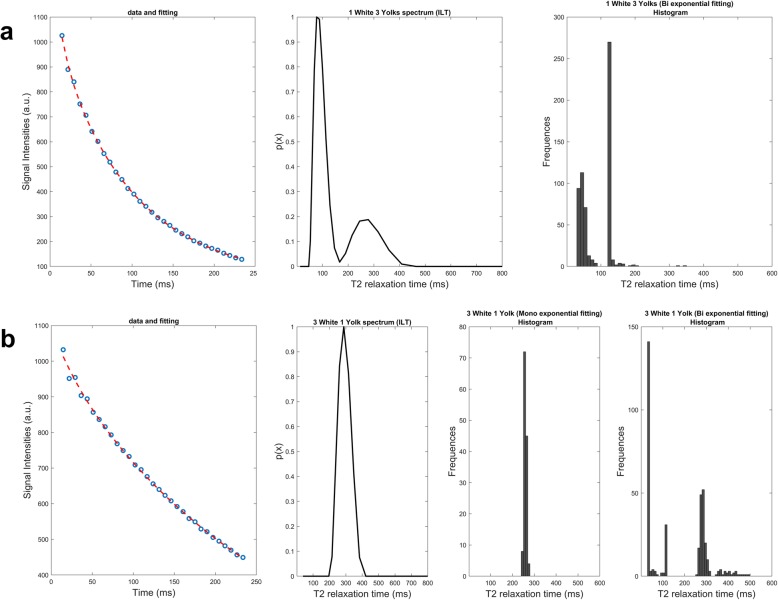
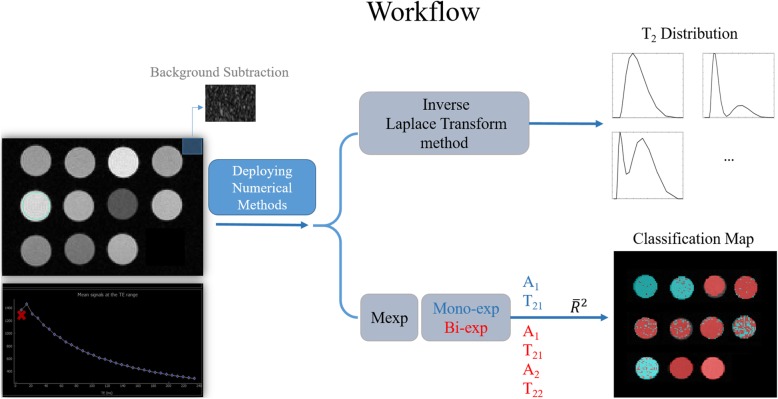
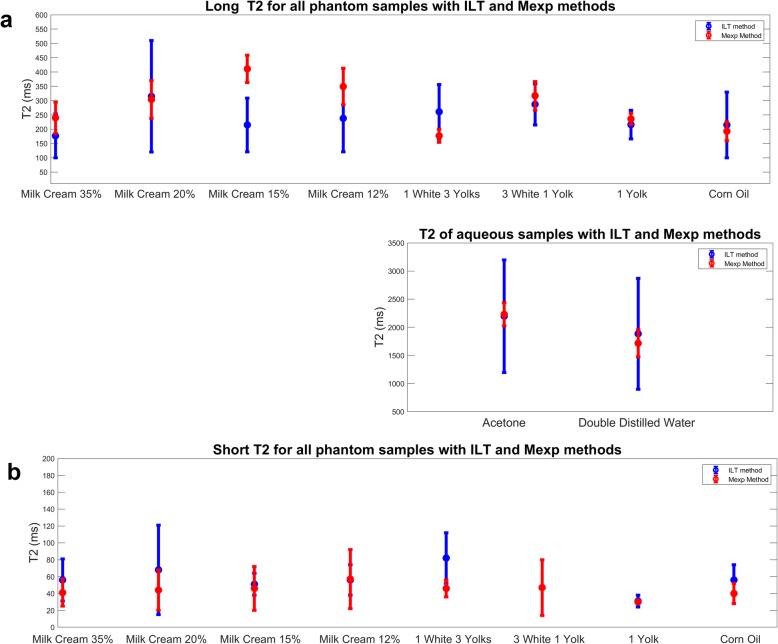
Eleven samples of aqueous, fatty and mixed composition were analysed using ILT and Mexp. The phantom was imaged using a 1.5-T system with a single slice T2 relaxometry 25-echo Carr-Purcell-Meiboom-Gill sequence in order to obtain the T2 decay curve with 25 equidistant echo times. The adjusted R goodness of fit criterion was used to determine the number of T2 components using the Mexp method on a voxel-based analysis. Comparison of mean and standard deviation of T2 values for both methods was performed by fitting a Gaussian function to the ILT resulting vector.
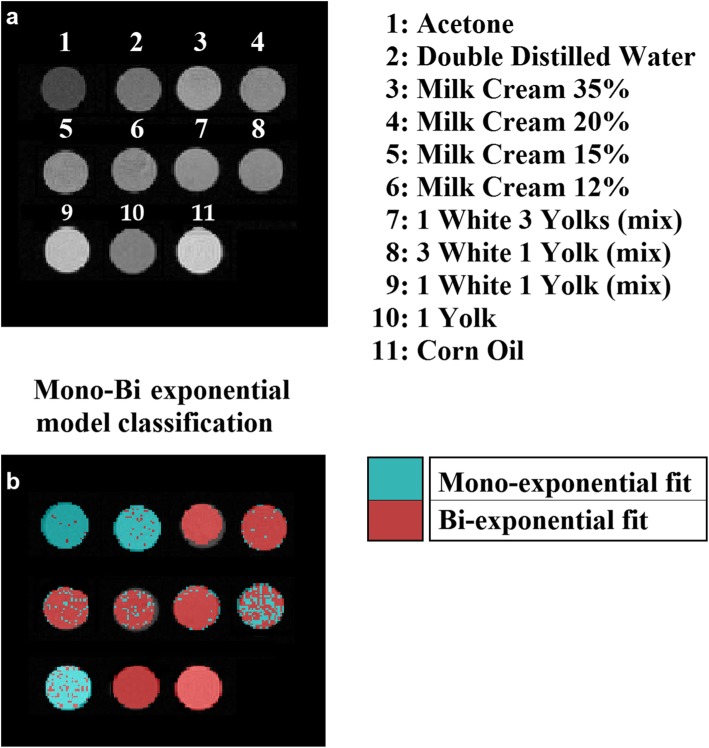
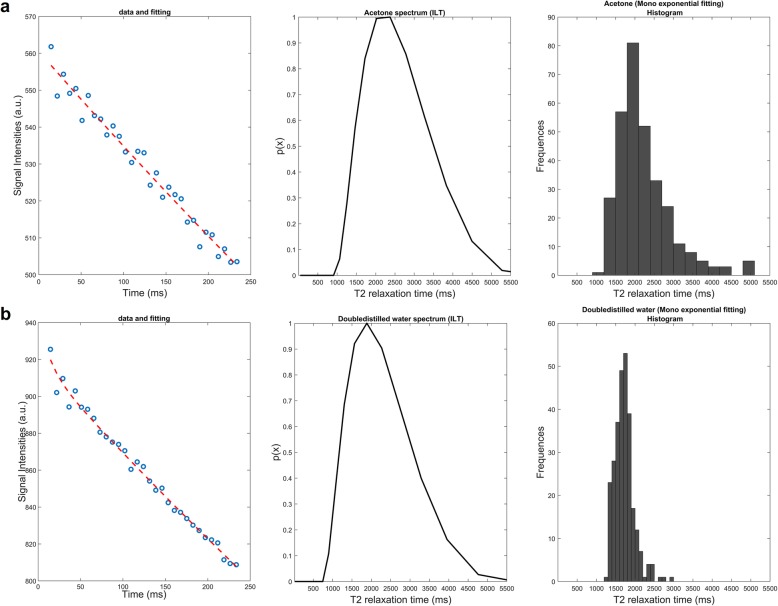
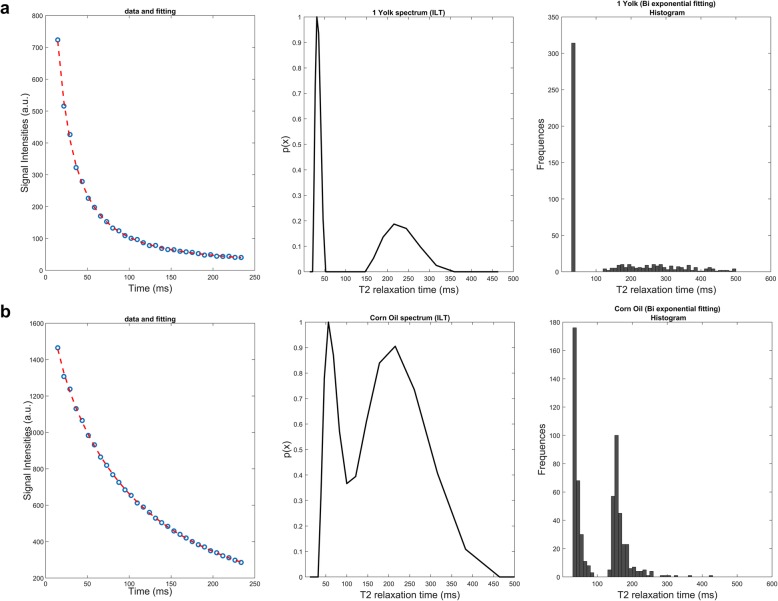
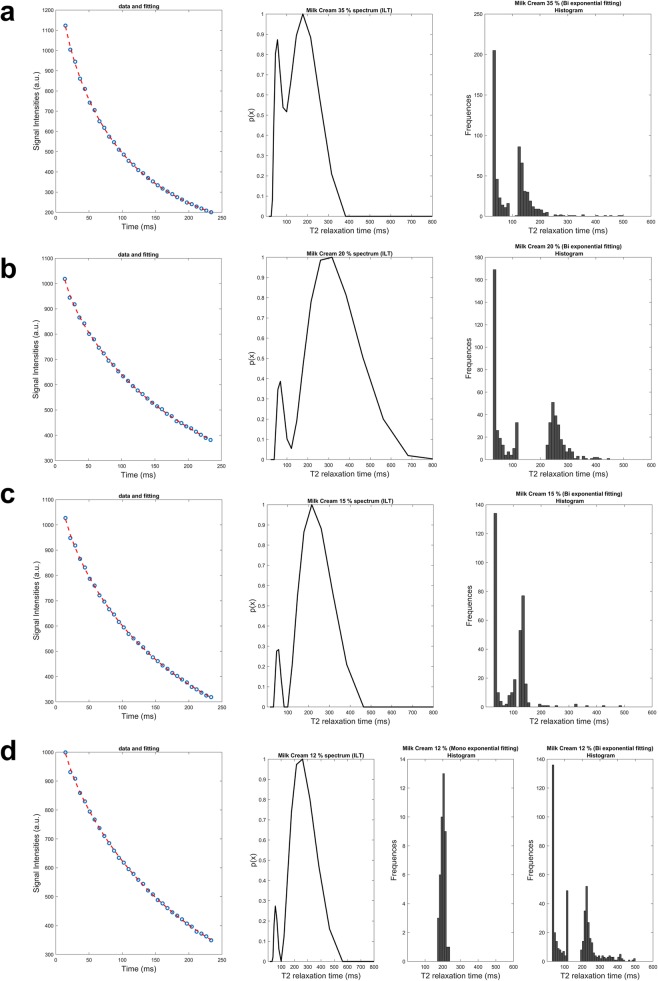
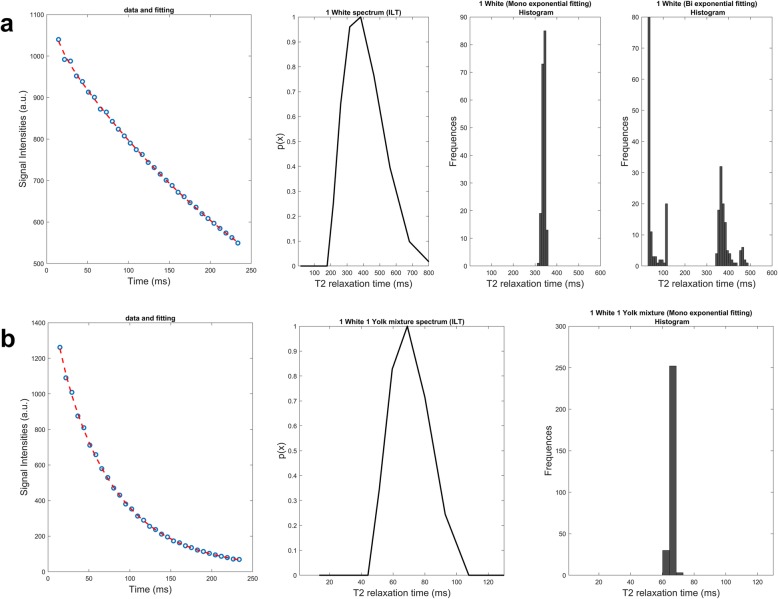
Phantom results showed pure monoexponential decay for acetone and water and pure biexponential behaviour for corn oil, egg yolk, and 35% fat milk cream, while mixtures of egg whites and yolks as well as milk creams with 12-20% fatty composition exhibit mixed monoexponential and biexponential behaviour at different fractions. The number of T2 components by the Mexp method was compared to the ILT-derived spectrum as ground truth.
Mexp analysis with the adjusted R criterion can be used for the detection of the T2 distribution of aqueous, fatty and mixed samples with the added advantage of voxelwise mapping.
逆拉普拉斯变换(ILT)是 T2 弛豫数据分析中最广泛使用的方法。本研究检查了 ILT 和拟议的多指数(Mexp 方法)在 T2 分量数量方面的定性一致性。我们对 T2 弛豫法对异质组织的体素特征进行了可行性研究。
使用 ILT 和 Mexp 分析了 11 种水相、脂肪相和混合组成的样品。使用 1.5-T 系统对幻影进行成像,采用单切片 T2 弛豫 25 回波 Carr-Purcell-Meiboom-Gill 序列,以便用 25 个等距回波时间获得 T2 衰减曲线。在体素基础分析上,使用 Mexp 方法通过调整 R 拟合优度标准确定 T2 分量的数量。通过拟合高斯函数对 ILT 结果向量进行拟合,比较两种方法的 T2 值的平均值和标准偏差。
幻影结果表明丙酮和水为纯单指数衰减,玉米油、蛋黄和 35%脂肪牛奶奶油为纯双指数行为,而蛋清和蛋黄混合物以及脂肪含量为 12-20%的牛奶奶油则表现出不同分数的混合单指数和双指数行为。通过 Mexp 方法获得的 T2 分量数量与 ILT 衍生光谱作为基准进行比较。
调整后的 R 标准的 Mexp 分析可用于检测水相、脂肪相和混合样品的 T2 分布,其优点是体素映射。