Department of Molecular Medicine & Biopharmaceutical Sciences, Graduate School of Convergence Science and Technology, Seoul National University, Seoul, Republic of Korea.
Cancer Research Institute, Seoul National University, Seoul, Republic of Korea.
PLoS One. 2020 May 7;15(5):e0232754. doi: 10.1371/journal.pone.0232754. eCollection 2020.
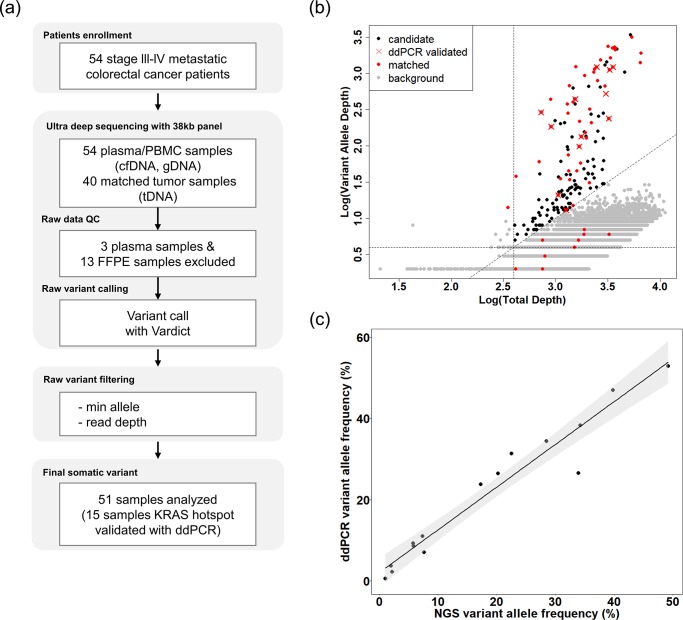
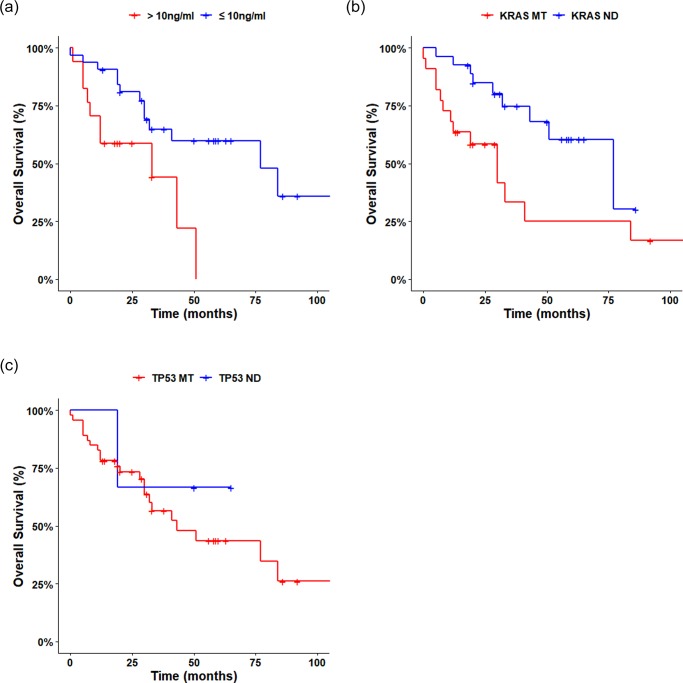
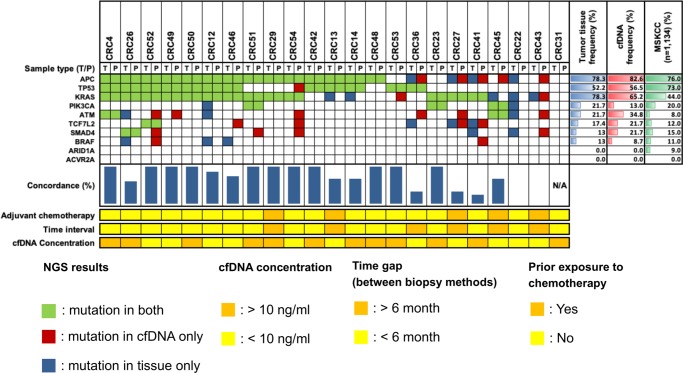
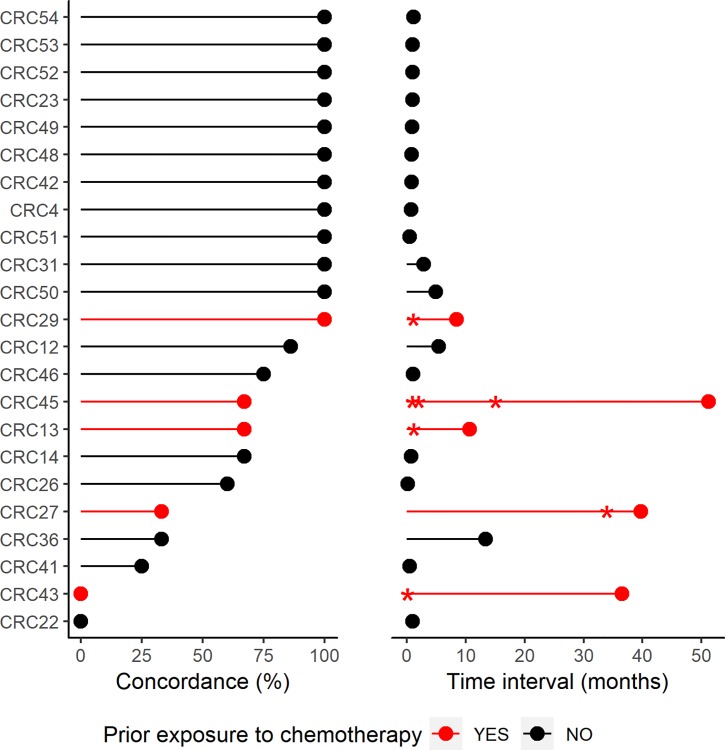
Analyzing cell-free DNA (cfDNA) as a source of circulating tumor DNA is useful for diagnosing or monitoring patients with cancer. However, the concordance between cfDNA within liquid biopsy and genomic DNA (gDNA) within tumor tissue biopsy is still under debate. To evaluate the concordance in a clinical setting, we enrolled 54 patients with metastatic colorectal cancer and analyzed their plasma cfDNA, gDNA from peripheral blood mononuclear cells (PBMC), and gDNA from available matched tumor tissues using ultra-deep sequencing targeting 10 genes (38-kb size) recurrently mutated in colorectal cancer. We first established a highly reliable cut-off value using reference material. The sensitivity of detecting KRAS hotspot mutations in plasma was calculated as 100%, according to digital droplet PCR. We could selectively detect clinically important somatic alterations with a variant allele frequency as low as 0.18%. We next compared somatic mutations of the 10 genes between cfDNA and genomic DNA from tumor tissues and observed an overall 93% concordance rate between the two types of samples. Additionally, the concordance rate of patients with the time interval between liquid biopsy and tumor tissue biopsy within 6 months and no prior exposure to chemotherapy was much higher than those without. The patients with KRAS mutant fragments in plasma had poor prognosis than those without the mutant fragments (33 months vs. 63 months; p<0.05). Consequently, the profiling with our method could achieve highly concordant results and may facilitate the surveillance of the tumor status with liquid biopsy in CRC patients.
分析游离 DNA(cfDNA)作为循环肿瘤 DNA 的来源,可用于诊断或监测癌症患者。然而,液体活检中的 cfDNA 与肿瘤组织活检中的基因组 DNA(gDNA)之间的一致性仍存在争议。为了在临床环境中评估一致性,我们招募了 54 名转移性结直肠癌患者,使用靶向结直肠癌中经常发生突变的 10 个基因(38kb 大小)的超深度测序,分析了他们的血浆 cfDNA、外周血单核细胞(PBMC)中的 gDNA 以及可用的匹配肿瘤组织中的 gDNA。我们首先使用参考材料建立了一个高度可靠的截止值。根据数字液滴 PCR,检测血浆中 KRAS 热点突变的灵敏度计算为 100%。我们可以选择性地检测具有低至 0.18%的变异等位基因频率的临床重要的体细胞改变。接下来,我们比较了 cfDNA 和肿瘤组织基因组 DNA 中的 10 个基因的体细胞突变,观察到两种类型的样本之间总体 93%的一致性率。此外,液体活检和肿瘤组织活检之间时间间隔在 6 个月内且没有先前化疗暴露的患者的一致性率明显高于没有化疗暴露的患者。血浆中 KRAS 突变片段的患者预后比没有突变片段的患者差(33 个月 vs. 63 个月;p<0.05)。因此,我们的方法可以实现高度一致的结果,并且可能有助于通过液体活检监测 CRC 患者的肿瘤状态。