Department of Biotechnology and Genetic Engineering, Kohat University of Science and Technology (KUST), Kohat, Pakistan.
Dental Material, Institute of Basic Medical Sciences, Khyber Medical University Peshawar, Peshawar, Pakistan.
BMC Med Genet. 2020 May 7;21(1):97. doi: 10.1186/s12881-020-01038-6.
Amelogenesis imperfecta (AI) is a highly heterogeneous group of hereditary developmental abnormalities which mainly affects the dental enamel during tooth development in terms of its thickness, structure, and composition. It appears both in syndromic as well as non-syndromic forms. In the affected individuals, the enamel is usually thin, soft, rough, brittle, pitted, chipped, and abraded, having reduced functional ability and aesthetics. It leads to severe complications in the patient, like early tooth loss, severe discomfort, pain, dental caries, chewing difficulties, and discoloration of teeth from yellow to yellowish-brown or creamy type. The study aimed to identify the disease-causing variant in a consanguineous family.
We recruited a consanguineous Pashtun family of Pakistani origin. Exome sequencing analysis was followed by Sanger sequencing to identify the pathogenic variant in this family.
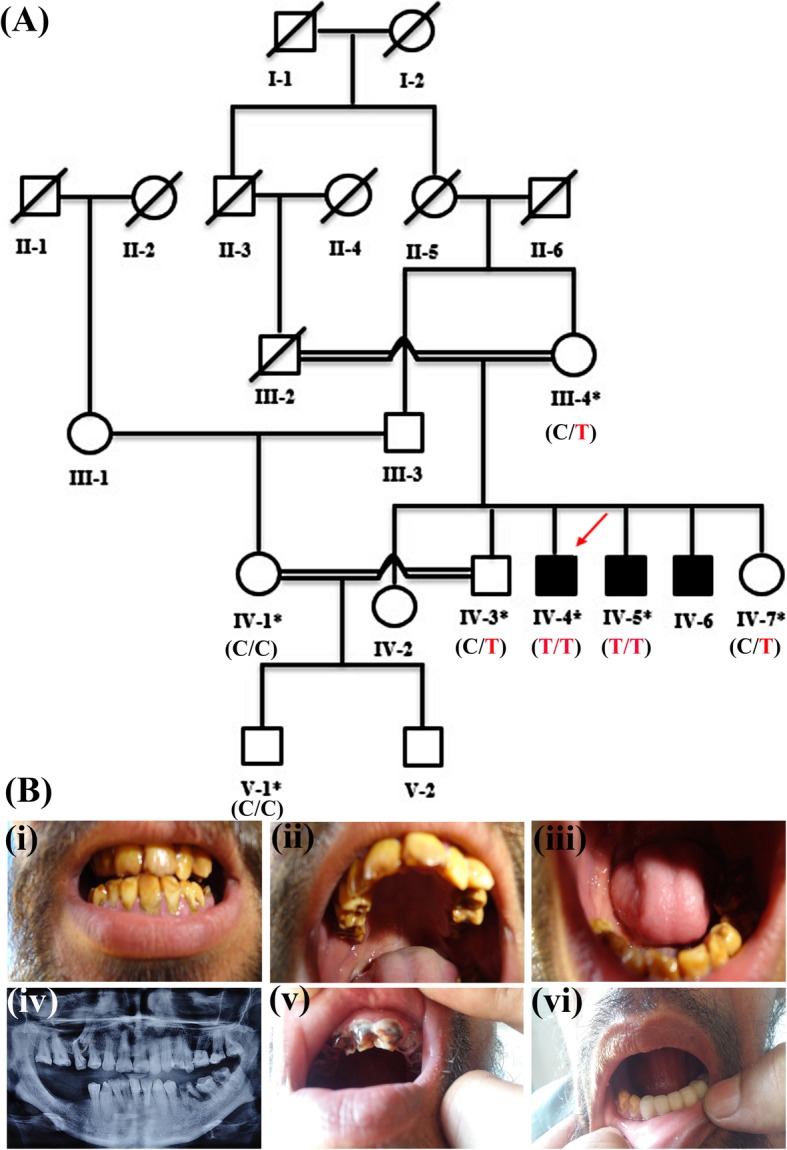
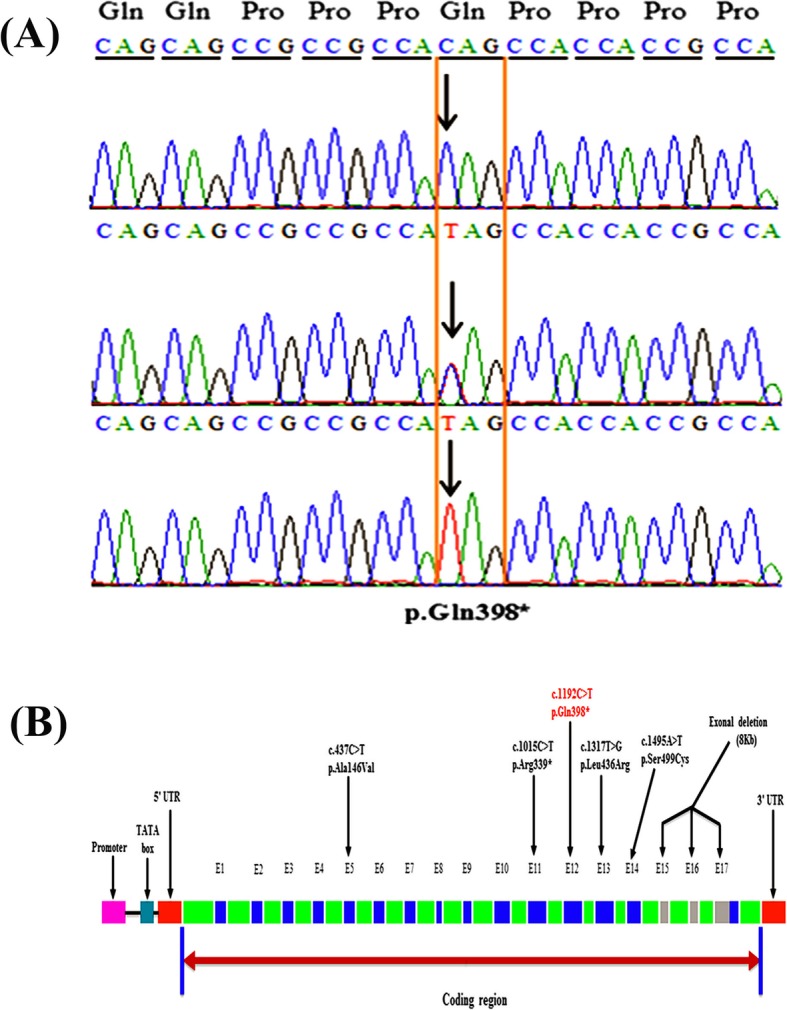
Clinical analysis revealed hypomaturation AI having generalized yellow-brown or creamy type of discoloration in affected members. We identified a novel nonsense sequence variant c.1192C > T (p.Gln398*) in exon-12 of SLC24A4 by using exome sequencing. Later, its co-segregation within the family was confirmed by Sanger sequencing. The human gene mutation database (HGMD, 2019) has a record of five pathogenic variants in SLC24A4, causing AI phenotype.
This nonsense sequence variant c.1192C > T (p.Gln398*) is the sixth disease-causing variant in SLC24A4, which extends its mutation spectrum and confirms the role of this gene in the morphogenesis of human tooth enamel. The identified variant highlights the critical role of SLC24A4 in causing a rare AI type in humans.
釉质发育不全(AI)是一组高度异质性的遗传性发育异常,主要影响牙齿发育过程中牙釉质的厚度、结构和成分。它既出现在综合征形式中,也出现在非综合征形式中。在受影响的个体中,牙釉质通常较薄、柔软、粗糙、易碎、有凹坑、剥落和磨损,功能和美观性降低。这会导致患者出现严重的并发症,如早期牙齿脱落、严重不适、疼痛、龋齿、咀嚼困难和牙齿变色,从黄色变为黄棕色或奶油色。本研究旨在鉴定一个近亲结婚的家族中的致病变异。
我们招募了一个来自巴基斯坦的近亲结婚的普什图家族。对该家族进行外显子组测序分析,然后进行 Sanger 测序以鉴定致病变异。
临床分析显示,该家族的成员存在低成熟型釉质发育不全,表现为普遍的黄棕色或奶油色变色。我们通过外显子组测序发现 SLC24A4 外显子 12 中的一个新型无义序列变异 c.1192C>T(p.Gln398*)。随后,通过 Sanger 测序确认了该变异在家族内的共分离。人类基因突变数据库(HGMD,2019)记录了 SLC24A4 中的五个致病变异,导致 AI 表型。
这个无义序列变异 c.1192C>T(p.Gln398*)是 SLC24A4 的第六个致病变异,扩展了其突变谱,并证实了该基因在人类牙釉质形态发生中的作用。所鉴定的变异强调了 SLC24A4 在导致人类罕见 AI 类型中的关键作用。