Biology Department, The University of North Carolina Asheville, One University Heights, Asheville, North Carolina, United States of America.
Asheville Ecological Services Office, United States Fish and Wildlife Service, Asheville, North Carolina, United States of America.
PLoS One. 2020 May 8;15(5):e0232835. doi: 10.1371/journal.pone.0232835. eCollection 2020.
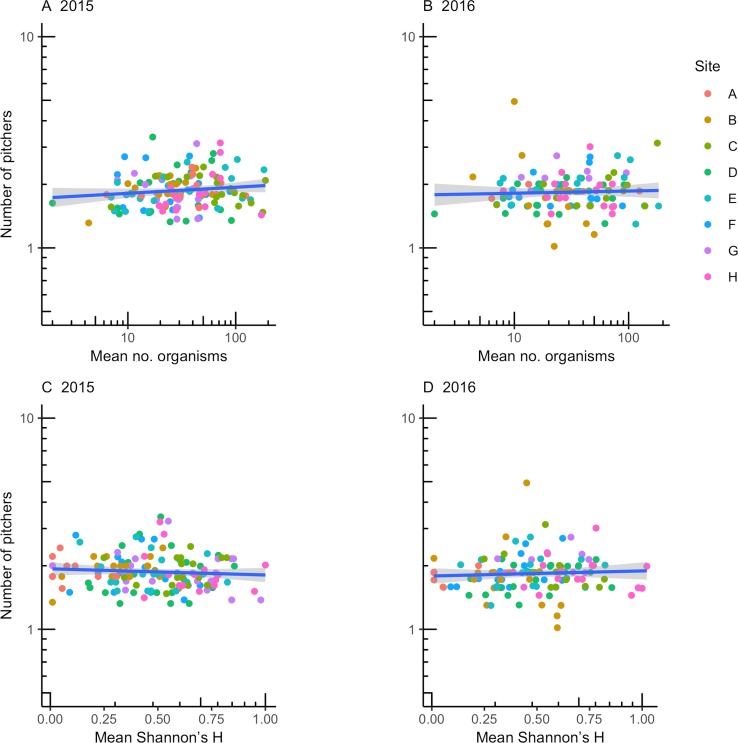
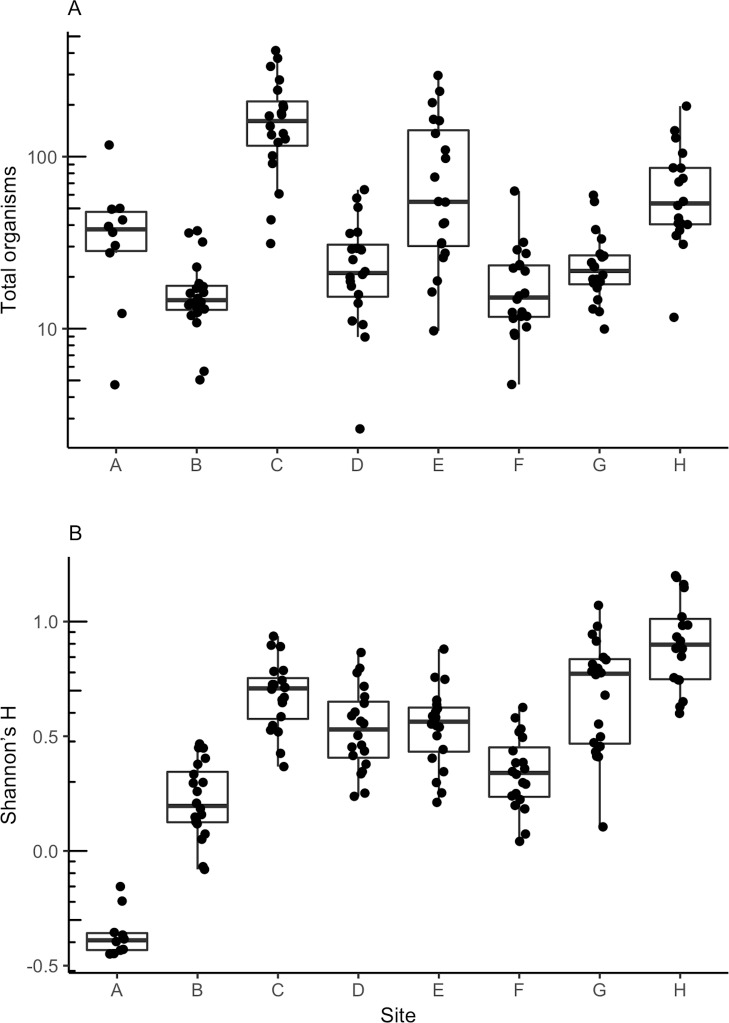
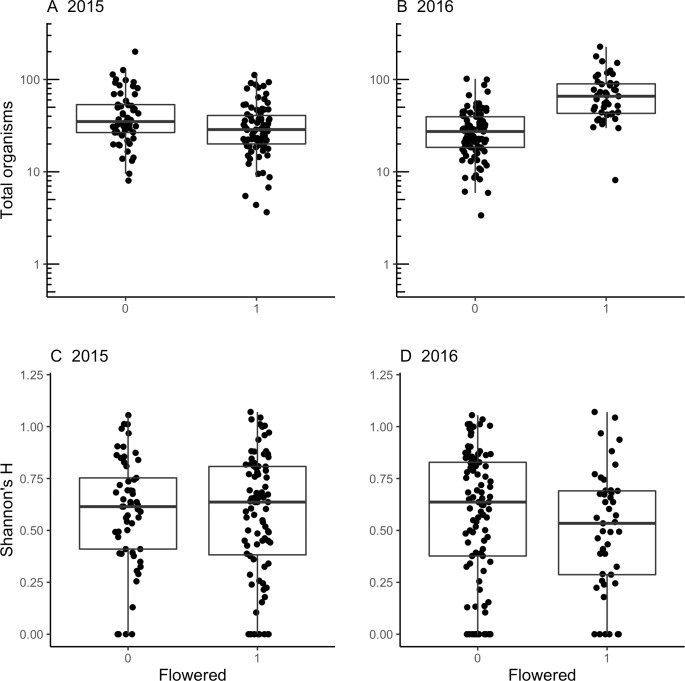
Many plant species harbor communities of symbionts that release nutrients used by their host plants. However, the importance of these nutrients to plant growth and reproductive effort is not well understood. Here, we evaluate the relationship between the communities that colonize pitcher plant phytotelmata and the pitcher plants' vegetative growth and flower production to better understand the symbiotic role played by phytotelma communities. We focus on the mountain variety purple pitcher plant (Sarracenia purpurea var. montana), which occurs in small and isolated populations in Western North Carolina. We found that greater symbiont community diversity is associated with higher flower production the following season. We then examined geographic variation in communities and found that smaller plant populations supported less diverse symbiont communities. We relate our observations to patterns of community diversity predicted by community ecology theory.
许多植物物种都拥有共生体群落,这些共生体释放出宿主植物所需要的养分。然而,这些养分对植物生长和繁殖努力的重要性还不是很清楚。在这里,我们评估了殖民猪笼草水罐的群落与猪笼草的营养生长和花产量之间的关系,以更好地理解水罐群落所扮演的共生角色。我们专注于山地品种紫猪笼草(Sarracenia purpurea var. montana),它存在于北卡罗来纳州西部的小而孤立的种群中。我们发现,下一季共生体群落的多样性与更高的花产量有关。然后,我们检查了群落的地理变异性,并发现较小的植物种群支持的共生体群落多样性较低。我们将我们的观察结果与群落生态学理论预测的群落多样性模式联系起来。