Baek Seung-Yeol, Kwak Seung-Yeon, Kim Seoung-Tae, Hwang Kyu Young, Koo Hyun, Son Won-Joon, Choi Byoungki, Kim Sunghan, Choi Hyeonho, Baik Mu-Hyun
Department of Chemistry, Korea Advanced Institute of Science and Technology (KAIST), Daejeon, 34141, Republic of Korea.
Center for Catalytic Hydrocarbon Functionalizations, Institute for Basic Science (IBS), Daejeon, 34141, Republic of Korea.
Nat Commun. 2020 May 8;11(1):2292. doi: 10.1038/s41467-020-16091-1.
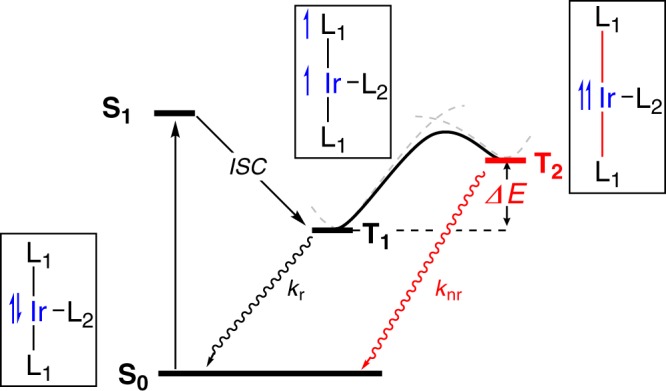
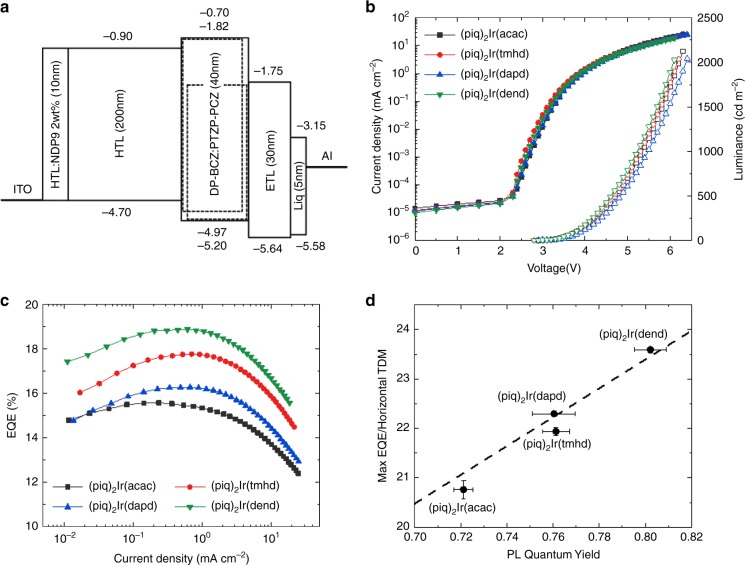
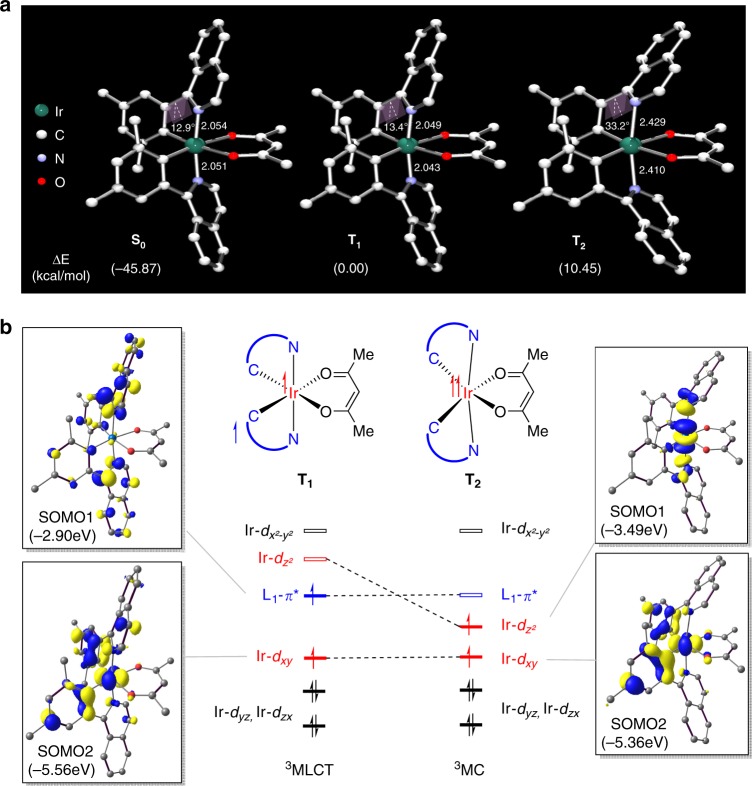
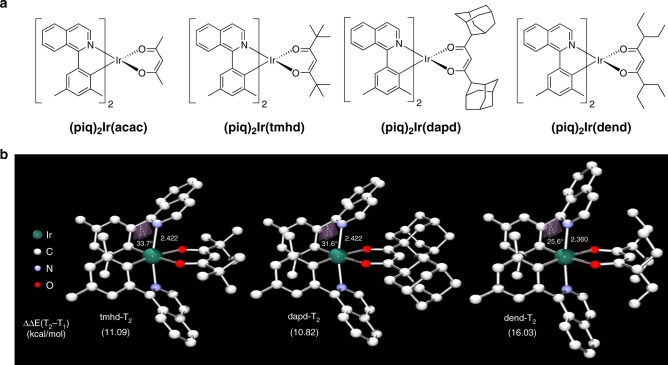
The excellent contrast ratio, visibility, and advantages in producing thin and light displays let organic light emitting diodes change the paradigm of the display industry. To improve future display technologies, higher electroluminescence efficiency is needed. Herein, the detailed study of the non-radiative decay mechanism employing density functional theory calculations is carried out and a simple, general strategy for the design of the ancillary ligand is formulated. It is shown that steric bulk properly directed towards the phenylisoquinoline ligands can significantly reduce the non-radiative decay rate.
优异的对比度、可视性以及在制造轻薄显示屏方面的优势,使得有机发光二极管改变了显示行业的模式。为了改进未来的显示技术,需要更高的电致发光效率。在此,利用密度泛函理论计算对非辐射衰减机制进行了详细研究,并制定了一种简单通用的辅助配体设计策略。结果表明,适当地朝向苯基异喹啉配体的空间位阻可以显著降低非辐射衰减速率。