Institute of Cardiovascular and Medical Sciences, University of Glasgow, Glasgow, Scotland, United Kingdom.
Institute of Cardiovascular and Medical Sciences, University of Glasgow, Glasgow, Scotland, United Kingdom.
Can J Cardiol. 2020 May;36(5):694-705. doi: 10.1016/j.cjca.2020.03.001. Epub 2020 Mar 5.
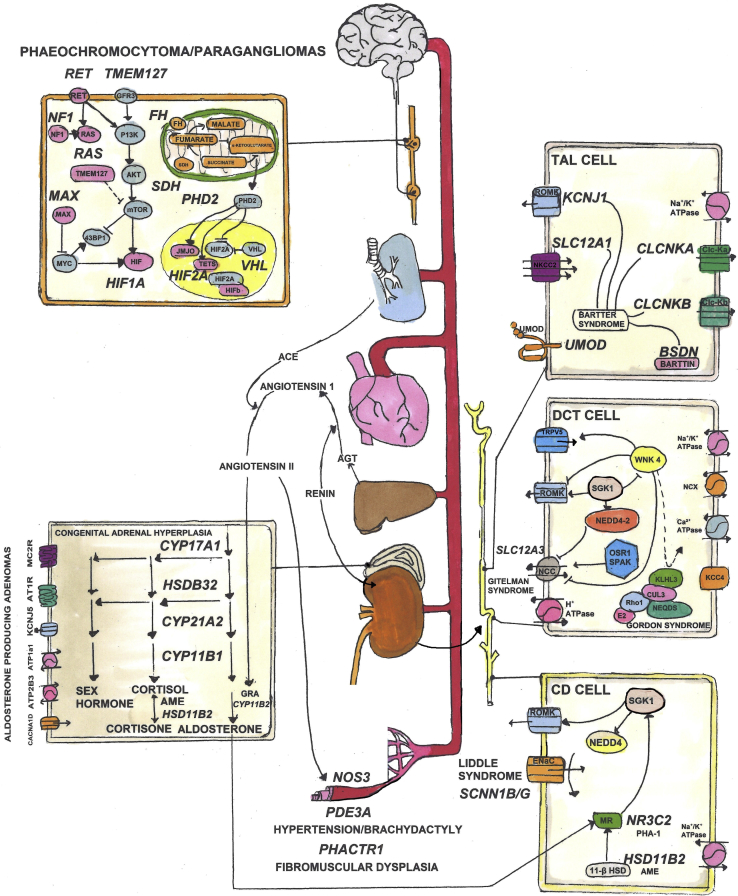
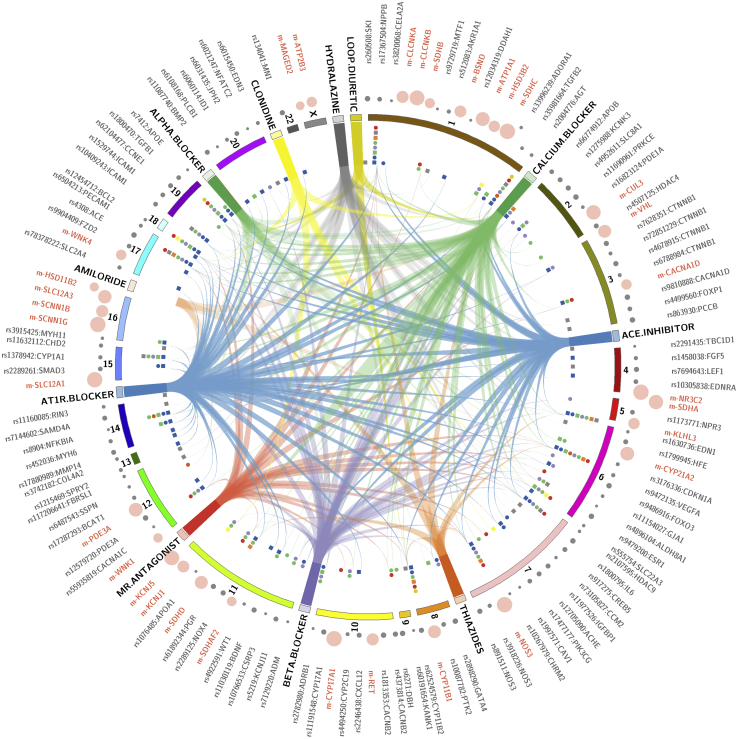
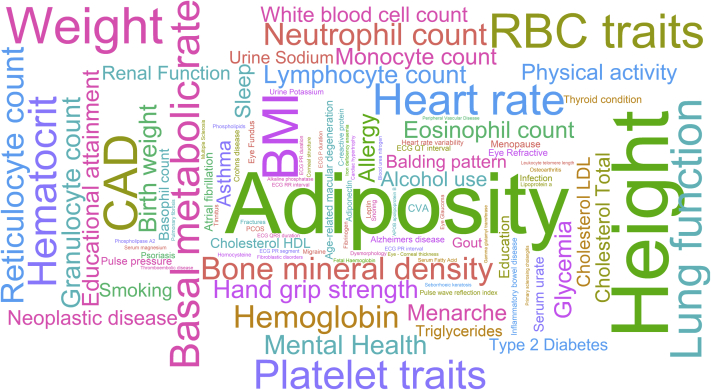
The genetic architecture of blood pressure (BP) now includes more than 30 genes, with rare mutations resulting in inherited forms of hypertension or hypotension, and 1477 common single-nucleotide polymorphisms (SNPs). These signify the heterogeneity of the BP phenotype and support the mosaic theory of hypertension. The majority of monogenic syndromes involve the renin-angiotensin-aldosterone system and the adrenal glucocorticoid pathway, and a smaller fraction are due to rare neuroendocrine tumours of the adrenal glands and the sympathetic and parasympathetic paraganglia. Somatic mutations in genes coding for ion channels (KCNJ5 and CACNA1D) and adenosine triphosphatases (ATP1A1 and ATP2B3) highlight the central role of calcium signalling in autonomous aldosterone production by the adrenal gland. The per-SNP BP effect is small for SNPs according to genome-wide association studies (GWAS), and all of the GWAS-identified BP SNPs explain ∼ 27% of the 30%-50% estimated heritability of BP. Uromodulin is a novel pathway identified by GWAS, and it has now progressed to a genotype-directed clinical trial. The majority of the GWAS-identified BP SNPs show pleiotropic associations, and unravelling those signals and underpinning biological pathways offers potential opportunities for drug repurposing. The GWAS signals are predominantly from Europe-centric studies with other ancestries underrepresented, however, limiting the generalisability of the findings. In this review, we leverage the burgeoning list of polygenic and monogenic variants associated with BP regulation along with phenome-wide studies in the context of the mosaic theory of hypertension, and we explore potential translational aspects that underlie different hypertension subtypes.
血压的遗传结构现在包括 30 多个基因,罕见的突变导致遗传性高血压或低血压,以及 1477 个常见的单核苷酸多态性(SNP)。这些标志着血压表型的异质性,并支持高血压的镶嵌理论。大多数单基因综合征涉及肾素-血管紧张素-醛固酮系统和肾上腺糖皮质激素途径,而一小部分是由于肾上腺和交感神经副神经节的罕见神经内分泌肿瘤。编码离子通道(KCNJ5 和 CACNA1D)和三磷酸腺苷酶(ATP1A1 和 ATP2B3)的基因中的体细胞突变突出了钙信号在肾上腺自主产生醛固酮中的核心作用。根据全基因组关联研究(GWAS),SNP 对单核苷酸多态性的血压影响较小,所有 GWAS 确定的血压 SNP 解释了血压估计遗传率的 30%-50%的约 27%。尿调蛋白是通过 GWAS 发现的新途径,它现在已经进展到一个基于基因型的临床试验。大多数 GWAS 确定的血压 SNP 显示出多效性关联,揭示这些信号和支持生物学途径为药物再利用提供了潜在的机会。GWAS 信号主要来自以欧洲为中心的研究,其他血统代表性不足,限制了研究结果的普遍性。在这篇综述中,我们利用与血压调节相关的多基因和单基因变异的不断增加的列表,以及高血压镶嵌理论背景下的全表型研究,探讨了潜在的转化方面,这些方面是不同高血压亚型的基础。