Guan Yue, Kraus Sean G, Quaney Michael J, Daniels Mark A, Mitchem Jonathan B, Teixeiro Emma
Department of Molecular Microbiology and Immunology, School of Medicine, University of Missouri, Columbia, MO, United States.
Department of Surgery, School of Medicine, University of Missouri, Columbia, MO, United States.
Front Oncol. 2020 Apr 23;10:586. doi: 10.3389/fonc.2020.00586. eCollection 2020.
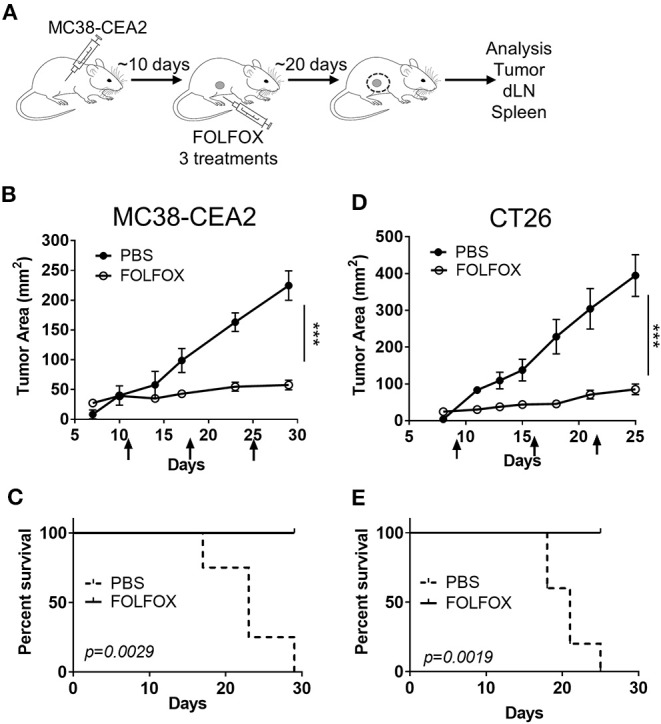
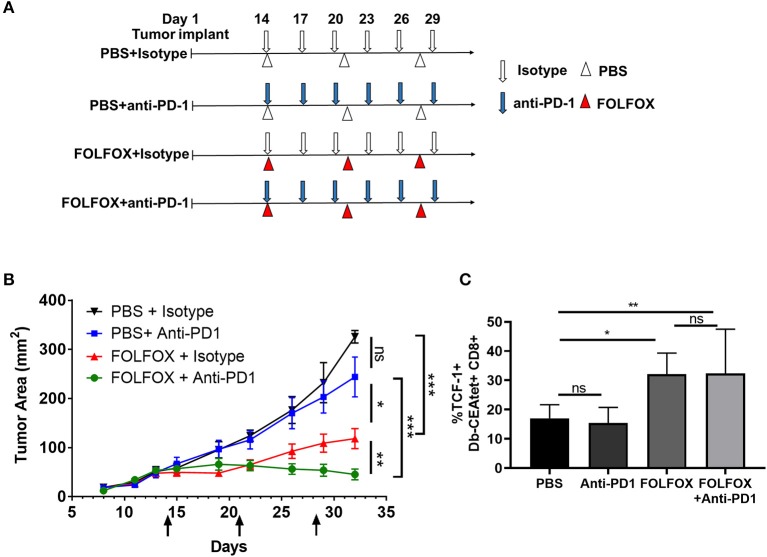
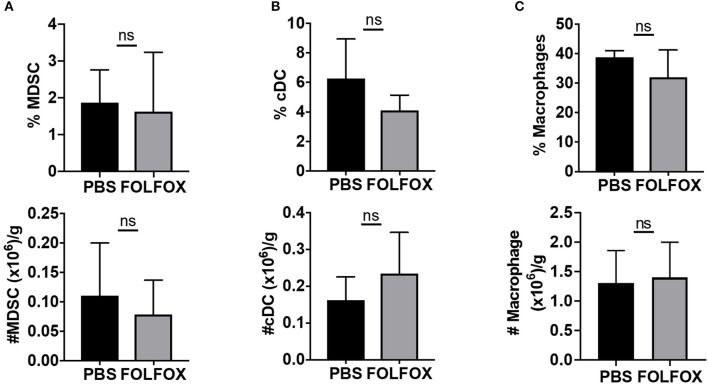
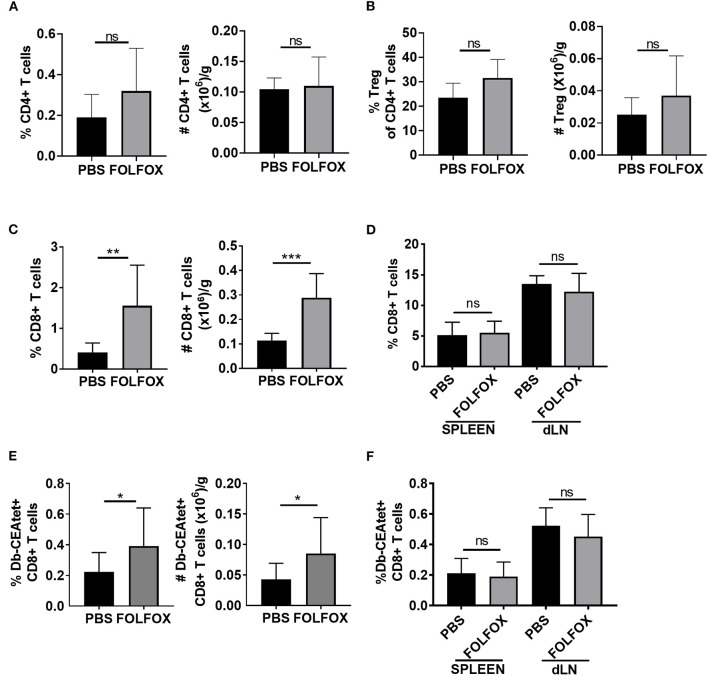
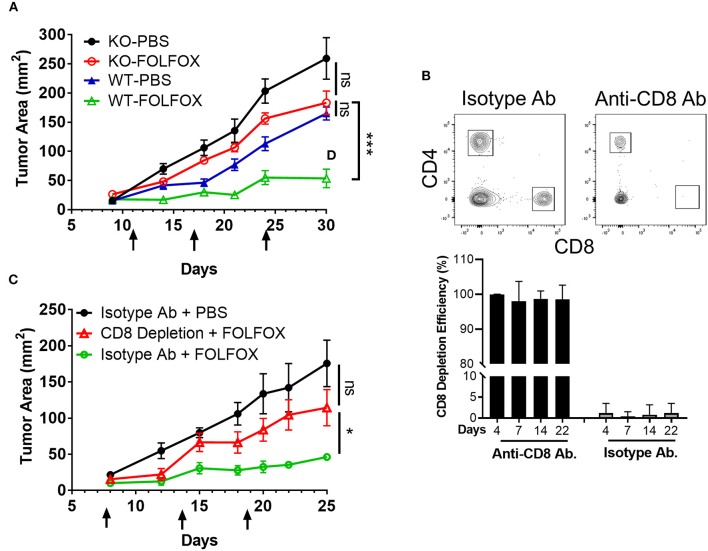
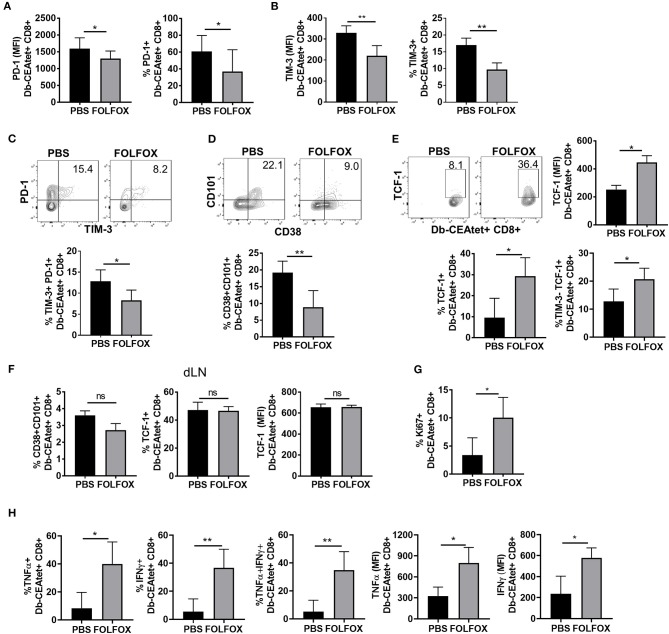
Colorectal cancer (CRC) is the third most common malignancy worldwide. The presence of CD8 tumor-infiltrating T lymphocytes (TILs) is associated with improved prognosis and therapeutic response in CRC patients. FOLFOX chemotherapy is a standard first-line treatment for patients with CRC. Yet, the effect of FOLFOX on TILs is poorly understood. Specifically, it is unclear whether FOLFOX therapy impacts the phenotype and functionality of tumor antigen specific TILs. Immune checkpoint blockade (ICB) has significantly improved clinical outcome of cancer treatment but has shown limited efficacy in CRC patients. Recently, ICB efficiency has been linked to reinvigoration of T cells with a non-terminally dysfunctional phenotype. Here, we investigate the effect of FOLFOX on CD8 T cell tumor accumulation, phenotype and function and tested the combination of FOLFOX and ICB to improve tumor regression. A mouse model of CRC expressing a human tumor antigen was used to study the effect of FOLFOX on tumor growth and TILs phenotype and function. Tetramers were used to identify and monitor phenotype and function of tumor specific TILs. The phenotype and function of TILs were compared between FOLFOX and control treatment through flow cytometry, depletion and stimulation. Furthermore, the anti-tumor effect of the single drug or combined therapy with anti-PD1 were also assessed. We show that FOLFOX treatment effectively controlled tumor burden and this was dependent on CD8 T cells. FOLFOX enabled TILs to remain in a functional differentiation state characterized by lower levels of inhibitory receptors PD-1 and TIM-3 and a CD38CD101TIM-3TCF-1 phenotype. Consistent with this, TILs from FOLFOX treated tumors exhibited higher effector function. Importantly, while anti-PD-1 treatment alone had no significant effect on tumor burden, FOLFOX and PD-1 checkpoint blockade combination showed significant tumor control. FOLFOX treatment impacts the phenotype and function of TILs making them more responsive to checkpoint blockade. This study highlights the importance of combining chemotherapy and ICB to optimize treatment efficacy in patients with colorectal cancer.
结直肠癌(CRC)是全球第三大常见恶性肿瘤。CD8肿瘤浸润性T淋巴细胞(TILs)的存在与CRC患者预后改善及治疗反应相关。FOLFOX化疗是CRC患者的标准一线治疗方案。然而,FOLFOX对TILs的影响尚不清楚。具体而言,FOLFOX治疗是否会影响肿瘤抗原特异性TILs的表型和功能尚不明确。免疫检查点阻断(ICB)显著改善了癌症治疗的临床结果,但在CRC患者中疗效有限。最近,ICB疗效与具有非终末功能失调表型的T细胞再活化有关。在此,我们研究FOLFOX对CD8 T细胞肿瘤聚集、表型和功能的影响,并测试FOLFOX与ICB联合使用以改善肿瘤消退情况。使用表达人类肿瘤抗原的CRC小鼠模型来研究FOLFOX对肿瘤生长以及TILs表型和功能的影响。四聚体用于鉴定和监测肿瘤特异性TILs的表型和功能。通过流式细胞术、清除和刺激比较FOLFOX与对照治疗之间TILs的表型和功能。此外,还评估了单药或与抗PD-1联合治疗的抗肿瘤效果。我们发现FOLFOX治疗有效控制了肿瘤负荷,且这依赖于CD8 T细胞。FOLFOX使TILs保持在功能分化状态,其特征为抑制性受体PD-1和TIM-3水平较低以及具有CD38CD101TIM-3TCF-1表型。与此一致,来自接受FOLFOX治疗肿瘤的TILs表现出更高的效应功能。重要的是,虽然单独使用抗PD-1治疗对肿瘤负荷没有显著影响,但FOLFOX与PD-1检查点阻断联合使用显示出显著的肿瘤控制效果。FOLFOX治疗影响TILs的表型和功能,使其对检查点阻断更敏感。本研究强调了联合化疗和ICB以优化结直肠癌患者治疗疗效的重要性。