Blagodatskikh Konstantin, Romaniuk Dmitrii, Malko Dmitry
Molecular Oncology Laboratory, Pirogov Russian National Research Medical University, Moscow, Russia.
Laboratory for Transplantation Immunology, National Research Center for Hematology, Moscow, Russia.
Front Bioeng Biotechnol. 2020 Apr 22;8:353. doi: 10.3389/fbioe.2020.00353. eCollection 2020.
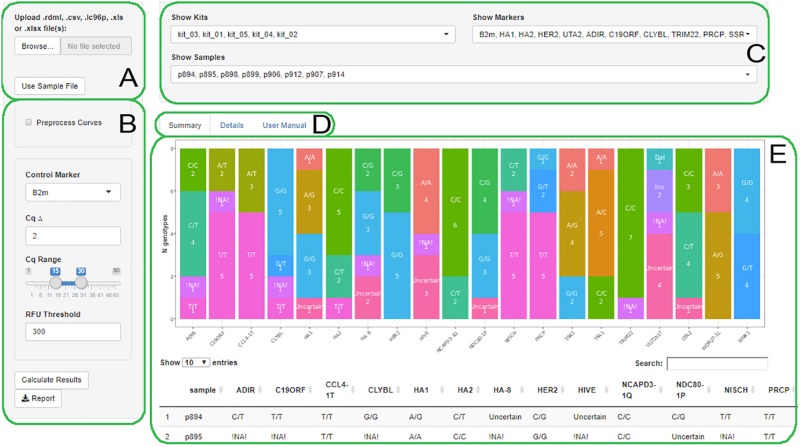
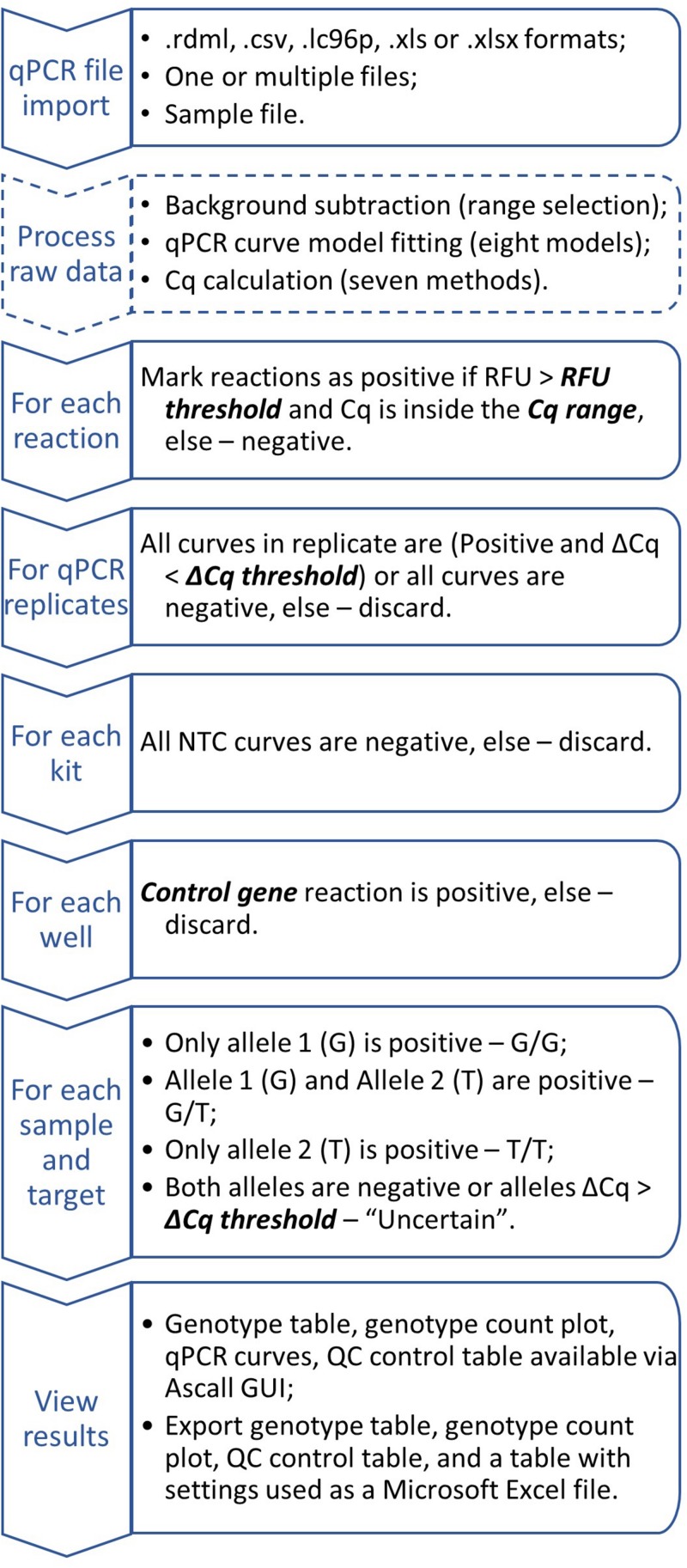
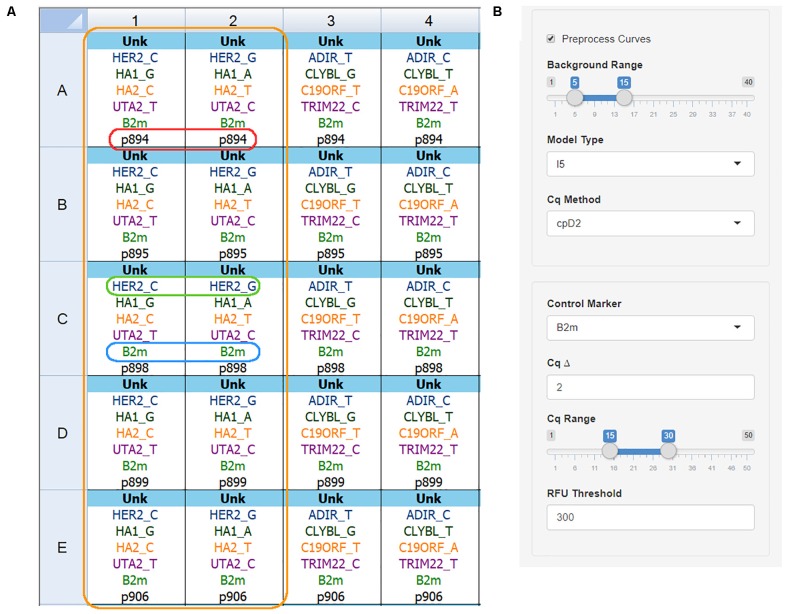
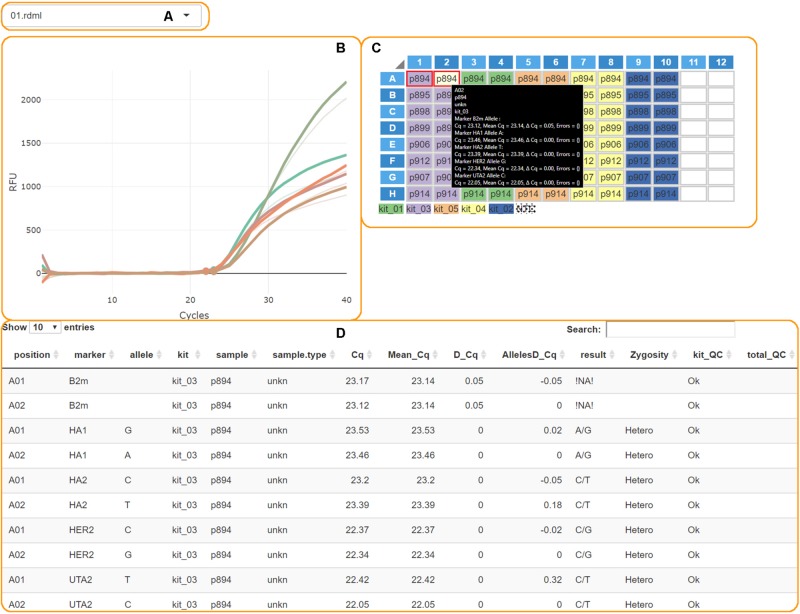
Minor histocompatibility antigens (MiHA) are critical elements for the immune response after allogeneic hematopoietic stem cell transplantation. They may cause both beneficial and detrimental effects in forms of graft-versus-tumor and graft-versus-host accordingly. MiHAs originate from donor-recipient discrepancies in single nucleotide polymorphisms, insertions, and deletions. To determine the genetic mismatches between a donor and a recipient, we have implemented a real-time PCR method in conjunction with allele-specific primers (AS-qPCR). The new approach allows for multiplexing up to 480 reactions per 96 well plate and differs from common qPCR based genotyping methods. Earlier, we have confirmed and published the AS-qPCR method, but standard software for qPCR analysis does not suit AS-qPCR data. Here we fill this gap and describe AScall - the interactive web application for the proposed genotyping method. With a convenient interface mimicking a regular qPCR machine interface, our tool allows batch qPCR data import via universal RDML format, amplification curves preprocessing, quality control, sample genotype calling, detailed results visualization, and report generation. We show the use of AScall for SNP and indel genotyping for the MiHA study, but anyone can use the application for an accordingly designed AS-qPCR experiment of their own. Genotyping was done manually and with AScall for 96 genomic DNA samples. AScall processed 4,800 qPCRs in 1.5 min, with only two genotype mismatches compared to manual analysis. It took 3 h for an experienced researcher for manual analysis. Source code is freely available for download at https://github.com/kablag/AScall. The tool is freely available on the web at the AScall server http://shtest.evrogen.net/AScall.
次要组织相容性抗原(MiHA)是异基因造血干细胞移植后免疫反应的关键因素。它们可能分别以移植物抗肿瘤和移植物抗宿主的形式产生有益和有害的影响。MiHA源于单核苷酸多态性、插入和缺失方面的供体 - 受体差异。为了确定供体和受体之间的基因错配,我们采用了一种结合等位基因特异性引物的实时PCR方法(AS-qPCR)。这种新方法允许在每个96孔板中进行多达480个反应的多重检测,并且与基于qPCR的常见基因分型方法不同。此前,我们已经证实并发表了AS-qPCR方法,但用于qPCR分析的标准软件并不适用于AS-qPCR数据。在这里,我们填补了这一空白,并描述了AScall——一种用于所提出的基因分型方法的交互式网络应用程序。通过模仿常规qPCR机器界面的便捷界面,我们的工具允许通过通用的RDML格式批量导入qPCR数据、进行扩增曲线预处理、质量控制、样本基因型判定、详细结果可视化以及报告生成。我们展示了AScall在MiHA研究的SNP和插入缺失基因分型中的应用,但任何人都可以将该应用程序用于他们自己设计的相应AS-qPCR实验。对96个基因组DNA样本进行了手动基因分型和使用AScall进行基因分型。AScall在1.5分钟内处理了4800个qPCR反应,与手动分析相比,只有两个基因型错配。一名经验丰富的研究人员进行手动分析需要3小时。源代码可在https://github.com/kablag/AScall上免费下载。该工具可在AScall服务器http://shtest.evrogen.net/AScall上免费在线使用。