Ghiglione Yanina, Polo María Laura, Urioste Alejandra, Rhodes Ajantha, Czernikier Alejandro, Trifone César, Quiroga María Florencia, Sisto Alicia, Patterson Patricia, Salomón Horacio, Rolón María José, Bakkour Sonia, Lewin Sharon R, Turk Gabriela, Laufer Natalia
CONICET-Universidad de Buenos Aires, Instituto de Investigaciones Biomédicas en Retrovirus y Sida (INBIRS), Buenos Aires, Argentina.
The Peter Doherty Institute for Infection and Immunity, The University of Melbourne and Royal Melbourne Hospital, Melbourne, Victoria, Australia.
Open Forum Infect Dis. 2020 Apr 2;7(5):ofaa115. doi: 10.1093/ofid/ofaa115. eCollection 2020 May.
Hepatitis C virus (HCV) coinfection among people with human immunodeficiency virus (HIV) might perturb immune function and HIV persistence. We aimed to evaluate the impact of HCV clearance with direct-acting antivirals (DAAs) on immune activation and HIV persistence in HIV/HCV-coinfected individuals on antiretroviral therapy (ART).
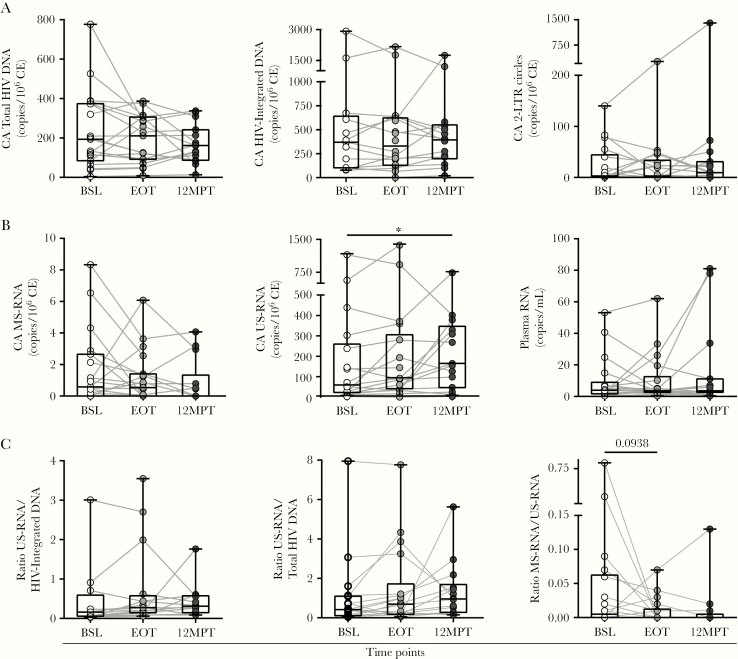
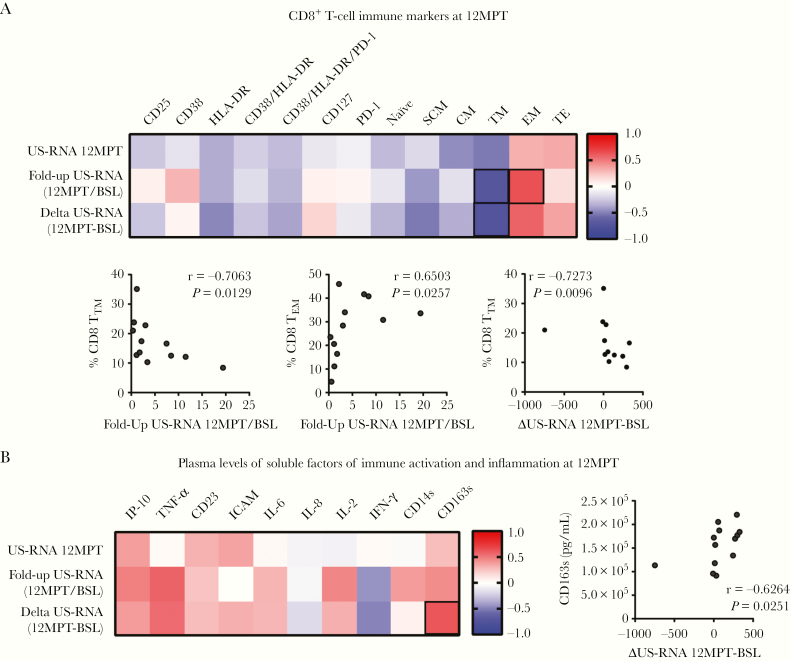
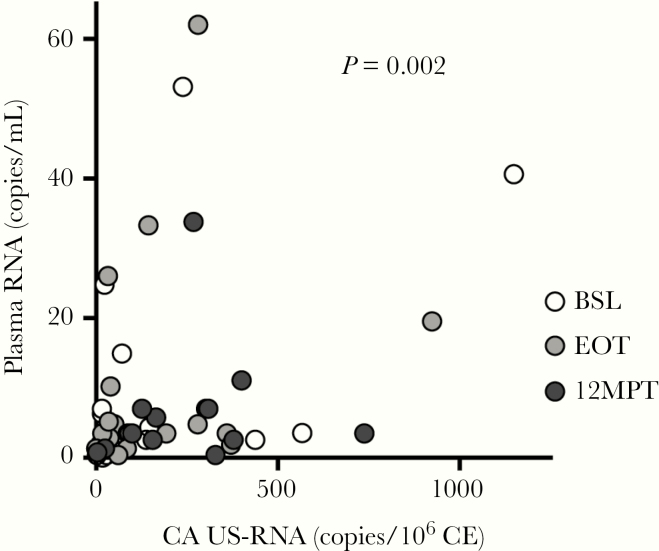
In a prospective observational study, ART-treated participants with HIV/HCV coinfection received sofosbuvir/daclatasvir ± ribavirin (n = 19). Blood samples were collected before DAA therapy, at the end of treatment, and 12 months after DAA termination (12MPT). T- and natural killer (NK)-cell phenotype, soluble plasma factors, cell-associated (CA)-HIV deoxyribonucleic acid (DNA) forms (total, integrated, 2LTR), CA-unspliced (US) and multiple-spliced ribonucleic acid (RNA), and plasma HIV RNA were evaluated.
Hepatitis C virus clearance was associated with (1) a downmodulation of activation and exhaustion markers in CD4, CD8 T, and NK cells together with (2) decreased plasma levels of Interferon gamma-induced protein 10 (IP10), interleukin-8 (IL-8), soluble (s)CD163 and soluble intercellular adhesion molecule (sICAM). Cell-associated US HIV RNA was significantly higher at 12MPT compared to baseline, with no change in HIV DNA or plasma RNA.
Elimination of HCV in HIV/HCV-coinfected individuals alters immune function and the transcriptional activity of latently infected cells. This report provides insights into the effects of HCV coinfection in HIV persistence and regards coinfected subjects as a population in which HIV remission might prove to be more challenging.
丙型肝炎病毒(HCV)在人类免疫缺陷病毒(HIV)感染者中合并感染可能会扰乱免疫功能和HIV的持续存在。我们旨在评估使用直接抗病毒药物(DAA)清除HCV对接受抗逆转录病毒治疗(ART)的HIV/HCV合并感染个体的免疫激活和HIV持续存在的影响。
在一项前瞻性观察性研究中,接受ART治疗的HIV/HCV合并感染参与者接受索磷布韦/达卡他韦±利巴韦林治疗(n = 19)。在DAA治疗前、治疗结束时以及DAA停药后12个月(12MPT)采集血样。评估T细胞和自然杀伤(NK)细胞表型、可溶性血浆因子、细胞相关(CA)-HIV脱氧核糖核酸(DNA)形式(总量、整合型、2LTR)、CA-未剪接(US)和多剪接核糖核酸(RNA)以及血浆HIV RNA。
丙型肝炎病毒清除与(1)CD4、CD8 T和NK细胞中激活和耗竭标志物的下调相关,同时(2)血浆中γ干扰素诱导蛋白10(IP10)、白细胞介素-8(IL-8)、可溶性(s)CD163和可溶性细胞间黏附分子(sICAM)水平降低。与基线相比,12MPT时细胞相关的US HIV RNA显著升高,而HIV DNA或血浆RNA无变化。
在HIV/HCV合并感染个体中消除HCV会改变免疫功能和潜伏感染细胞的转录活性。本报告深入探讨了HCV合并感染对HIV持续存在的影响,并认为合并感染的受试者是一个群体,在其中HIV缓解可能更具挑战性。