CIRAD, UMR AGAP, 34098 Montpellier, France.
AGAP, Univ Montpellier, CIRAD, INRAE, Institut Agro, Montpellier, France.
Ann Bot. 2020 Sep 14;126(4):745-763. doi: 10.1093/aob/mcaa089.
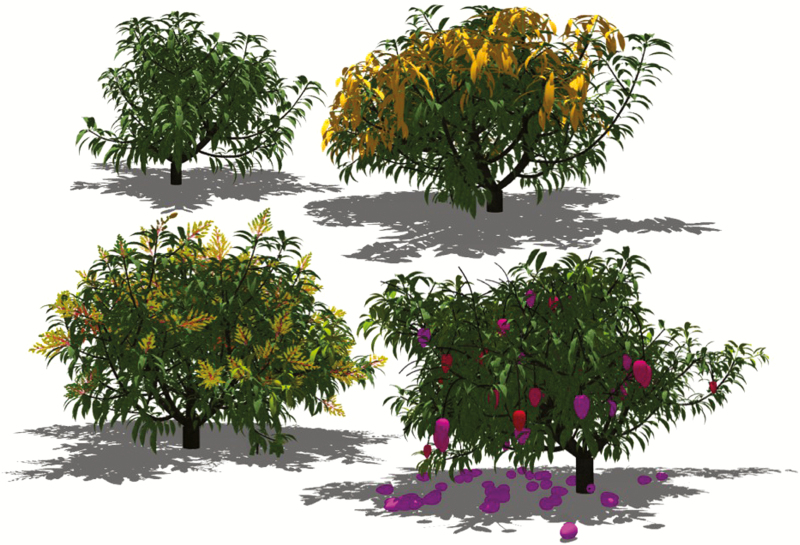
Mango (Mangifera indica L.) is the fifth most widely produced fruit in the world. Its cultivation, mainly in tropical and sub-tropical regions, raises a number of issues such as the irregular fruit production across years, phenological asynchronisms that lead to long periods of pest and disease susceptibility, and the heterogeneity of fruit quality and maturity at harvest. To address these issues, we developed an integrative functional-structural plant model that synthesizes knowledge about the vegetative and reproductive development of the mango tree and opens up the possible simulation of cultivation practices.
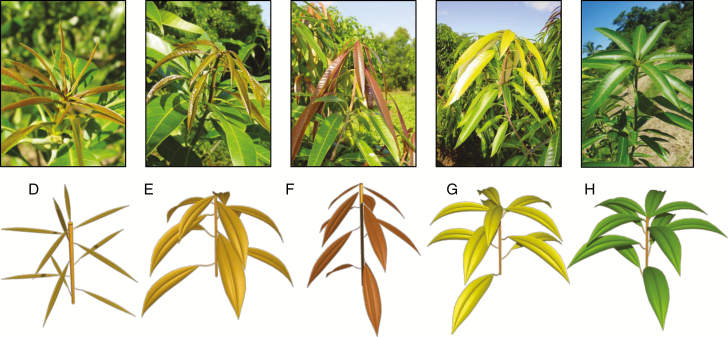
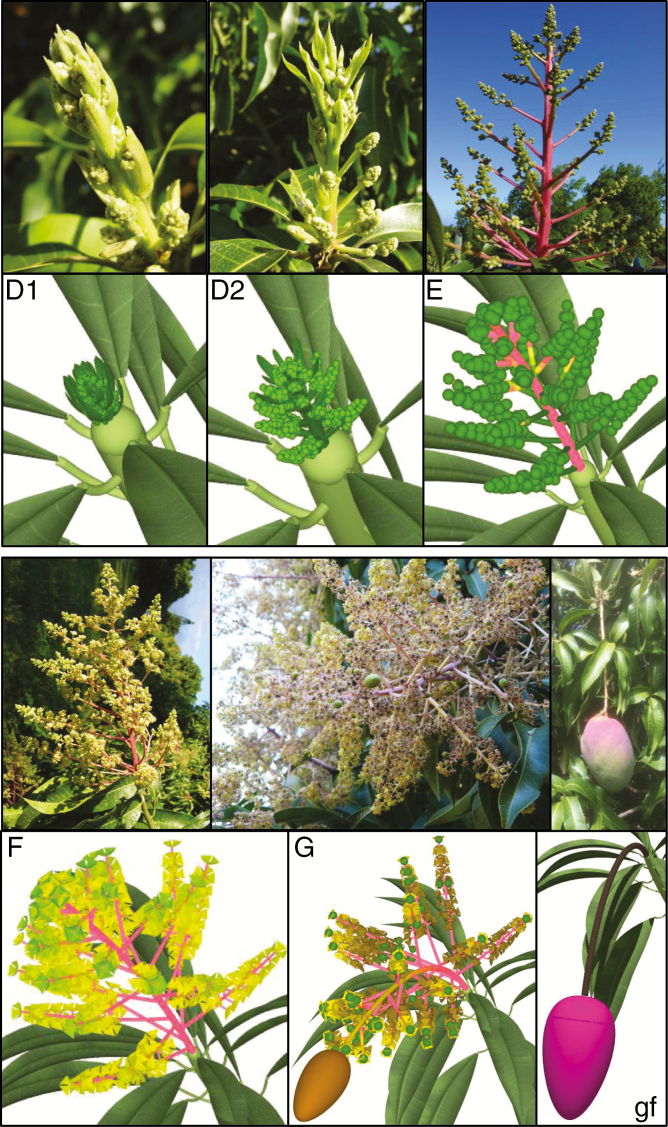
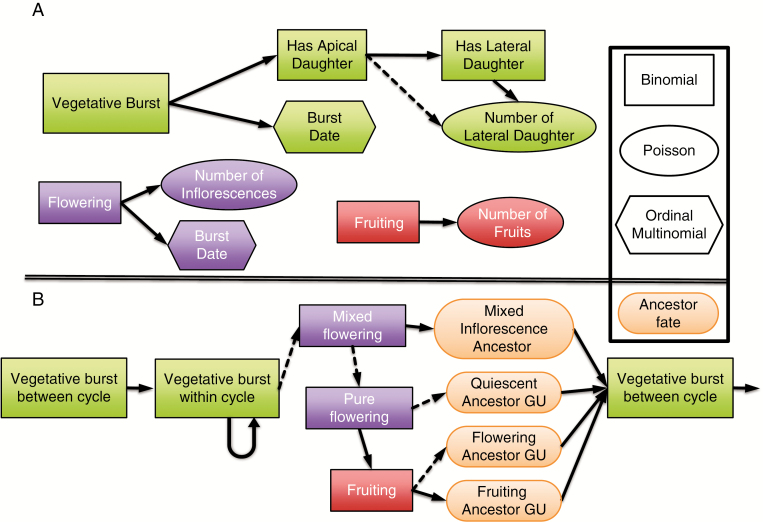
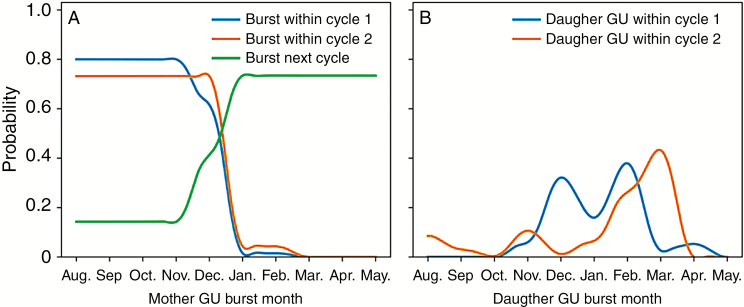
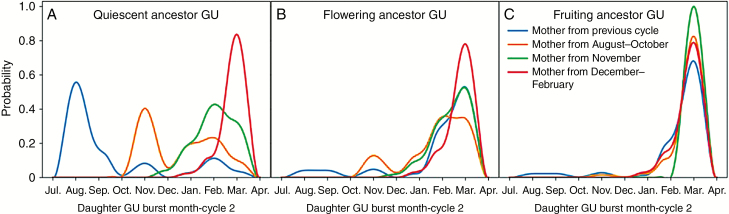
We designed a model of architectural development in order to precisely characterize the intricate developmental processes of the mango tree. The appearance of botanical entities was decomposed into elementary stochastic events describing occurrence, intensity and timing of development. These events were determined by structural (position and fate of botanical entities) and temporal (appearance dates) factors. Daily growth and development of growth units and inflorescences were modelled using empirical distributions and thermal time. Fruit growth was determined using an ecophysiological model that simulated carbon- and water-related processes at the fruiting branch scale.
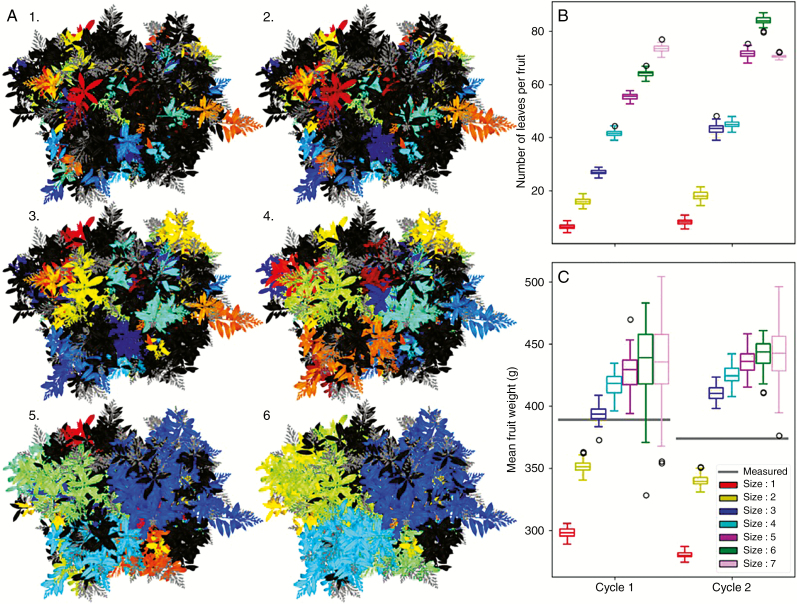
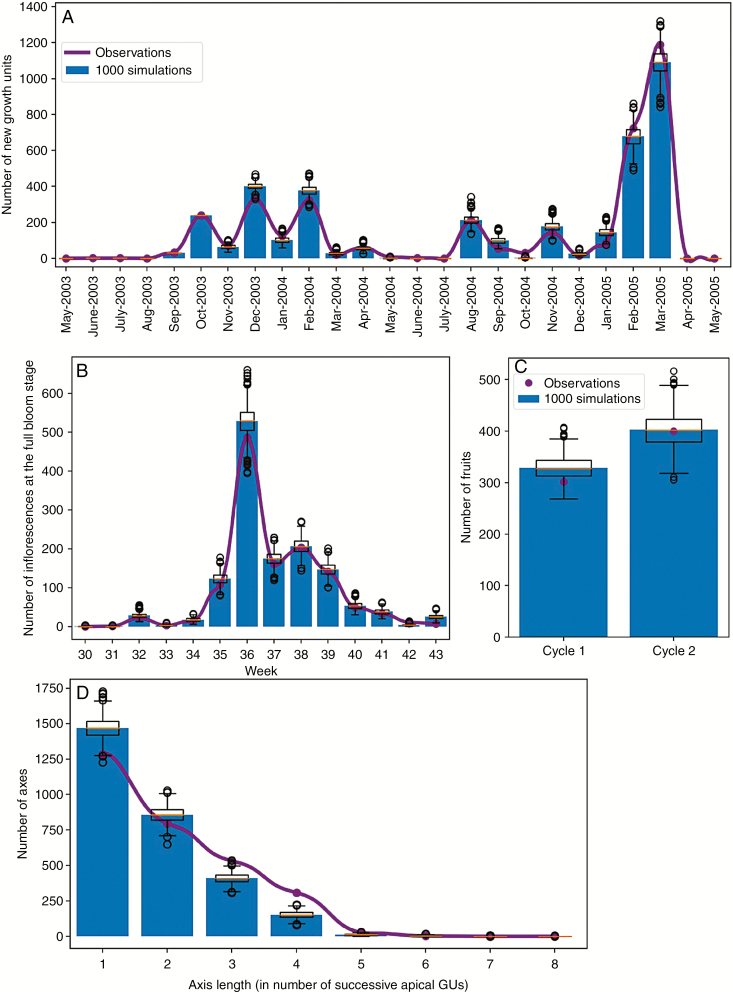
The model simulates the dynamics of the population of growth units, inflorescences and fruits at the tree scale during a growing cycle. Modelling the effects of structural and temporal factors makes it possible to simulate satisfactorily the complex interplays between vegetative and reproductive development. The model allowed the characterization of the susceptibility of mango tree to pests and the investigatation of the influence of tree architecture on fruit growth.
This integrative functional-structural model simulates mango tree vegetative and reproductive development over successive growing cycles, allowing a precise characterization of tree phenology and fruit growth and production. The next step is to integrate the effects of cultivation practices, such as pruning, into the model.
芒果(Mangifera indica L.)是世界上第五大最广泛种植的水果。其种植主要集中在热带和亚热带地区,存在着一些问题,如多年来果实产量的不规律、物候期不同步导致的长时间易受病虫害影响,以及果实质量和成熟度的异质性。为了解决这些问题,我们开发了一个综合的功能结构植物模型,该模型综合了芒果树营养和生殖生长的知识,并为可能的栽培实践模拟提供了可能性。
我们设计了一个建筑发展模型,以便精确地描述芒果树复杂的发育过程。植物实体的出现被分解为描述发生、强度和时间的基本随机事件。这些事件由结构(植物实体的位置和命运)和时间(出现日期)因素决定。使用经验分布和热时间来模拟生长单位和花序的日常生长和发育。果实生长是通过模拟碳和水相关过程在果实分枝尺度上的生态生理学模型来确定的。
该模型模拟了生长周期中整棵树的生长单位、花序和果实的种群动态。模拟结构和时间因素的影响使得模拟营养和生殖生长之间的复杂相互作用成为可能。该模型允许对芒果树对病虫害的易感性进行特征描述,并研究树结构对果实生长的影响。
这个综合的功能结构模型模拟了芒果树连续生长周期中的营养和生殖发育,能够精确描述树的物候和果实生长和生产。下一步是将栽培措施(如修剪)的影响纳入模型。