Department of Medical Oncology & Therapeutics Research, City of Hope, 1500 E. Duarte Rd, Duarte, CA, 91010, USA.
Department of Translational Research & Cellular Therapeutics, City of Hope, Duarte, CA, USA.
BMC Med Genet. 2020 May 11;21(1):101. doi: 10.1186/s12881-020-01034-w.
Desmoplastic small round cell tumor (DSRCT) is a rare, highly aggressive, translocation-associated soft-tissue sarcoma that primarily affects children, adolescents, and young adults, with a striking male predominance. It is characterized by t(11;22) generating a novel EWSR1-WT1 fusion gene. Secondary genomic alterations are rarely described.
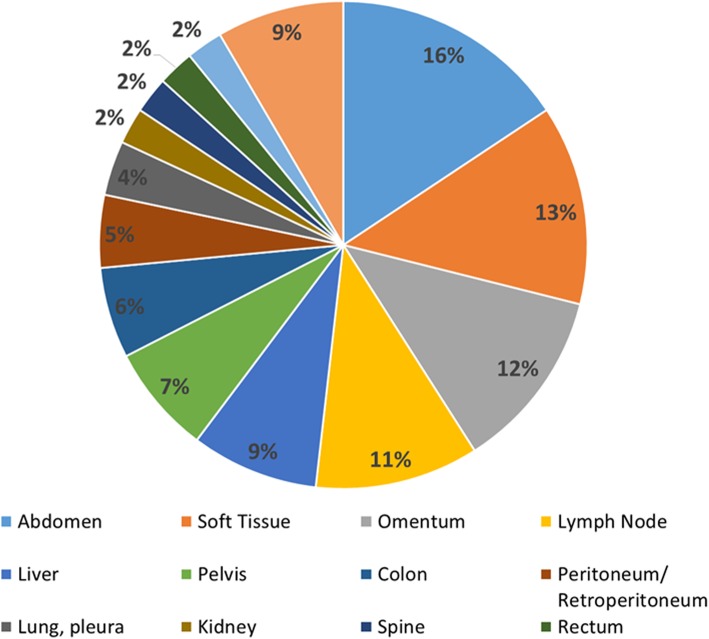
Tumor tissue from 83 DSRCT patients was assayed by hybrid-capture based comprehensive genomic profiling, FoundationOne® Heme next generation sequencing analysis of 406 genes and RNA sequencing of 265 genes. Tumor mutation burden was calculated from a minimum of 1.4 Mb sequenced DNA. Microsatellite instability status was determined by a novel algorithm analyzing 114 specific loci.
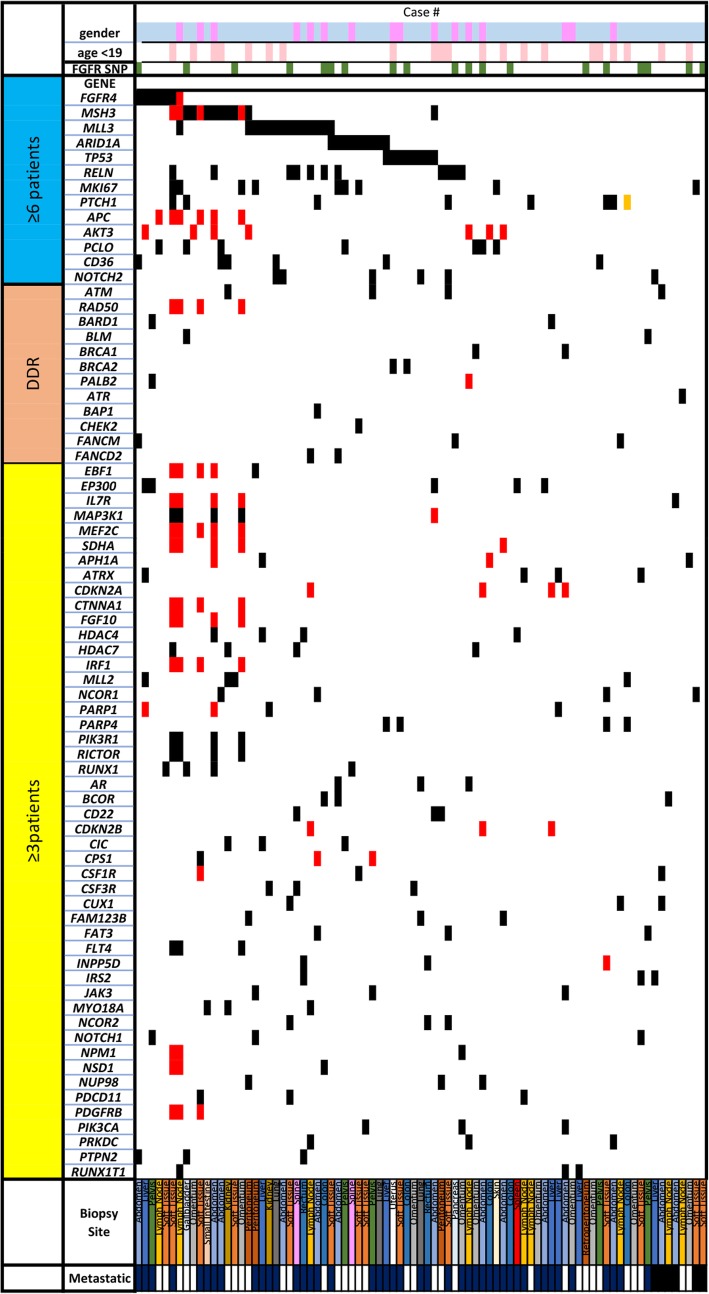
Comprehensive genomic profiling identified several genomically-defined DSRCT subgroups. Recurrent genomic alterations were most frequently detected in FGFR4, ARID1A, TP53, MSH3, and MLL3 genes. With the exception of FGFR4, where the genomic alterations predicted activation, most of the alterations in the remaining genes predicted gene inactivation. No DSRCT were TMB or MSI high.
In summary, recurrent secondary somatic alterations in FGFR4, ARID1A, TP53, MSH3, and MLL3 were detected in 82% of DSRCT, which is significantly greater than previously reported. These alterations may have both prognostic and therapeutic implications.
促纤维增生性小圆细胞肿瘤(DSRCT)是一种罕见的、高度侵袭性的、与易位相关的软组织肉瘤,主要影响儿童、青少年和年轻成年人,男性发病率明显较高。它的特征是 t(11;22) 产生一种新的 EWSR1-WT1 融合基因。很少有描述继发性基因组改变的报道。
通过基于杂交捕获的综合基因组分析、FoundationOne® Heme 下一代测序分析 406 个基因和 265 个基因的 RNA 测序,对 83 例 DSRCT 患者的肿瘤组织进行检测。从至少 1.4 Mb 测序的 DNA 计算肿瘤突变负担。通过分析 114 个特定基因座的新算法确定微卫星不稳定性状态。
综合基因组分析确定了几个基因组定义的 DSRCT 亚组。FGFR4、ARID1A、TP53、MSH3 和 MLL3 基因中最常检测到反复出现的基因组改变。除了 FGFR4 外,基因组改变预测激活,其余基因的改变大多预测基因失活。没有 DSRCT 的 TMB 或 MSI 高。
总之,在 82%的 DSRCT 中检测到 FGFR4、ARID1A、TP53、MSH3 和 MLL3 中反复出现的继发性体细胞改变,这明显高于以前的报道。这些改变可能具有预后和治疗意义。