Markby Greg R, Macrae Vicky E, Summers Kim M, Corcoran Brendan M
The Roslin Institute, University of Edinburgh, Scotland, United Kingdom.
Royal Dick, School of Veterinary Studies, University of Edinburgh, Scotland, United Kingdom.
Front Genet. 2020 Apr 27;11:372. doi: 10.3389/fgene.2020.00372. eCollection 2020.
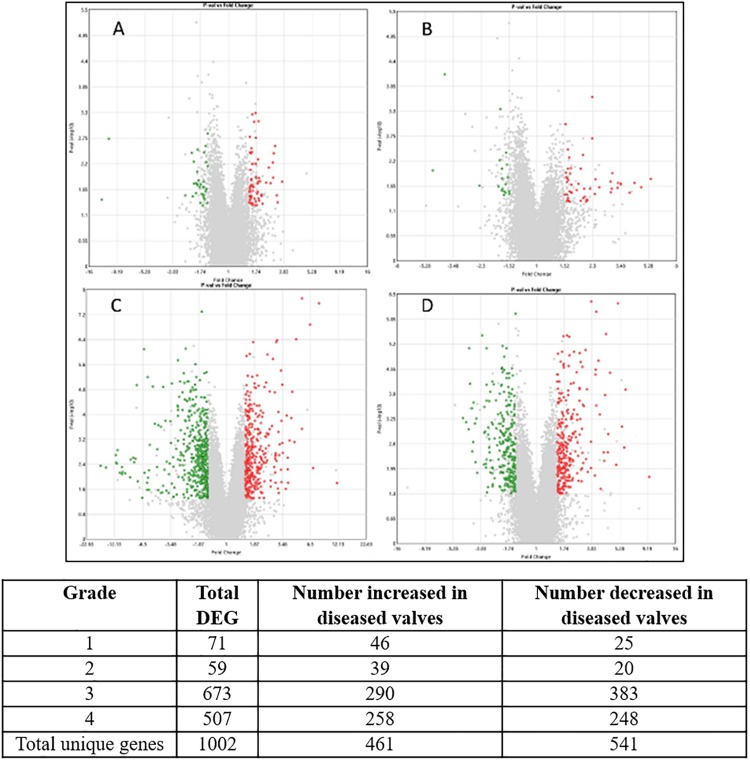
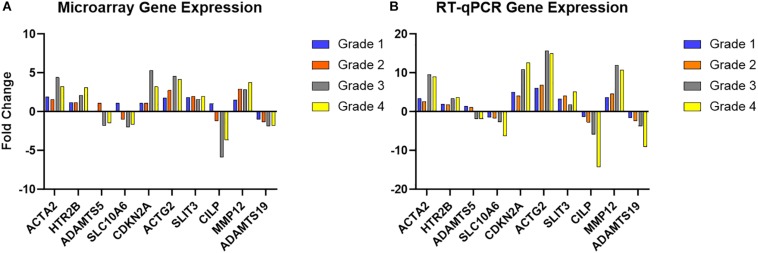
Myxomatous mitral valve disease (MMVD) is the most common acquired canine cardiovascular disease and shares many similarities with human mitral valvulopathies. While transcriptomic datasets are available for the end-stage disease in both species, there is no information on how gene expression changes as the disease progresses, such that it cannot be stated with certainty if the changes seen in end-stage disease are casual or consequential. In contrast to humans, the disease in dogs can be more readily examined as it progresses, and this allows an opportunity for insight into disease pathogenesis relevant to both species. The aim of this study was to identify changes in valve gene expression as canine MMVD advances over an entire life-time, from normal (grade 0) to severely affected (grade 4), and differences in gene expression comparing normal and disease areas of the same valve. Transcriptomic profiling identified 1002 differentially expressed genes (DEGs) across all four disease grades when compared with normal valves with the greatest number of DEGs in grade 3 (673) and grade 4 (507). DEGs were associated with a large number of gene families, including genes encoding cytoskeletal filaments, peptidases, extra-cellular matrix (ECM) proteins, chemokines and integrins. Gene enrichment analysis identified significant grade-dependent changes in gene clustering, with clusters trending both up and down as disease progressed. Significant grade-dependent changes in hallmark disease gene expression intensity were identified, including , , , and . Gene Ontology terms were dominated by terms for ECM and inflammation with β, , identified as the top up-stream regulators in both whole and dissected diseased valve samples. These data show that while disease progression in MMVD is associated with increasing numbers of DEGs, TGFβ appears to be the dominant signaling pathway controlling pathogenesis irrespective of disease severity.
黏液瘤样二尖瓣疾病(MMVD)是犬类最常见的后天性心血管疾病,与人类二尖瓣病变有许多相似之处。虽然两种物种的终末期疾病都有转录组数据集,但对于疾病进展过程中基因表达如何变化却一无所知,因此无法确定终末期疾病中观察到的变化是偶然的还是必然的。与人类不同,犬类的疾病在进展过程中更容易被检查,这为深入了解与两种物种相关的疾病发病机制提供了机会。本研究的目的是确定随着犬类MMVD在整个生命周期中从正常(0级)发展到严重受影响(4级),瓣膜基因表达的变化,以及比较同一瓣膜正常区域和疾病区域的基因表达差异。转录组分析确定,与正常瓣膜相比,在所有四个疾病等级中共有1002个差异表达基因(DEG),其中3级(673个)和4级(507个)的DEG数量最多。DEG与大量基因家族相关,包括编码细胞骨架丝、肽酶、细胞外基质(ECM)蛋白、趋化因子和整合素的基因。基因富集分析确定了基因聚类中显著的等级依赖性变化,随着疾病进展,聚类呈上升和下降趋势。确定了标志性疾病基因表达强度的显著等级依赖性变化,包括 , , ,和 。基因本体术语主要是ECM和炎症相关术语,β, , 被确定为整个患病瓣膜样本和解剖后的患病瓣膜样本中的顶级上游调节因子。这些数据表明,虽然MMVD的疾病进展与DEG数量增加有关,但无论疾病严重程度如何,TGFβ似乎都是控制发病机制的主要信号通路。