Zheng Xiaoqing, Tsou Pei-Suen, Sawalha Amr H
Division of Rheumatology, Department of Pediatrics, Children's Hospital of Pittsburgh, University of Pittsburgh, Pittsburgh, PA 15260, USA.
Division of Rheumatology, Department of Internal Medicine, University of Michigan, Ann Arbor, MI 48109, USA.
Immunometabolism. 2020;2(2). doi: 10.20900/immunometab20200013. Epub 2020 Apr 9.
EZH2 is overexpressed in CD4 T cells from patients with systemic lupus erythematosus (SLE). Increased disease activity in SLE patients is associated with a proinflammatory epigenetic shift in naïve CD4 T cells, likely mediated by EZH2. Here we aim to understand the upstream mechanisms underlying EZH2 overexpression in SLE CD4 T cells.
Naïve CD4 T cells were isolated from SLE patients and then stimulated with anti-CD3/anti-CD28. qPCR and Western blotting were used to measure mRNA and protein expression levels, respectively. 2-Deoxy-d-glucose (2-DG) was used to inhibit glycolysis. mTORC1 signaling was inhibited using rapamycin. Oxidative stress was induced by HO.
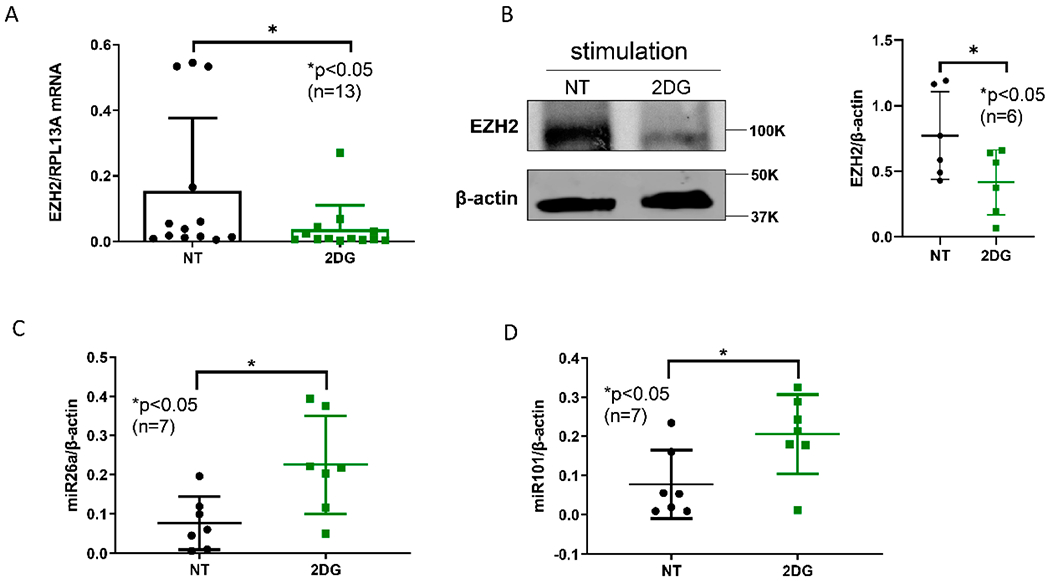
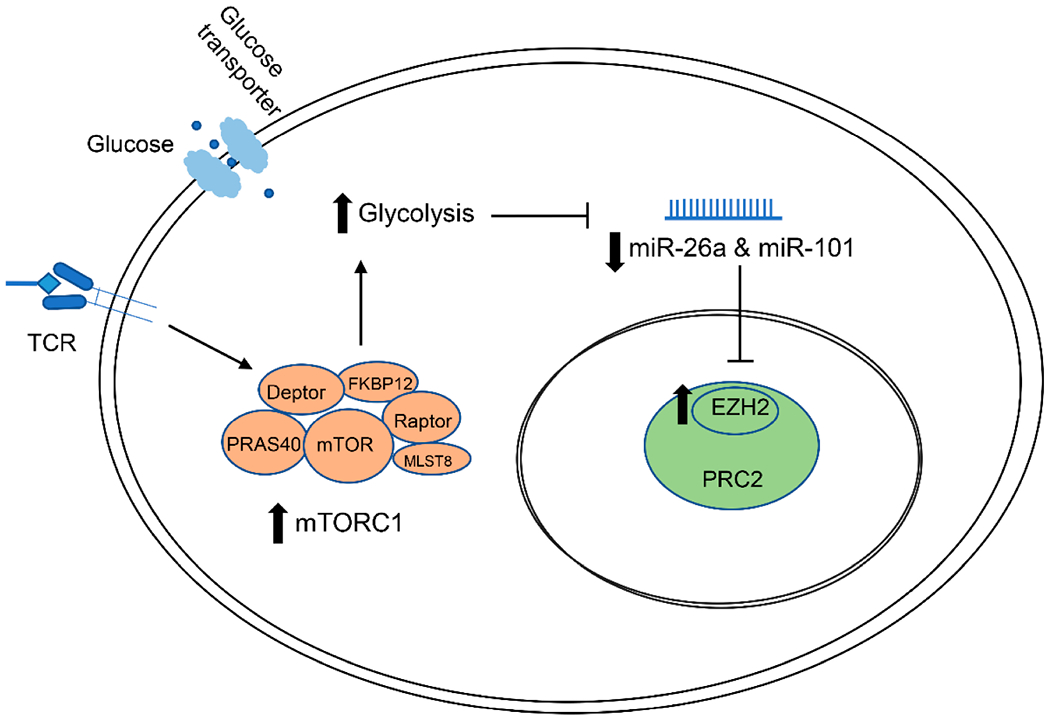
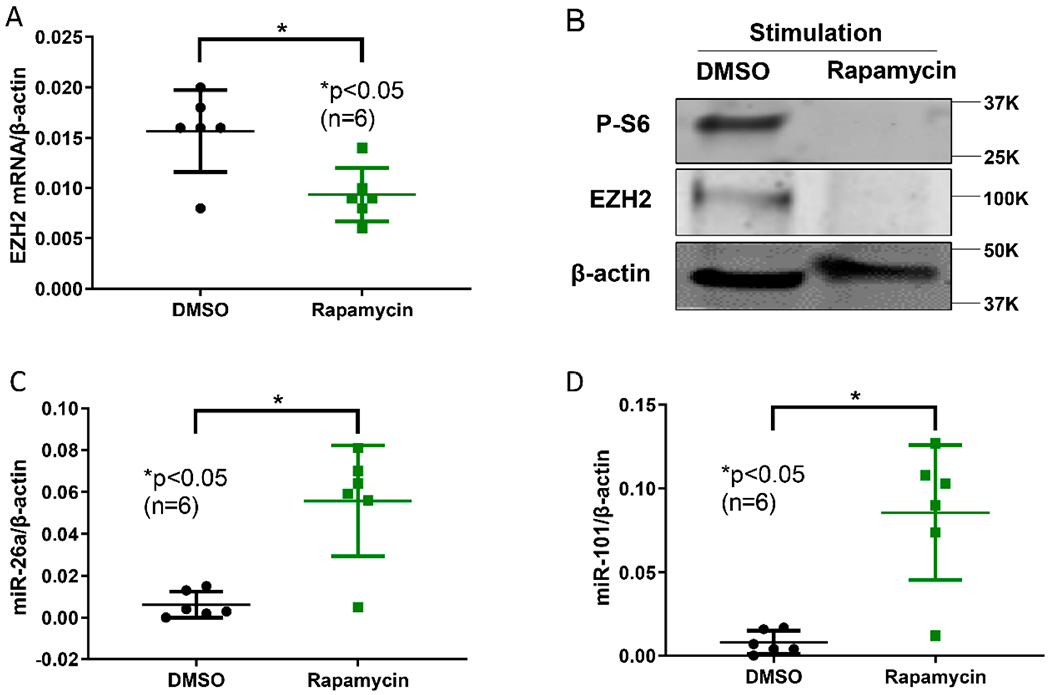
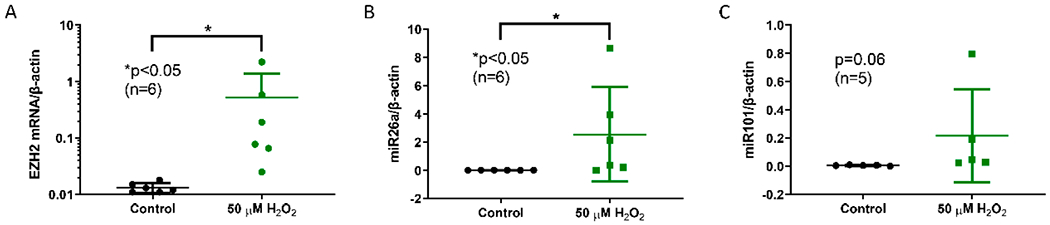
Because glycolysis is increased in SLE CD4 T cells and glycolysis regulates miR-26a and miR-101, which target EZH2, we examined the effect of inhibiting glycolysis on EZH2 expression. 2-DG significantly inhibited EZH2 expression in SLE CD4 T cells. In addition, 2-DG restored the expression of miR-26a and miR-101, suggesting that suppression of EZH2 by 2-DG occurs at the post-transcriptional level. Because mTORC1 is activated in SLE CD4 T cells in part due to increased oxidative stress, and mTORC1 activation increases glycolysis, we hypothesized that mTORC1 mediates increased EZH2 expression. Indeed, inhibiting mTORC1 increased miR-26a and miR-101 and suppressed EZH2 expression in SLE CD4 T cells. Further, HO treatment increased EZH2 expression, however, this effect appears to be independent of miR-26a and miR-101.
Increased EZH2 is mediated by activation of mTORC1 and increased glycolysis in SLE CD4 T cells. Therapeutic effects from inhibiting mTOR or glycolysis in SLE might be in part mediated by suppression of EZH2.
EZH2在系统性红斑狼疮(SLE)患者的CD4 T细胞中过表达。SLE患者疾病活动度增加与初始CD4 T细胞中促炎表观遗传转变有关,可能由EZH2介导。在此,我们旨在了解SLE CD4 T细胞中EZH2过表达的上游机制。
从SLE患者中分离出初始CD4 T细胞,然后用抗CD3/抗CD28进行刺激。分别使用qPCR和蛋白质印迹法测量mRNA和蛋白质表达水平。使用2-脱氧-D-葡萄糖(2-DG)抑制糖酵解。使用雷帕霉素抑制mTORC1信号传导。通过HO诱导氧化应激。
由于SLE CD4 T细胞中的糖酵解增加,且糖酵解调节靶向EZH2的miR-26a和miR-101,我们研究了抑制糖酵解对EZH2表达的影响。2-DG显著抑制SLE CD4 T细胞中EZH2的表达。此外,2-DG恢复了miR-26a和miR-101的表达,表明2-DG对EZH2的抑制发生在转录后水平。由于mTORC1在SLE CD4 T细胞中部分由于氧化应激增加而被激活,且mTORC1激活会增加糖酵解,我们推测mTORC1介导EZH2表达增加。确实,抑制mTORC1会增加miR-26a和miR-101并抑制SLE CD4 T细胞中EZH2的表达。此外,HO处理会增加EZH2的表达,然而,这种作用似乎独立于miR-26a和miR-101。
SLE CD4 T细胞中EZH2增加是由mTORC1激活和糖酵解增加介导的。在SLE中抑制mTOR或糖酵解的治疗效果可能部分由EZH2的抑制介导。