Islam Jahirul, Lee Hack June, Yang Seung Hee, Kim Dong Ki, Joo Kwon Wook, Kim Yon Su, Seo Sang-Uk, Seong Seung-Yong, Lee Dong-Sup, Youn Je-In, Han Seung Seok
Department of Biomedical Sciences, Seoul National University College of Medicine, Seoul 03080, Korea.
Department of Internal Medicine, Seoul National University College of Medicine, Seoul 03080, Korea.
Immune Netw. 2020 Feb 18;20(2):e18. doi: 10.4110/in.2020.20.e18. eCollection 2020 Apr.
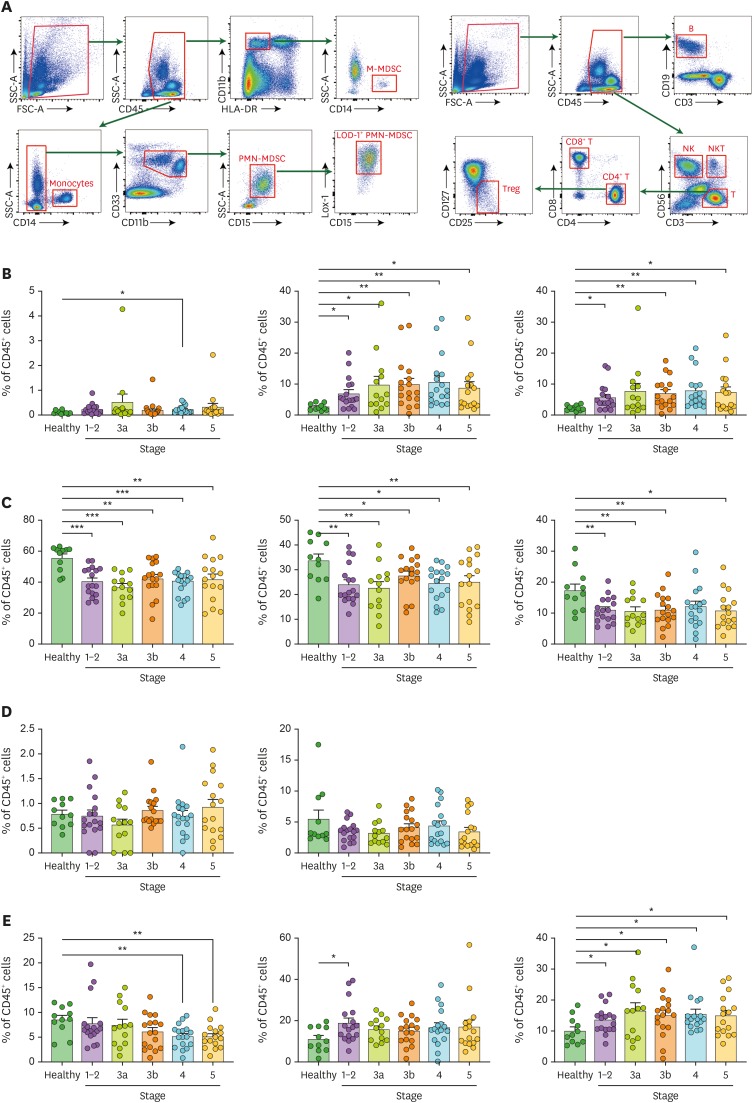
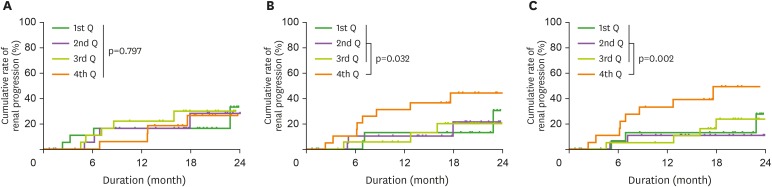
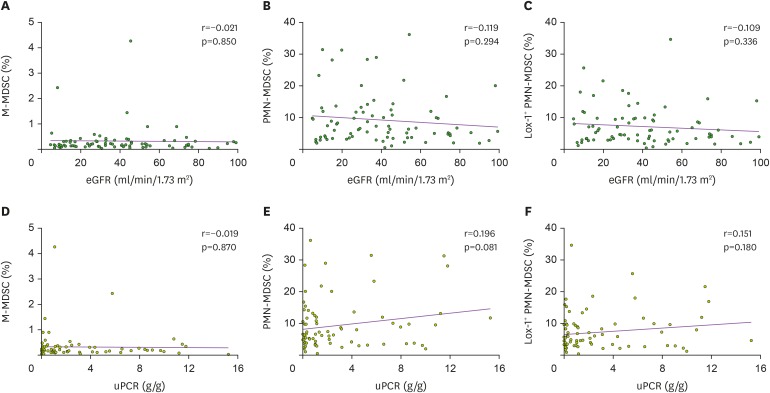
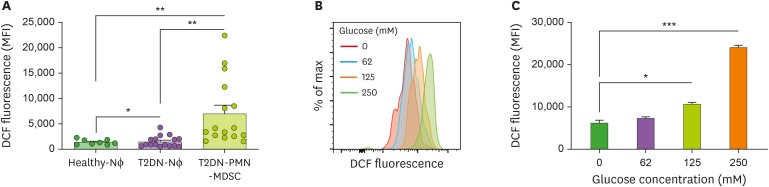
Type 2 diabetic nephropathy (T2DN) progresses with an increasingly inflammatory milieu, wherein various immune cells are relevant. Herein, we investigated the levels of myeloid-derived suppressor cells (MDSCs) and their clinical implication in patients with T2DN. A total of 91 subjects (T2DN, n=80; healthy, n=11) were recruited and their PBMCs were used for flow cytometric analysis of polymorphonuclear (PMN-) and monocytic (M-) MDSCs, in addition to other immune cell subsets. The risk of renal progression was evaluated according to the quartiles of MDSC levels using the Cox model. The proportion of MDSCs in T2DN patients was higher than in healthy individuals (median, 6.7% vs. 2.5%). PMN-MDSCs accounted for 96% of MDSCs, and 78% of PMN-MDSCs expressed Lox-1. The expansion of PMN-MDSCs was not related to the stage of T2DN or other kidney disease parameters such as glomerular filtration rate and proteinuria. The production of ROS in PMN-MDSCs of patients was higher than in neutrophils of patients or in immune cells of healthy individuals, and this production was augmented under hyperglycemic conditions. The 4th quartile group of PMN-MDSCs had a higher risk of renal progression than the 1st quartile group, irrespective of adjusting for multiple clinical and laboratory variables. In conclusion, PMN-MDSCs are expanded in patients with T2DN, and may represent as an immunological biomarker of renal progression.
2型糖尿病肾病(T2DN)在炎症环境日益加重的情况下进展,其中各种免疫细胞都与之相关。在此,我们研究了髓系来源抑制细胞(MDSCs)的水平及其在T2DN患者中的临床意义。共招募了91名受试者(T2DN患者80例,健康者11例),除其他免疫细胞亚群外,其外周血单个核细胞(PBMCs)用于多形核(PMN-)和单核(M-)MDSCs的流式细胞术分析。使用Cox模型根据MDSC水平的四分位数评估肾脏进展风险。T2DN患者中MDSCs的比例高于健康个体(中位数分别为6.7%和2.5%)。PMN-MDSCs占MDSCs的96%,78%的PMN-MDSCs表达凝集素样氧化低密度脂蛋白受体1(Lox-1)。PMN-MDSCs的扩增与T2DN的分期或其他肾脏疾病参数如肾小球滤过率和蛋白尿无关。患者PMN-MDSCs中活性氧(ROS)的产生高于患者的中性粒细胞或健康个体的免疫细胞,并且在高血糖条件下这种产生会增加。无论对多个临床和实验室变量进行调整,PMN-MDSCs的第4四分位数组比第1四分位数组有更高的肾脏进展风险。总之,T2DN患者中PMN-MDSCs扩增,可能是肾脏进展的免疫生物标志物。