Dai Yu-Jun, Hu Fang, Li Huan, Huang Han-Ying, Wang Da-Wei, Liang Yang
Collaborative Innovation Center for Cancer Medicine, Guangzhou 510060, China.
State Key Laboratory of Oncology in South China, Guangzhou 510060, China.
Ann Transl Med. 2020 Apr;8(7):481. doi: 10.21037/atm.2020.03.61.
The new coronavirus pneumonia (NCP) is now causing a severe public health emergency. The novel coronavirus 2019 (2019-nCoV) infected individuals by binding human angiotensin converting enzyme II (ACE2) receptor. ACE2 is widely expressed in multiple organs including respiratory, cardiovascular, digestive and urinary systems in healthy individuals. These tissues with high expression level of ACE2 seemed to be more vulnerable to SARS-CoV-2 infection. Recently, it has been reported that patients with tumors were likely to be more susceptible to SARS-CoV-2 infection and indicated poor prognosis.
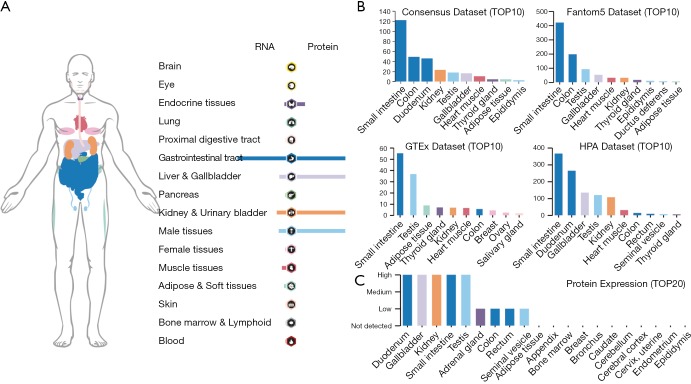
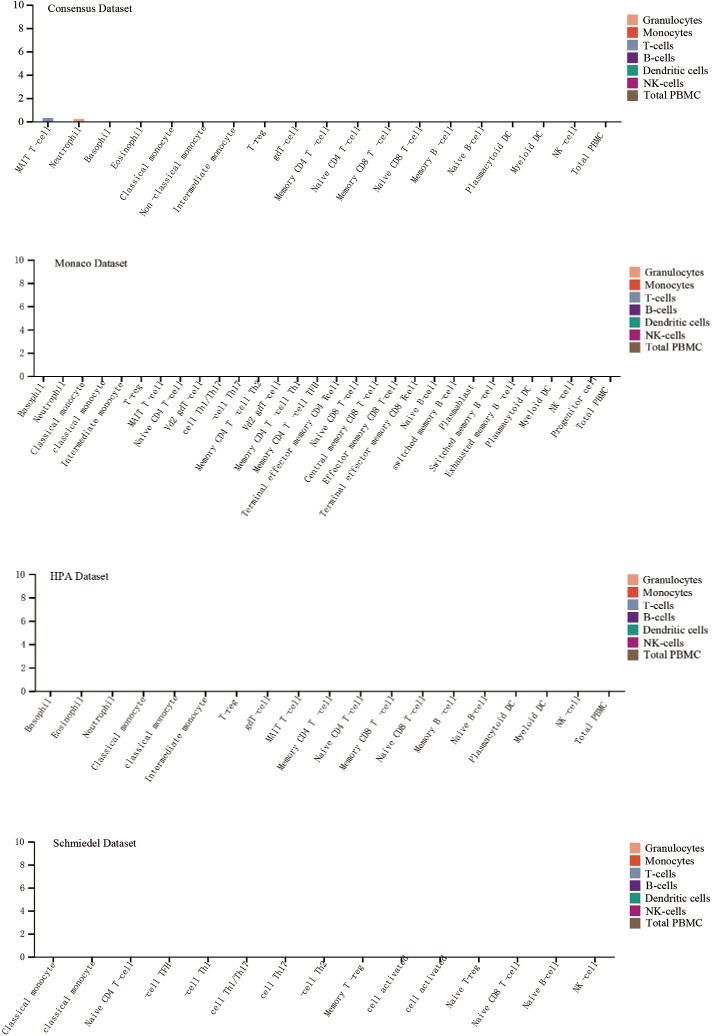
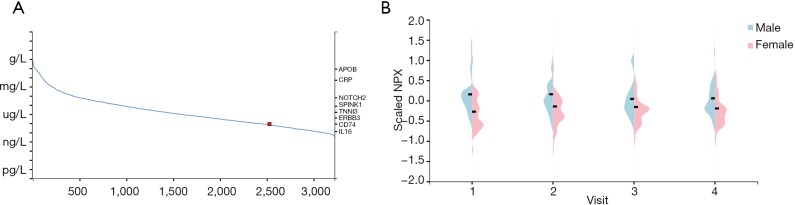
The tissue atlas database and the blood atlas were used to analyze the distribution of ACE2 in human tissues or organs of cancers and normal samples. Starbase dataset was applied to predict the prognosis of cancers according to expression level of ACE2.
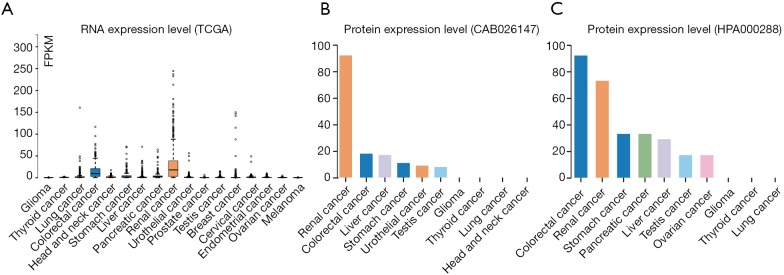
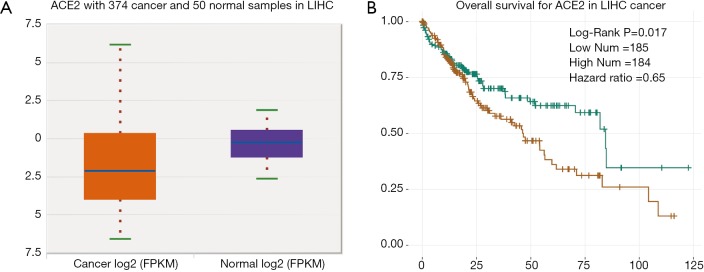
In this study, we demonstrated a landscape profiling analysis on expression level of ACE2 in pan-cancers and showed the risky of different type of cancers to SARS-CoV-2 according to the expression level of ACE2. In addition, we found that ACE2 was both differential expression and related to the prognosis only in liver hepatocellular carcinoma (LIHC). Relative high expression of ACE2 indicated a favorable prognosis in LIHC, but they might be more susceptible to SARS-CoV-2.
We indeed emphasized that LIHC patients with high expression level of ACE2 should be more cautious of the virus infection. Our study might provide a potential clue for preventing infection of SARS-CoV-2 in cancers.
新型冠状病毒肺炎(NCP)目前正在引发严重的突发公共卫生事件。2019新型冠状病毒(2019 - nCoV)通过与人血管紧张素转换酶II(ACE2)受体结合来感染个体。ACE2在健康个体的多个器官中广泛表达,包括呼吸、心血管、消化和泌尿系统。这些ACE2表达水平高的组织似乎更容易受到严重急性呼吸综合征冠状病毒2(SARS-CoV-2)感染。最近,有报道称肿瘤患者可能更容易感染SARS-CoV-2,且预后较差。
利用组织图谱数据库和血液图谱分析ACE2在癌症和正常样本的人体组织或器官中的分布。应用Starbase数据集根据ACE2的表达水平预测癌症的预后。
在本研究中,我们展示了对泛癌中ACE2表达水平的全景分析,并根据ACE2的表达水平显示了不同类型癌症对SARS-CoV-2的易感性。此外,我们发现ACE2仅在肝细胞肝癌(LIHC)中存在差异表达且与预后相关。ACE2相对高表达表明LIHC患者预后良好,但他们可能更容易感染SARS-CoV-2。
我们确实强调,ACE2表达水平高的LIHC患者应更加谨慎对待病毒感染。我们的研究可能为预防癌症患者感染SARS-CoV-2提供潜在线索。