Song Yeonhwa, Kim Sanghwa, Lee Hyeryon, No Joo Hwan, Ryu Hyung Chul, Kim Jason, Lim Jee Woong, Kim Moonhee, Choi Inhee, Seo Haeng Ran
Cancer Biology Laboratory, Institut Pasteur Korea, Seongnam-si 13488, Korea.
Leishmania Research Laboratory, Institut Pasteur Korea, Seongnam-si 13488, Korea.
Cancers (Basel). 2020 May 8;12(5):1193. doi: 10.3390/cancers12051193.
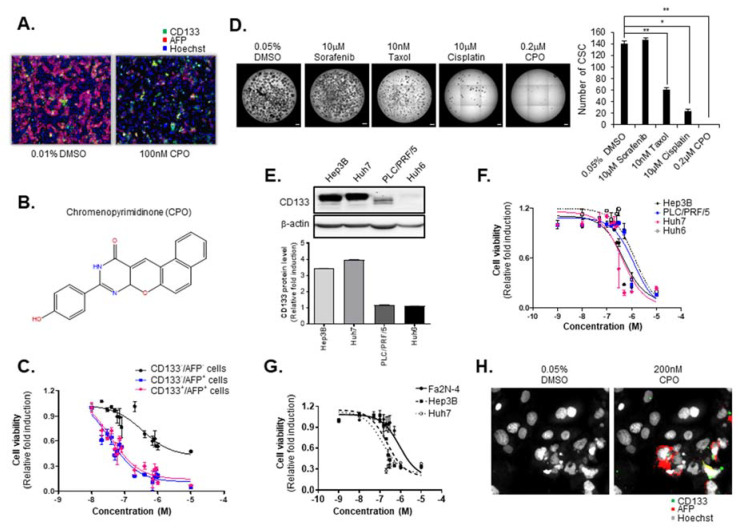
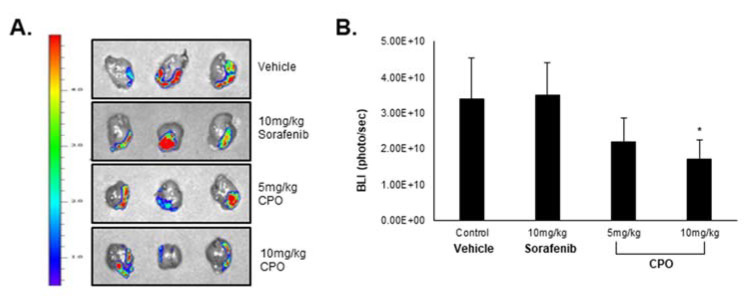
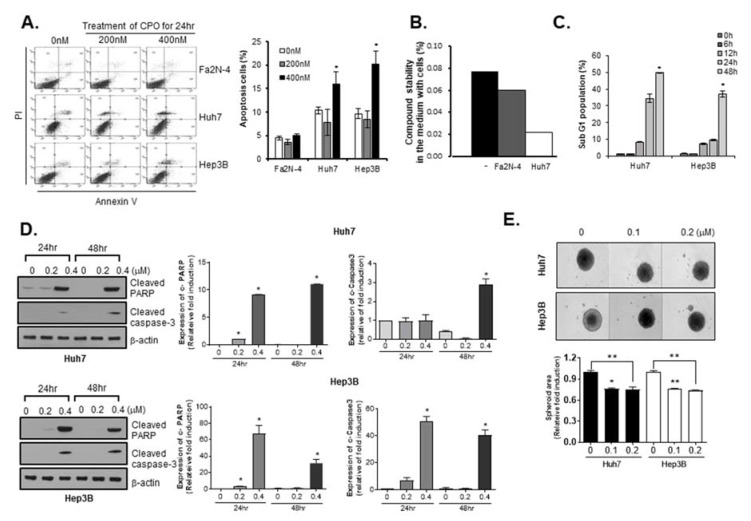
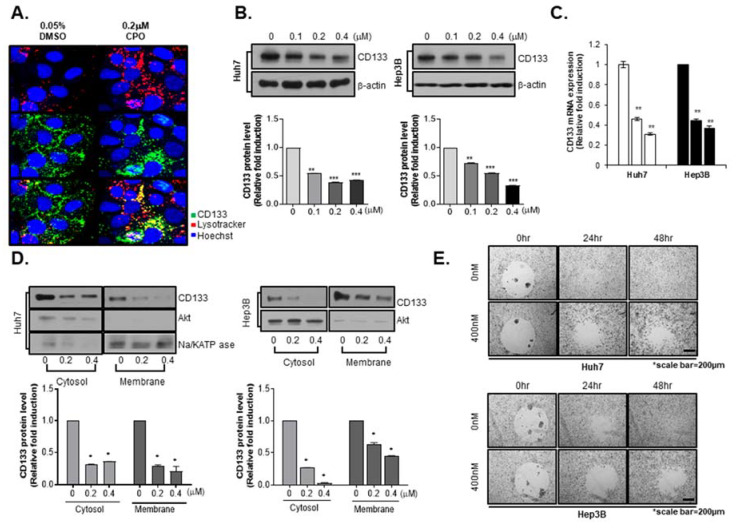
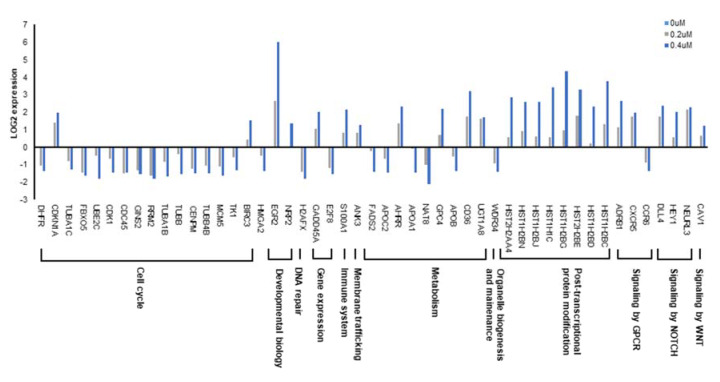
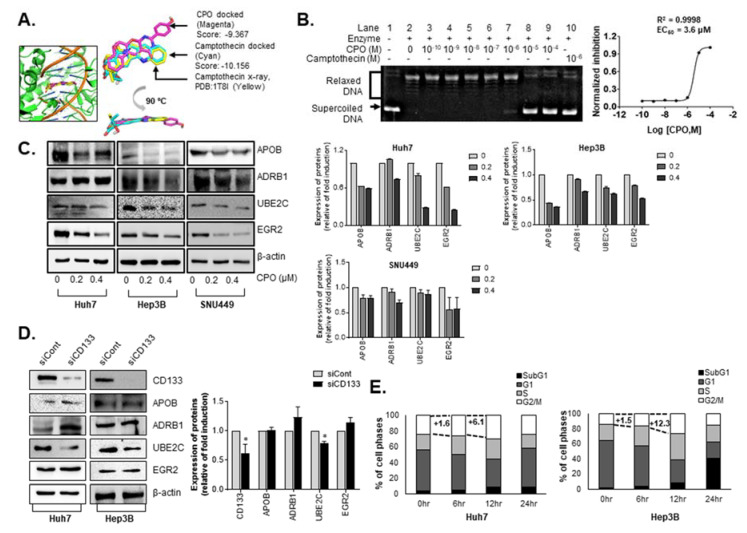
Hepatocellular carcinoma (HCC) is a highly malignant human cancer that has increasing mortality rates worldwide. Because CD133 cells control tumor maintenance and progression, compounds that target CD133 cancer cells could be effective in combating HCC. We found that the administration of chromenopyrimidinone (CPO) significantly decreased spheroid formation and the number of CD133 cells in mixed HCC cell populations. CPO not only significantly inhibited cell proliferation in HCC cells exhibiting different CD133 expression levels, but also effectively induced apoptosis and increased the expression of LC3-II in HCC cells. CPO also exhibits in vivo therapeutic efficiency in HCC. Specifically, CPO suppressed the expression of CD133 by altering the subcellular localization of CD133 from the membrane to lysosomes in CD133 HCC cells. Moreover, CPO treatment induced point mutations in the ADRB1, APOB, EGR2, and UBE2C genes and inhibited the expression of these proteins in HCC and the expression of UBE2C is particularly controlled by CD133 expression among those four proteins in HCC. Our results suggested that CPO may suppress stemness and malignancies in vivo and in vitro by decreasing CD133 and UBE2C expression in CD133 HCC. Our study provides evidence that CPO could act as a novel therapeutic agent for the effective treatment of CD133 HCC.
肝细胞癌(HCC)是一种高度恶性的人类癌症,在全球范围内死亡率不断上升。由于CD133细胞控制肿瘤的维持和进展,靶向CD133癌细胞的化合物可能对对抗HCC有效。我们发现,给予色烯并嘧啶酮(CPO)可显著减少混合HCC细胞群体中的球体形成和CD133细胞数量。CPO不仅显著抑制了表现出不同CD133表达水平的HCC细胞的增殖,还有效诱导了细胞凋亡并增加了HCC细胞中LC3-II的表达。CPO在HCC中也表现出体内治疗效果。具体而言,CPO通过改变CD133 HCC细胞中CD133从膜到溶酶体的亚细胞定位来抑制CD133的表达。此外,CPO处理在ADRB1、APOB、EGR2和UBE2C基因中诱导点突变,并抑制这些蛋白在HCC中的表达,并且在这四种蛋白中,UBE2C的表达在HCC中尤其受CD133表达的控制。我们的结果表明,CPO可能通过降低CD133 HCC中CD133和UBE2C的表达来在体内和体外抑制干性和恶性肿瘤。我们的研究提供了证据,表明CPO可作为一种新型治疗剂有效治疗CD133 HCC。