Division of Bone Marrow Transplantation and Immune Deficiency, Cincinnati Children's Hospital Medical Center, Cincinnati, OH, 45229, USA.
Cancer and Blood Diseases Institute, Cincinnati Children's Hospital Medical Center, Cincinnati, OH, 45229, USA.
Nat Commun. 2020 May 12;11(1):2369. doi: 10.1038/s41467-020-15733-8.
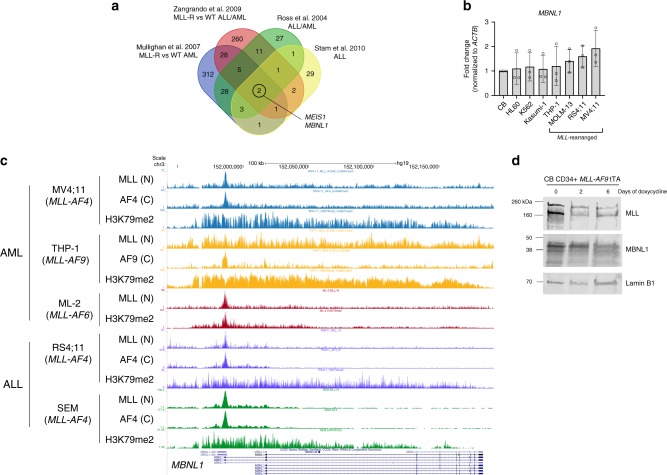
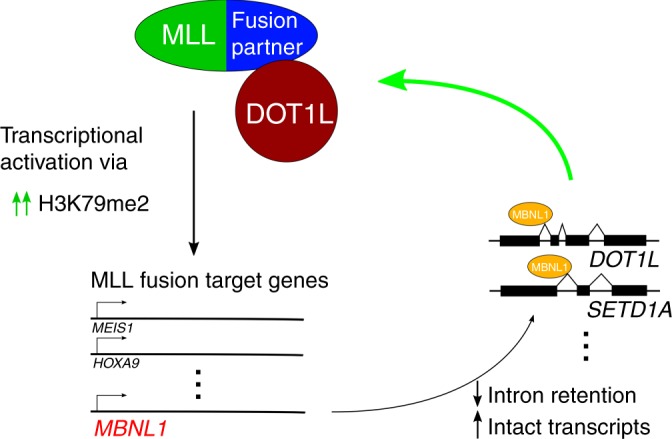
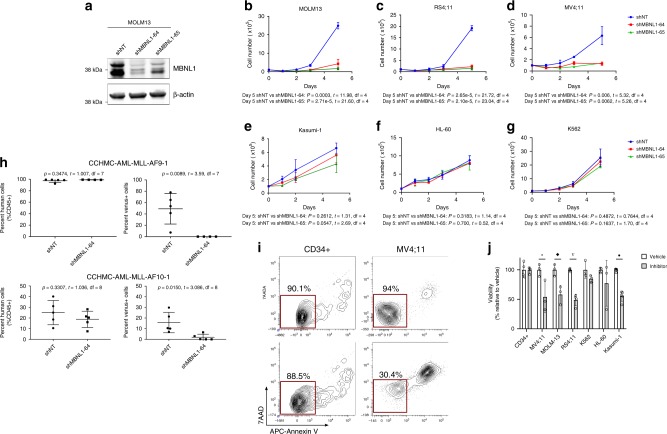
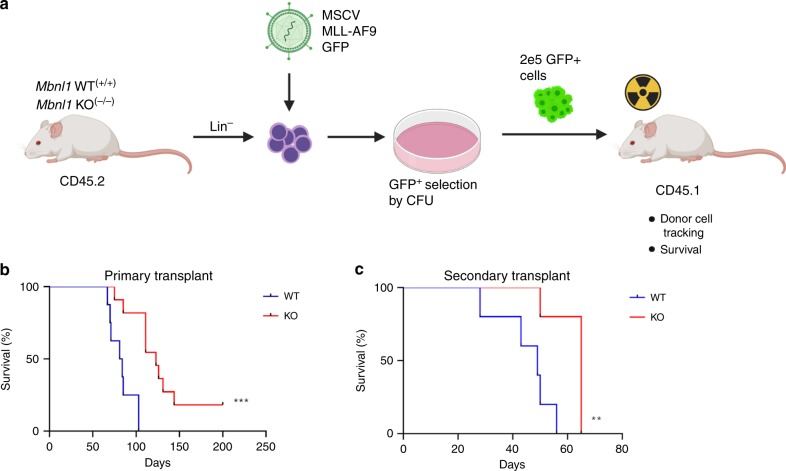
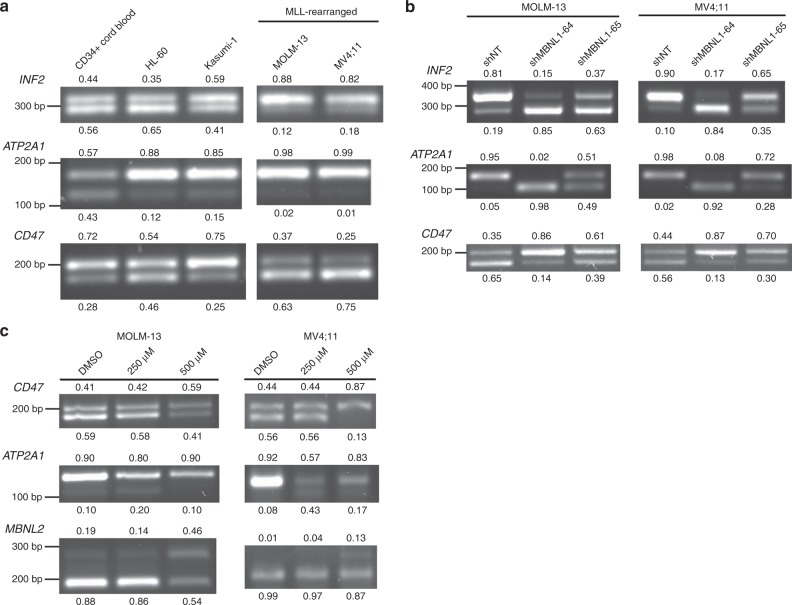
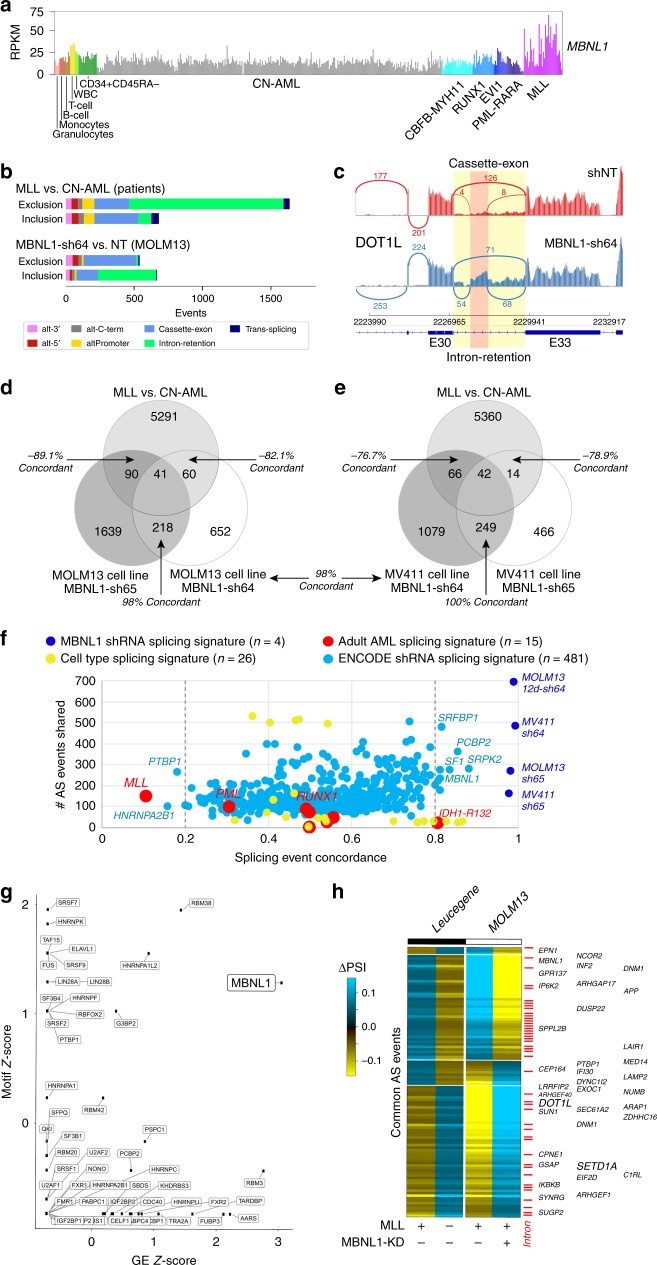
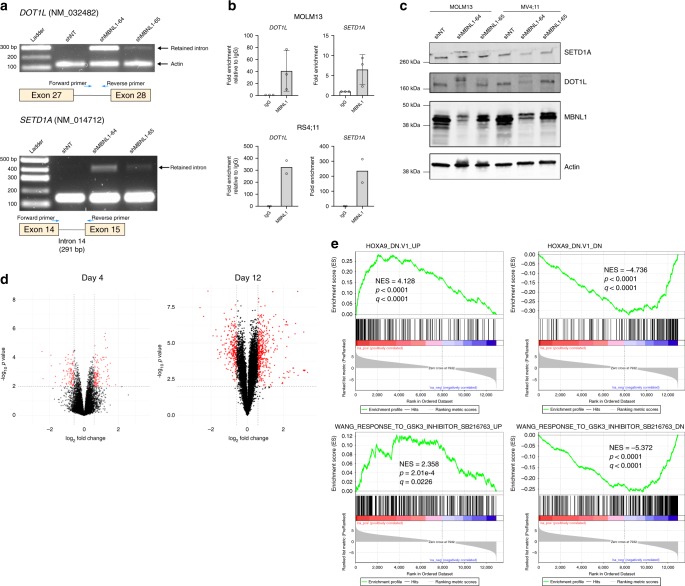
Despite growing awareness of the biologic features underlying MLL-rearranged leukemia, targeted therapies for this leukemia have remained elusive and clinical outcomes remain dismal. MBNL1, a protein involved in alternative splicing, is consistently overexpressed in MLL-rearranged leukemias. We found that MBNL1 loss significantly impairs propagation of murine and human MLL-rearranged leukemia in vitro and in vivo. Through transcriptomic profiling of our experimental systems, we show that in leukemic cells, MBNL1 regulates alternative splicing (predominantly intron exclusion) of several genes including those essential for MLL-rearranged leukemogenesis, such as DOT1L and SETD1A. We finally show that selective leukemic cell death is achievable with a small molecule inhibitor of MBNL1. These findings provide the basis for a new therapeutic target in MLL-rearranged leukemia and act as further validation of a burgeoning paradigm in targeted therapy, namely the disruption of cancer-specific splicing programs through the targeting of selectively essential RNA binding proteins.
尽管人们越来越意识到 MLL 重排白血病的生物学特征,但针对这种白血病的靶向治疗仍然难以捉摸,临床结果仍然不佳。MBNL1 是一种参与可变剪接的蛋白质,在 MLL 重排的白血病中始终过表达。我们发现 MBNL1 的缺失显着损害了体外和体内的小鼠和人类 MLL 重排白血病的传播。通过对我们的实验系统的转录组谱分析,我们表明在白血病细胞中,MBNL1 调节几个基因的可变剪接(主要是内含子排除),包括那些对 MLL 重排白血病发生至关重要的基因,例如 DOT1L 和 SETD1A。我们终于表明,小分子 MBNL1 抑制剂可实现选择性白血病细胞死亡。这些发现为 MLL 重排白血病的新治疗靶点提供了基础,并进一步验证了靶向治疗中一个新兴的范例,即通过靶向选择性必需的 RNA 结合蛋白来破坏癌症特异性剪接程序。