Chen Shuyu, Deng Yao, He Qiaoling, Chen Yanbo, Wang De, Sun Weimin, He Ying, Zou Zehong, Liang Zhenyu, Chen Rongchang, Yao Lihong, Tao Ailin
The Second Affiliated Hospital, Guangdong Provincial Key Laboratory of Allergy & Clinical Immunology, State Key Laboratory of Respiratory Disease, Guangzhou Medical University, Guangzhou, China.
Center for Immunology, Inflammation & Immune-Mediated Disease, Guangzhou Medical University, Guangzhou, China.
Allergy Asthma Immunol Res. 2020 Jul;12(4):608-625. doi: 10.4168/aair.2020.12.4.608.
Accumulating evidence has suggested that toll-like receptor 4 (TLR4) is critically involved in the pathogenesis of asthma. The aim of this study was to investigate the role of TLR4 in toluene diisocyanate (TDI)-induced allergic airway inflammation.
TLR4 and wild-type (WT) C57BL/10J mice were sensitized and challenged with TDI to generate a TDI-induced asthma model. B-cell lymphoma 2 (Bcl-2) inhibitors, ABT-199 (4 mg/kg) and ABT-737 (4 mg/kg), were intranasally given to TDI-exposed TLR4 mice after each challenge.
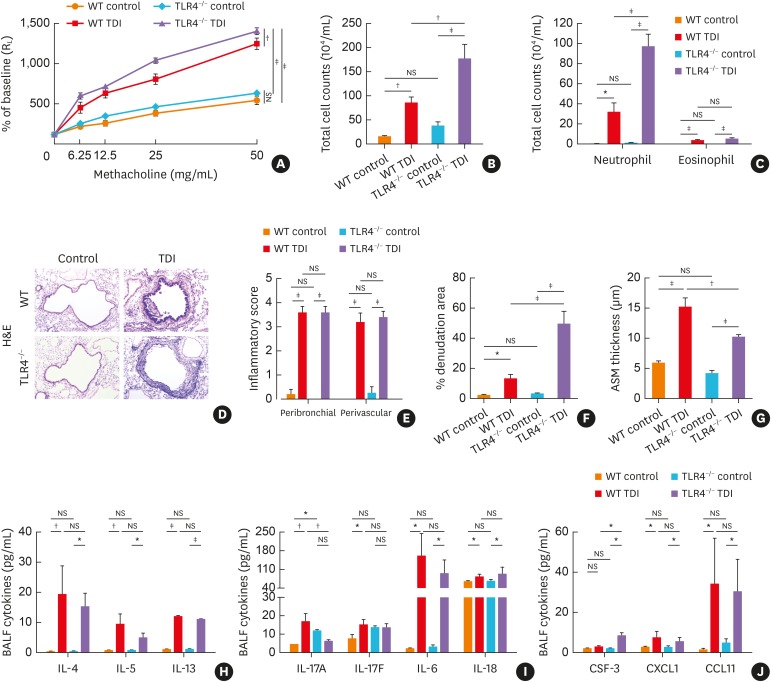
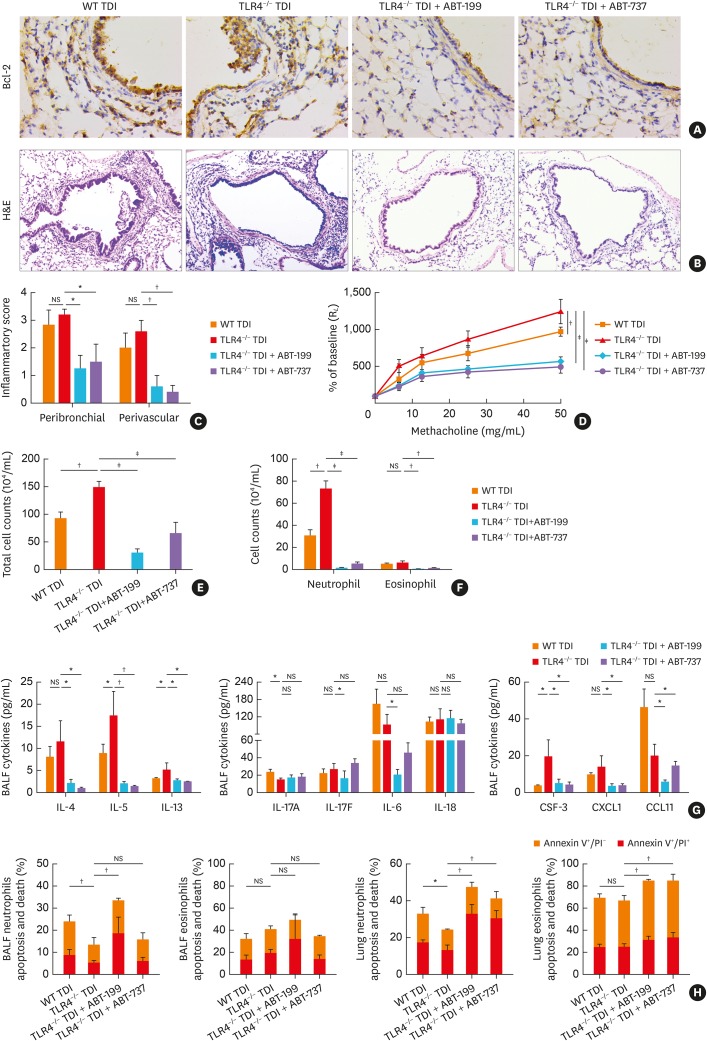
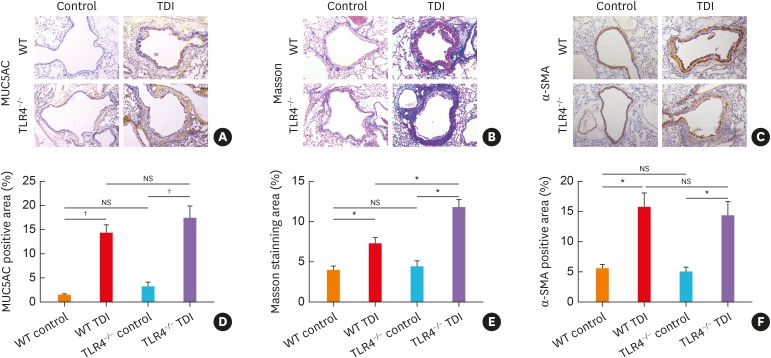
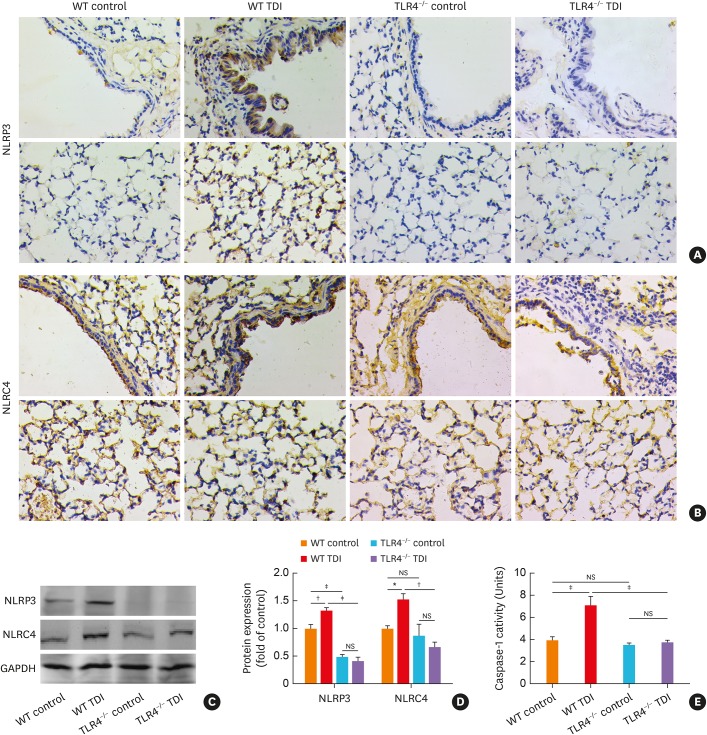
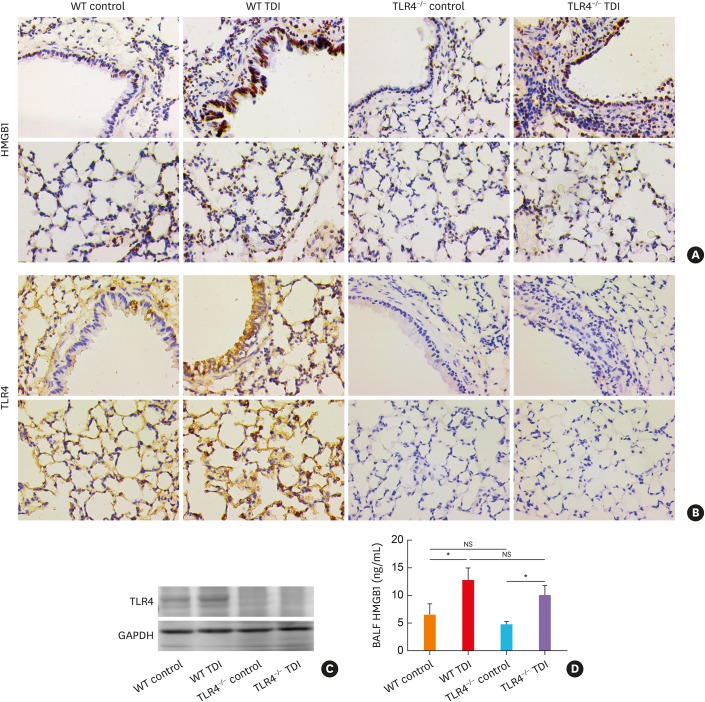
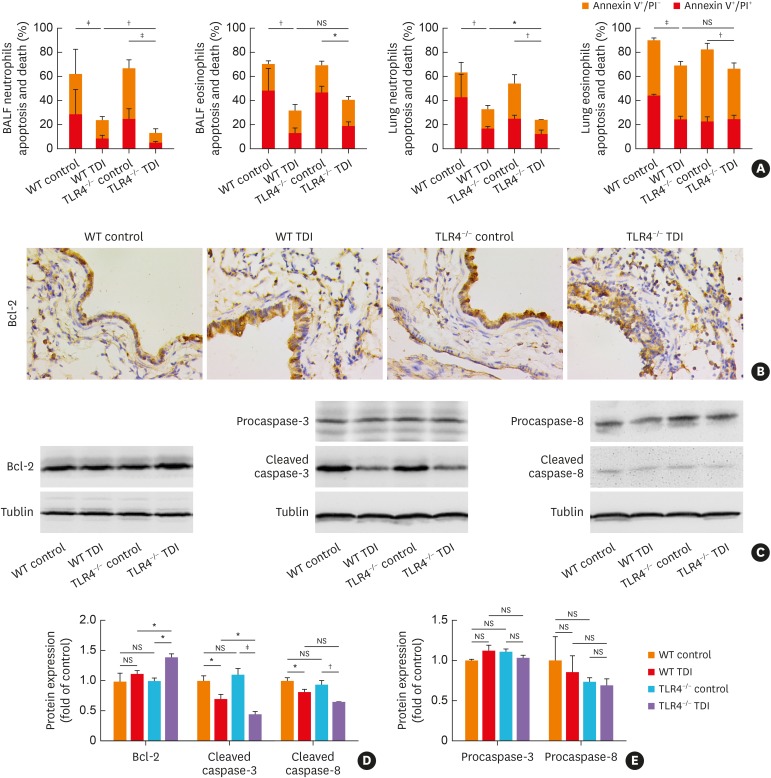
TDI exposure led to increased airway hyperresponsiveness (AHR), granulocyte flux, bronchial epithelial shedding and extensive submucosal collagen deposition, which were unexpectedly aggravated by TLR4 deficiency. Following TDI challenge, TLR4 mice exhibited down-regulated interleukin-17A and increased colony-stimulating factor 3 in bronchoalveolar lavage fluid (BALF), while WT mice did not. In addition, TLR4 deficiency robustly suppressed the expression of NOD-like receptor family pyrin domain containing 3 and NLR family CARD domain containing 4, decreased caspase-1 activity in TDI-exposed mice, but had no effect on the level of high mobility group box 1 in BALF. Flow cytometry revealed that TDI hampered both neutrophil and eosinophil apoptosis, of which neutrophil apoptosis was further inhibited in TDI-exposed TLR4 mice, with marked up-regulation of Bcl-2. Moreover, inhibition of Bcl-2 with either ABT-199 or ABT-737 significantly alleviated neutrophil recruitment by promoting apoptosis.
These data indicated that TLR4 deficiency promoted neutrophil infiltration by impairing its apoptosis via up-regulation of Bcl-2, thereby resulting in deteriorated AHR and airway inflammation, which suggests that TLR4 could be a negative regulator of TDI-induced neutrophilic inflammation.
越来越多的证据表明,Toll样受体4(TLR4)在哮喘发病机制中起关键作用。本研究旨在探讨TLR4在甲苯二异氰酸酯(TDI)诱导的过敏性气道炎症中的作用。
用TLR4和野生型(WT)C57BL/10J小鼠对TDI进行致敏和激发,以建立TDI诱导的哮喘模型。每次激发后,对暴露于TDI的TLR4小鼠经鼻给予B细胞淋巴瘤2(Bcl-2)抑制剂ABT-199(4mg/kg)和ABT-737(4mg/kg)。
TDI暴露导致气道高反应性(AHR)增加、粒细胞流量增加、支气管上皮脱落和广泛的黏膜下胶原沉积,而TLR4缺陷意外地加剧了这些情况。TDI激发后,TLR4小鼠支气管肺泡灌洗液(BALF)中白细胞介素-17A下调,集落刺激因子3增加,而WT小鼠则没有。此外,TLR4缺陷强烈抑制了含NOD样受体家族pyrin结构域3和含NLR家族CARD结构域4的表达,降低了暴露于TDI小鼠中的半胱天冬酶-1活性,但对BALF中高迁移率族蛋白盒1水平没有影响。流式细胞术显示,TDI阻碍了中性粒细胞和嗜酸性粒细胞的凋亡,其中暴露于TDI的TLR4小鼠中性粒细胞凋亡进一步受到抑制,Bcl-2明显上调。此外,用ABT-199或ABT-737抑制Bcl-2可通过促进凋亡显著减轻中性粒细胞募集。
这些数据表明,TLR4缺陷通过上调Bcl-2损害中性粒细胞凋亡,从而促进中性粒细胞浸润,导致AHR和气道炎症恶化,这表明TLR4可能是TDI诱导的中性粒细胞炎症的负调节因子。