German Federal Institute for Risk Assessment, Dept. Pesticides Safety, Max-Dohrn-Str. 8-10, 10589 Berlin, Germany.
German Federal Institute for Risk Assessment, Dept. Food Safety, Max-Dohrn-Str. 8-10, 10589 Berlin, Germany.
Cells. 2020 May 11;9(5):1192. doi: 10.3390/cells9051192.
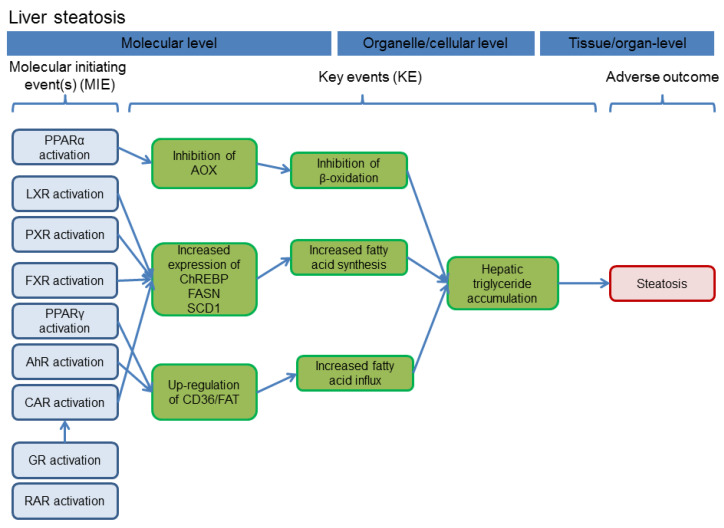
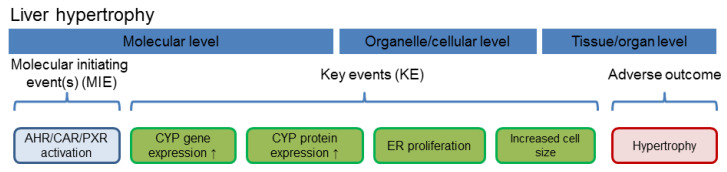
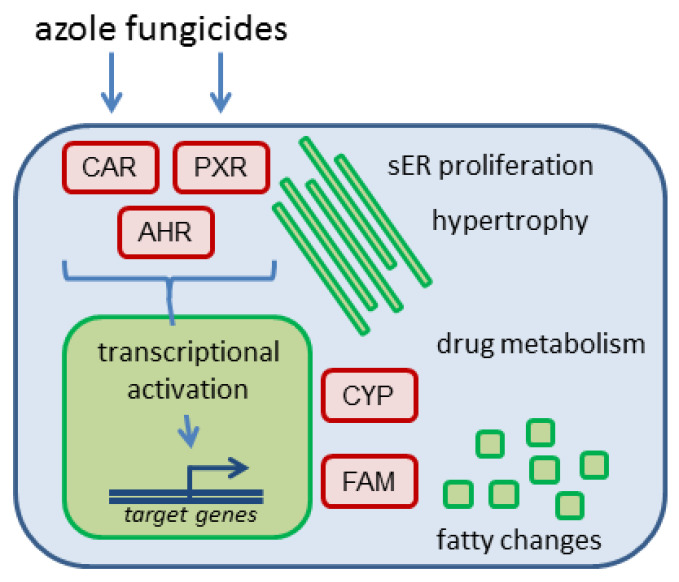
Azole fungicides, especially triazole compounds, are widely used in agriculture and as pharmaceuticals. For a considerable number of agricultural azole fungicides, the liver has been identified as the main target organ of toxicity. A number of previous studies points towards an important role of nuclear receptors such as the constitutive androstane receptor (CAR), the pregnane-X-receptor (PXR), or the aryl hydrocarbon receptor (AHR), within the molecular pathways leading to hepatotoxicity of these compounds. Nuclear receptor-mediated hepatic effects may comprise rather adaptive changes such as the induction of drug-metabolizing enzymes, to hepatocellular hypertrophy, histopathologically detectable fatty acid changes, proliferation of hepatocytes, and the promotion of liver tumors. Here, we present a comprehensive review of the current knowledge of the interaction of major agricultural azole-class fungicides with the three nuclear receptors CAR, PXR, and AHR in vivo and in vitro. Nuclear receptor activation profiles of the azoles are presented and related to histopathological findings from classic toxicity studies. Important issues such as species differences and multi-receptor agonism and the consequences for data interpretation and risk assessment are discussed.
唑类杀菌剂,特别是三唑类化合物,在农业和医药领域被广泛应用。对于相当数量的农用唑类杀菌剂,肝脏已被确定为毒性的主要靶器官。许多先前的研究表明,在这些化合物导致肝毒性的分子途径中,核受体如组成型雄烷受体 (CAR)、孕烷 X 受体 (PXR) 或芳烃受体 (AHR) 起着重要作用。核受体介导的肝效应可能包括适应性变化,如诱导药物代谢酶、肝细胞肥大、组织病理学上可检测到的脂肪酸变化、肝细胞增殖和促进肝肿瘤。在这里,我们全面回顾了主要农用唑类杀菌剂在体内和体外与三种核受体 CAR、PXR 和 AHR 相互作用的现有知识。介绍了唑类化合物的核受体激活谱,并将其与经典毒性研究中的组织病理学发现相关联。讨论了重要问题,如种属差异和多受体激动作用,以及对数据解释和风险评估的影响。