Beaulieu John C, Reed Shawndrika S, Obando-Ulloa Javier M, McClung Anna M
United States Department of Agriculture Agricultural Research Service Southern Regional Research Center New Orleans Louisiana.
Doctorate Program on Natural Science for the Development and Agronomy Engineering School Technology Institute of Costa Rica (ITCR) San Carlos Technology Local Campus Alajuela Ciudad Quesada Costa Rica.
Food Sci Nutr. 2020 Apr 13;8(5):2445-2457. doi: 10.1002/fsn3.1534. eCollection 2020 May.
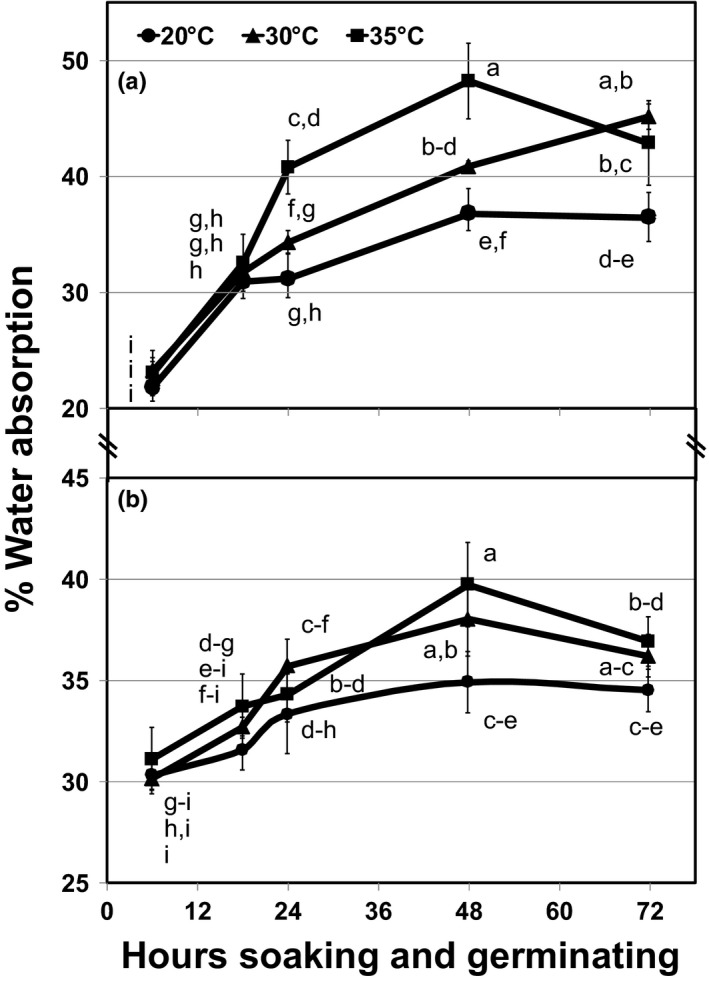
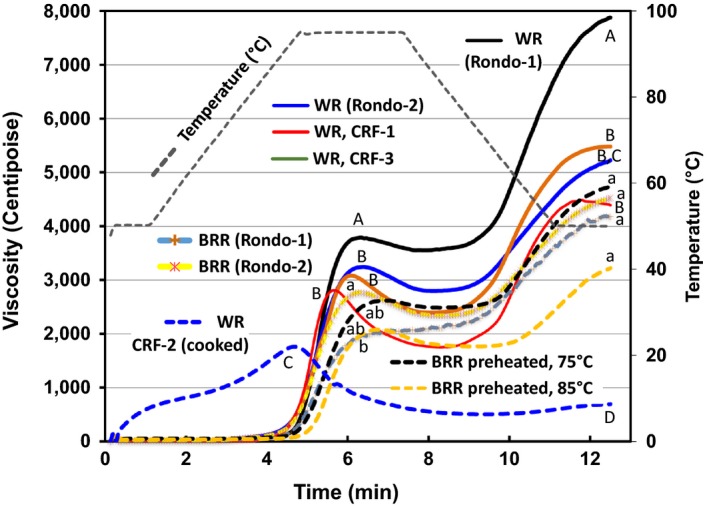
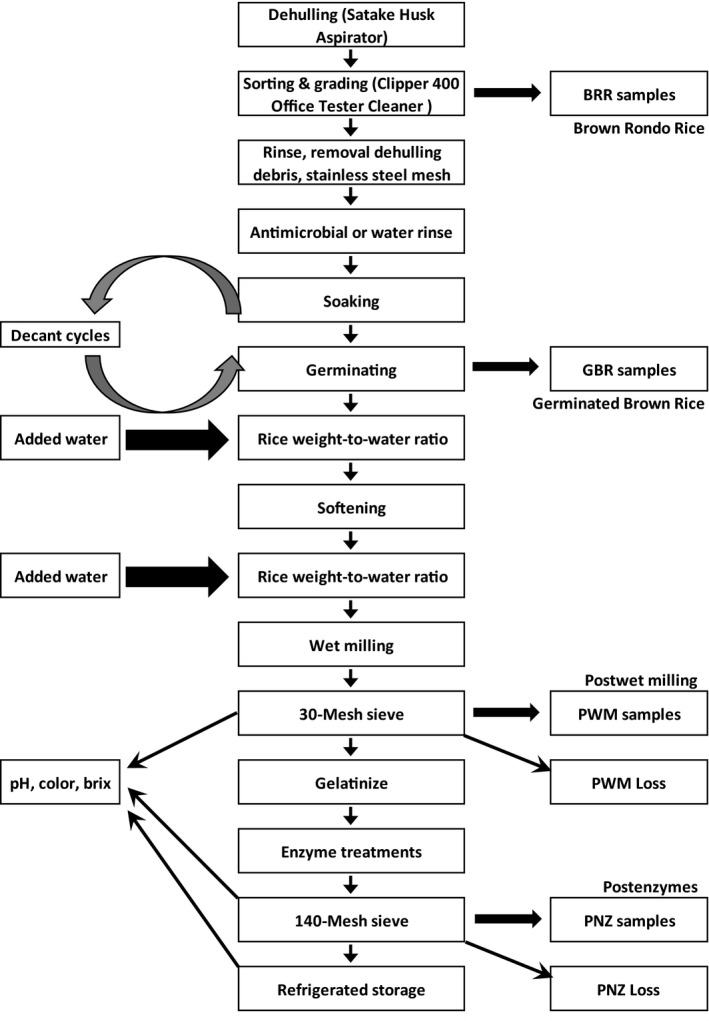
Rice-derived beverages offer a non-soy, lactose-free, cholesterol and gluten-free food source, which may offer well-balanced nutrition. Brown rice is nutritionally superior to white rice but oil oxidation and rancidity can be problematic regarding organoleptics during processing and storage. Using green technologies, which do not rely upon stabilization, brown rice was sprouted and processed with enzymes to produce preliminary value-added rice beverages. Paddy (rough) Rondo rice was dehulled using a pilot plant dehusker, sorted and cleaned into brown rice (BRR), rinsed, and germinated under various conditions (times and temperatures). Germinated brown rice (GBR) was then assessed (96.7 ± 0.8% germination and coleoptile length 2.24 ± 0.83 mm) prior to developing a method to soften, wet mill, sieve and gelatinize the matrix. Moderate macronutrient catabolism based on proximate analysis (e.g., 27.0%, 30.9% and 28.9% protein, oil and carbohydrate loss, respectively) and significantly decreased phytic acid (71.6%) from BRR → GBR along with processing efficiency were used to establish a germination and processing protocol engaging the natural enzymatic hydrolysis of starch and other biochemical changes. Based on rapid visco analyzer pasting properties in heated BRR, GBR sieving results and observations of stored crude beverages, proteins and oils apparently remained soluble and were conveyed forward into an the enzyme-treated solubilized oligosaccharide matrix, which could be a natural emulsion. A method for germinating and processing brown rice, leading to a completely green process and "free-flowing" soluble matrix to deliver preliminary sprouted brown rice beverages is presented.
米制饮品提供了一种非大豆、无乳糖、无胆固醇且无麸质的食物来源,可能提供营养均衡的饮食。糙米在营养上优于白米,但在加工和储存过程中,油脂氧化和酸败会影响其感官特性。采用不依赖稳定化处理的绿色技术,将糙米发芽并用酶进行处理,以生产具有初步附加值的米制饮品。使用中试脱壳机对水稻(糙米)隆多品种进行脱壳,筛选并清理成糙米(BRR),冲洗后在不同条件(时间和温度)下进行发芽。在开发软化、湿磨、筛分和使基质糊化的方法之前,先对发芽糙米(GBR)进行评估(发芽率为96.7±0.8%,胚芽鞘长度为2.24±0.83毫米)。基于近似分析的适度常量营养素分解代谢(例如,蛋白质、油脂和碳水化合物损失分别为27.0%、30.9%和28.9%)以及从BRR到GBR过程中植酸显著降低(71.6%),同时结合加工效率,建立了一种利用淀粉的自然酶水解和其他生化变化的发芽及加工方案。基于加热后的BRR的快速粘度分析仪糊化特性、GBR筛分结果以及对储存的粗制饮品的观察,蛋白质和油脂显然仍保持可溶状态,并被转移到经酶处理的溶解寡糖基质中,这可能是一种天然乳液。本文介绍了一种发芽和加工糙米的方法,该方法可实现完全绿色的加工过程,并得到“自由流动”的可溶性基质,以生产初步的发芽糙米饮品。