Department of Cardiology, The First Affiliated Hospital of Nanjing Medical University, 300 Guangzhou Road, Nanjing, 210029, China.
School of Computing, University of Southern Mississippi, Hattiesburg, USA.
J Nucl Cardiol. 2021 Jun;28(3):1023-1036. doi: 10.1007/s12350-020-02132-1. Epub 2020 May 13.
The systolic and diastolic dyssynchrony is physiologically related, but measure different left ventricular mechanisms. Left ventricular systolic mechanical dyssynchrony (systolic LVMD) has shown significant clinical values in improving cardiac resynchronization therapy (CRT) response in the heart failure patients with dilated cardiomyopathy (DCM). Our recent study demonstrated that LV diastolic dyssynchrony (diastolic LVMD) parameters have important prognostic values for DCM patients. However, there are a limited number of studies about the clinical value of diastolic LVMD for CRT. This study aims to explore the predictive values of both systolic LVMD and diastolic LVMD for CRT in DCM patients.
Eighty-four consecutive CRT patients with both DCM and complete left bundle branch block (CLBBB) who received gated resting SPECT MPI at baseline were included in the present study. The phase analysis technique was applied on resting gated short-axis SPECT MPI images to measure systolic LVMD and diastolic LVMD, characterized by phase standard deviation (PSD) and phase histogram bandwidth (PBW). CRT response was defined as ≥ 5% improvement of LVEF at 6-month follow-up. Variables with P < 0.10 in the univariate analysis were included in the multivariate cox analysis.
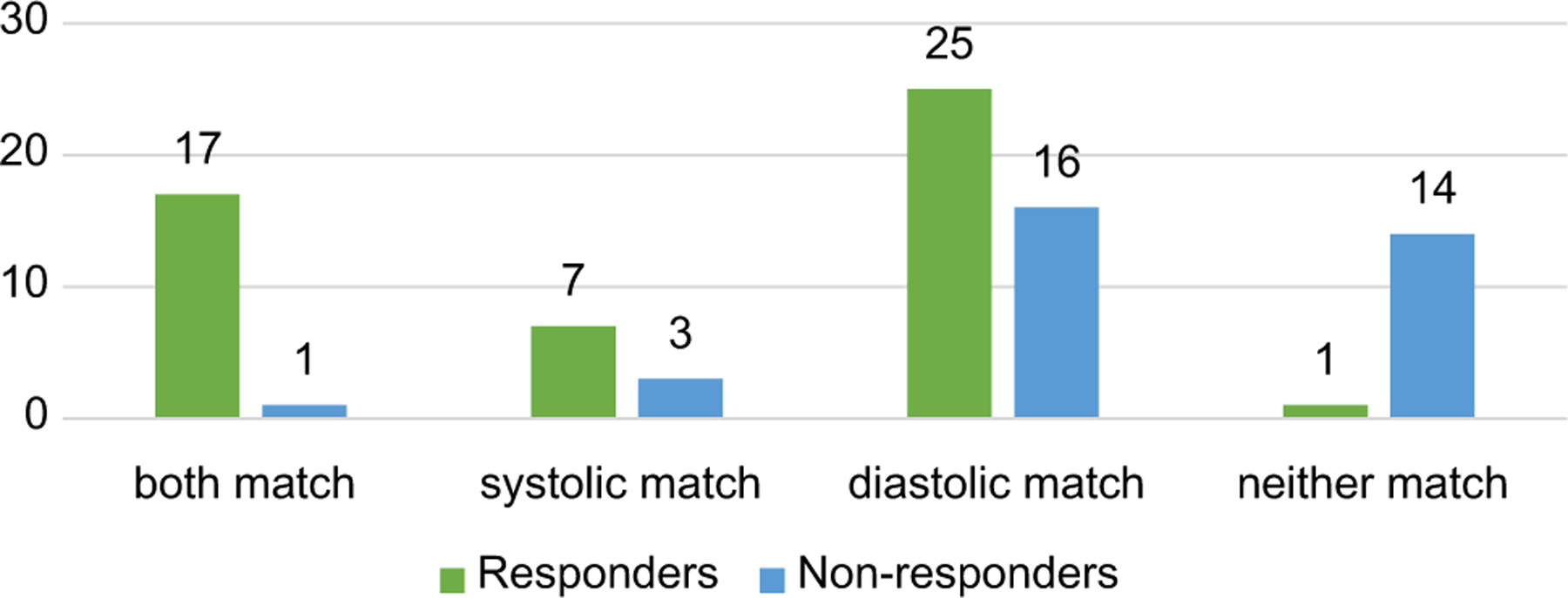
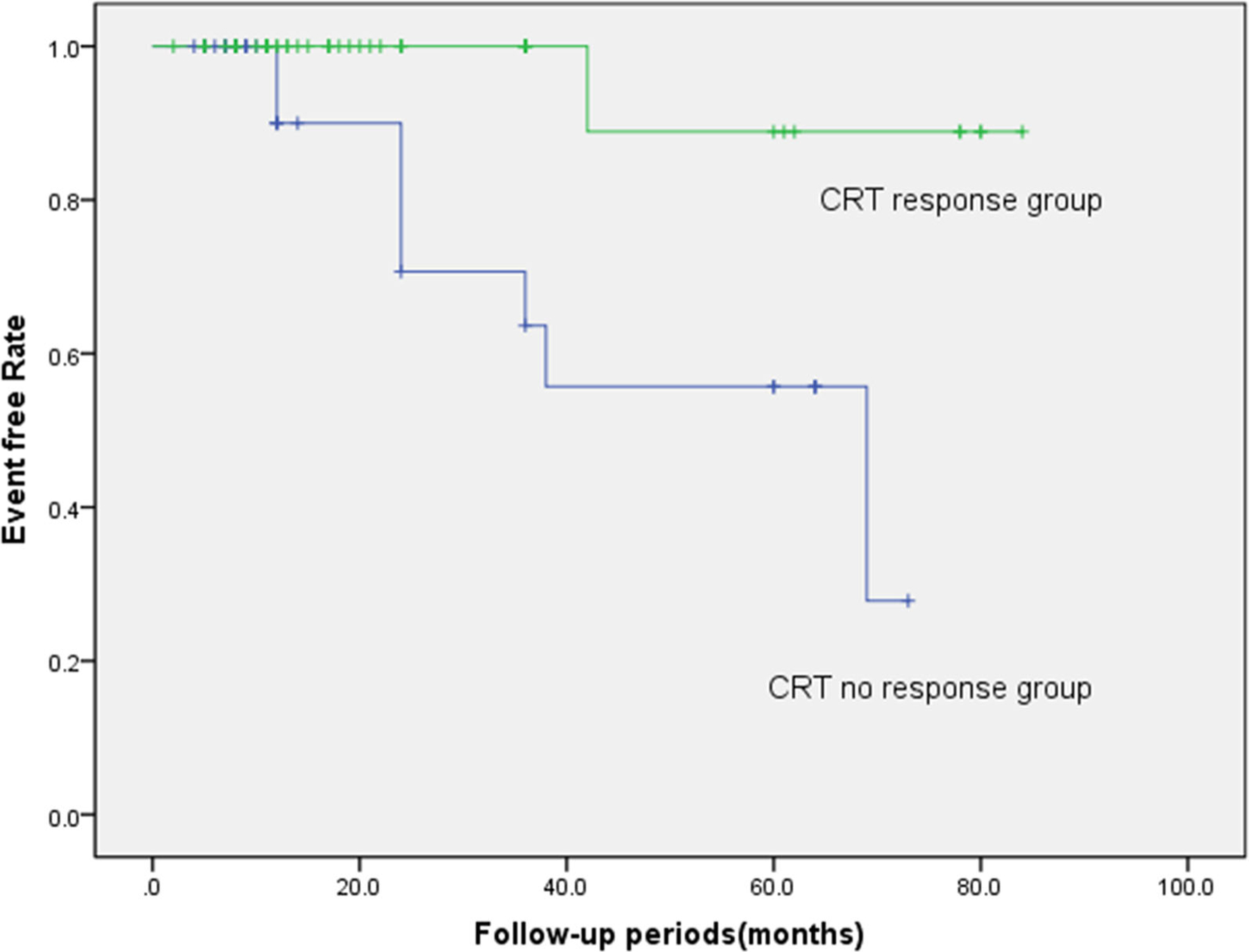
During the follow-up period, 59.5% (50 of 84) patients were CRT responders. The univariate cox regression analysis showed that at baseline QRS duration, non-sustained ventricular tachycardia (NS-VT), systolic PSD, systolic PBW, diastolic PSD, diastolic PBW, scar burden and LV lead in the scarred myocardium were statistically significantly associated with CRT response. The multivariate cox regression analysis showed that QRS duration, NS-VT, systolic PSD, systolic PBW, diastolic PSD, and diastolic PBW were independent predictive factors for CRT response. Furthermore, the rate of CRT response was 94.4% (17 of 18) in patients whose LV lead was in the segments with both the first three late contraction and the first three late relaxation; by contrast, the rate of CRT response was only 6.7% (1 of 15, P < 0.000) in patients whose LV lead was in the segments with neither the first three late contraction nor the first three late relaxation.
Both systolic LVMD and diastolic LVMD from gated SPECT MPI have important predictive values for CRT response in DCM patients. Pacing at LV segments with both late contraction and late relaxation has potential to increase the CRT response.
收缩和舒张不同步在生理学上是相关的,但测量的是不同的左心室机制。左心室收缩机械不同步(收缩 LVMD)在改善扩张型心肌病(DCM)心力衰竭患者的心脏再同步治疗(CRT)反应方面具有显著的临床价值。我们最近的研究表明,LV 舒张不同步(舒张 LVMD)参数对 DCM 患者具有重要的预后价值。然而,关于舒张 LVMD 对 CRT 的临床价值的研究数量有限。本研究旨在探讨收缩 LVMD 和舒张 LVMD 对 DCM 患者 CRT 的预测价值。
本研究纳入了 84 例接受门控静息 SPECT MPI 检查的连续 CRT 患者,这些患者均患有 DCM 和完全左束支传导阻滞(CLBBB)。应用相位分析技术对静息门控短轴 SPECT MPI 图像进行测量,以测量收缩 LVMD 和舒张 LVMD,特征为相位标准差(PSD)和相位直方图带宽(PBW)。CRT 反应定义为 6 个月随访时 LVEF 改善≥5%。单因素分析中 P<0.10 的变量被纳入多因素 Cox 分析。
在随访期间,59.5%(50/84)的患者为 CRT 反应者。单因素 Cox 回归分析显示,基线 QRS 持续时间、非持续性室性心动过速(NS-VT)、收缩期 PSD、收缩期 PBW、舒张期 PSD、舒张期 PBW、瘢痕负荷和 LV 导联在瘢痕心肌中与 CRT 反应相关。多因素 Cox 回归分析显示,QRS 持续时间、NS-VT、收缩期 PSD、收缩期 PBW、舒张期 PSD 和舒张期 PBW 是 CRT 反应的独立预测因素。此外,LV 导联位于既有最早三个收缩延迟又有最早三个舒张延迟的节段的患者 CRT 反应率为 94.4%(17/18);相比之下,LV 导联位于既无最早三个收缩延迟又无最早三个舒张延迟的节段的患者 CRT 反应率仅为 6.7%(1/15,P<0.000)。
门控 SPECT MPI 的收缩 LVMD 和舒张 LVMD 对 DCM 患者 CRT 反应均具有重要的预测价值。在既有收缩延迟又有舒张延迟的 LV 节段起搏有可能增加 CRT 反应。