Department of Biomedical Sciences, Colorado State University, Fort Collins, Colorado, United States of America.
Molecular, Cellular, and Integrative Neuroscience Program, Colorado State University, Fort Collins, Colorado, United States of America.
PLoS One. 2020 May 14;15(5):e0232991. doi: 10.1371/journal.pone.0232991. eCollection 2020.
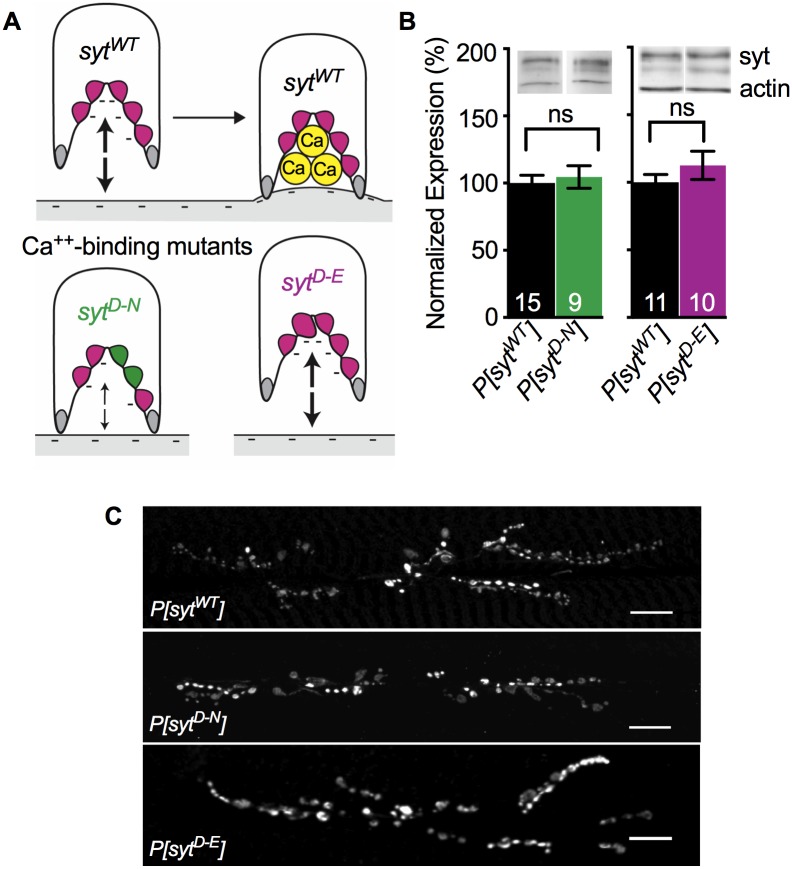
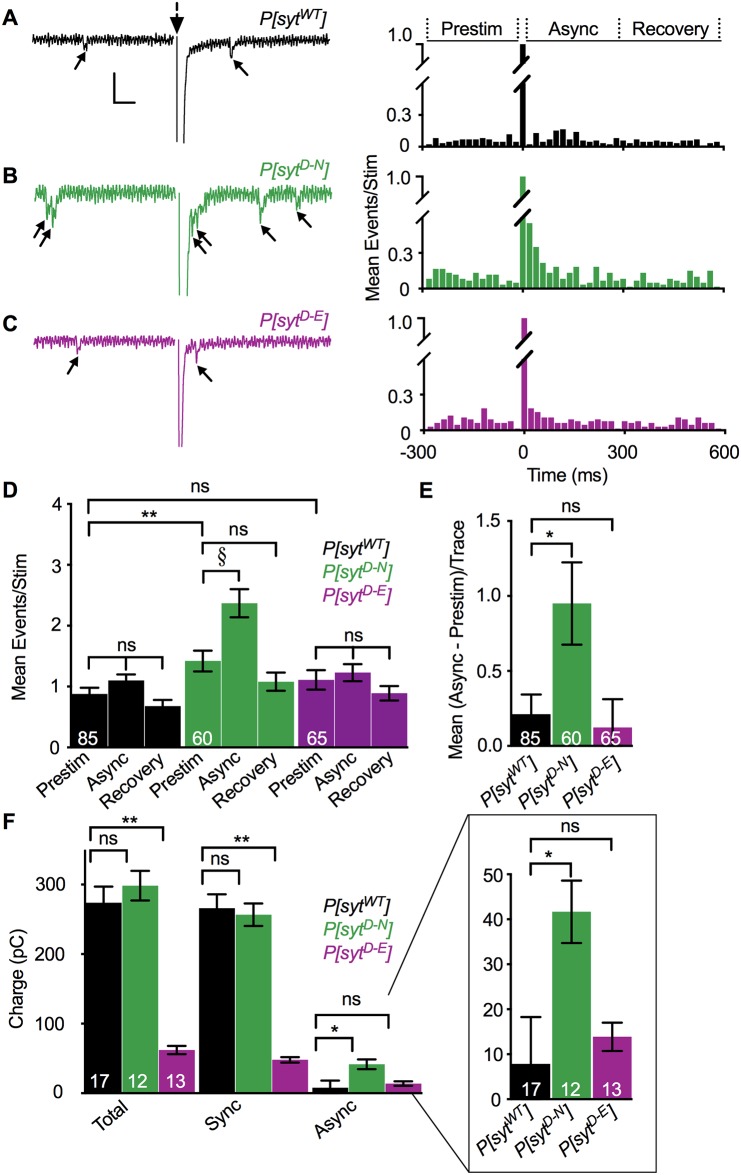
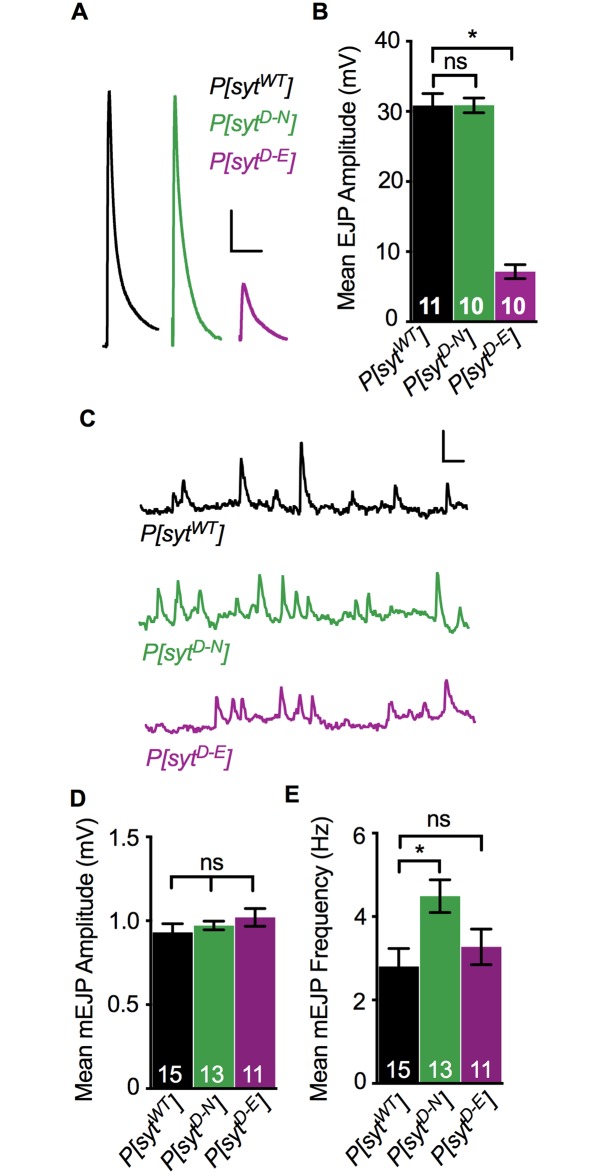
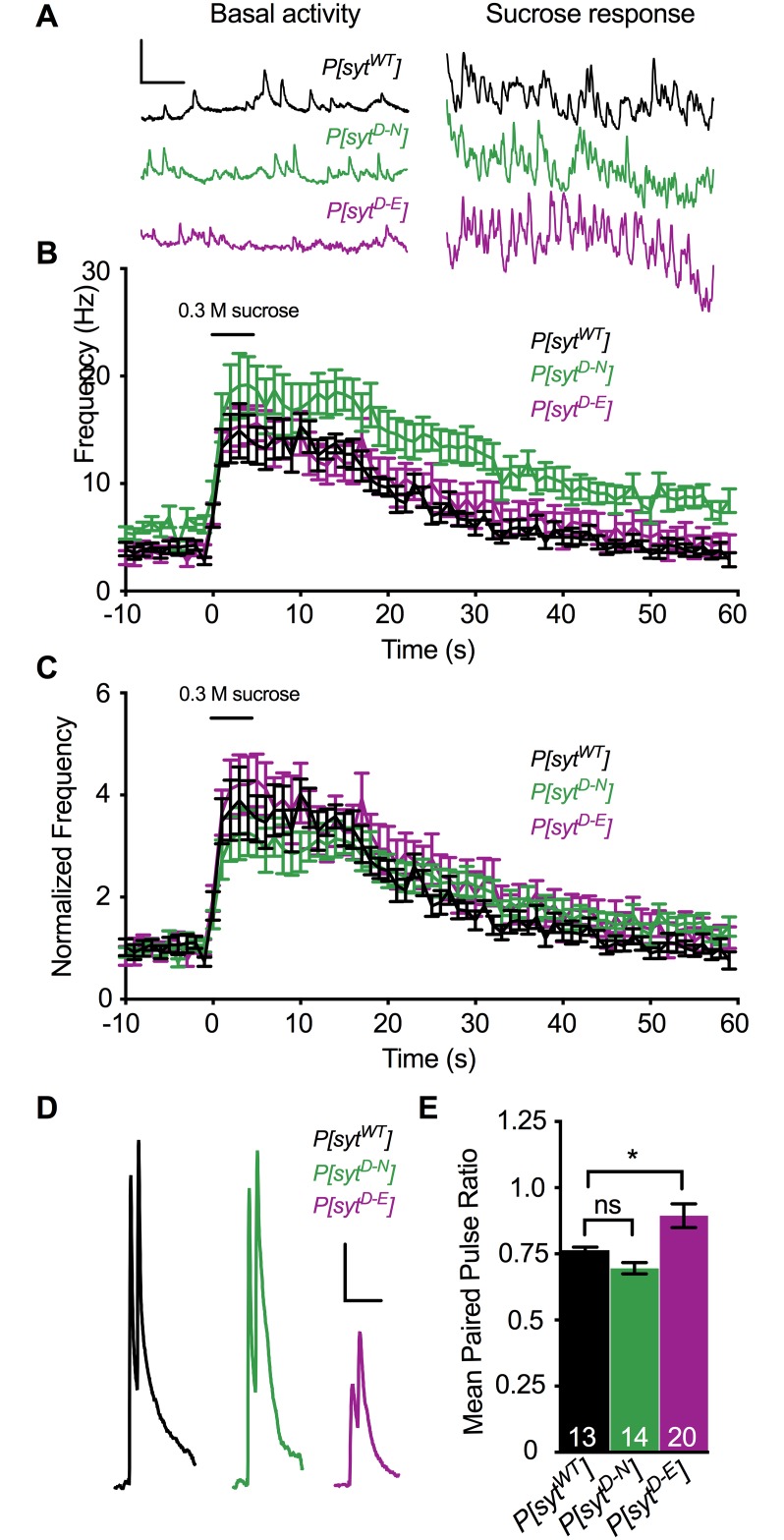
Following nerve stimulation, there are two distinct phases of Ca2+-dependent neurotransmitter release: a fast, synchronous release phase, and a prolonged, asynchronous release phase. Each of these phases is tightly regulated and mediated by distinct mechanisms. Synaptotagmin 1 is the major Ca2+ sensor that triggers fast, synchronous neurotransmitter release upon Ca2+ binding by its C2A and C2B domains. It has also been implicated in the inhibition of asynchronous neurotransmitter release, as blocking Ca2+ binding by the C2A domain of synaptotagmin 1 results in increased asynchronous release. However, the mutation used to block Ca2+ binding in the previous experiments (aspartate to asparagine mutations, sytD-N) had the unintended side effect of mimicking Ca2+ binding, raising the possibility that the increase in asynchronous release was directly caused by ostensibly constitutive Ca2+ binding. Thus, rather than modulating an asynchronous sensor, sytD-N may be mimicking one. To directly test the C2A inhibition hypothesis, we utilized an alternate C2A mutation that we designed to block Ca2+ binding without mimicking it (an aspartate to glutamate mutation, sytD-E). Analysis of both the original sytD-N mutation and our alternate sytD-E mutation at the Drosophila neuromuscular junction showed differential effects on asynchronous release, as well as on synchronous release and the frequency of spontaneous release. Importantly, we found that asynchronous release is not increased in the sytD-E mutant. Thus, our work provides new mechanistic insight into synaptotagmin 1 function during Ca2+-evoked synaptic transmission and demonstrates that Ca2+ binding by the C2A domain of synaptotagmin 1 does not inhibit asynchronous neurotransmitter release in vivo.
神经刺激后,Ca2+依赖性神经递质释放有两个明显的阶段:快速、同步释放阶段和延长、异步释放阶段。这两个阶段都受到严格的调节,并由不同的机制介导。突触融合蛋白 1 是主要的 Ca2+传感器,其 C2A 和 C2B 结构域与 Ca2+结合后触发快速、同步的神经递质释放。它还被牵连到抑制异步神经递质释放中,因为通过突触融合蛋白 1 的 C2A 结构域阻断 Ca2+结合会导致异步释放增加。然而,用于阻断之前实验中 Ca2+结合的突变(天冬氨酸到天冬酰胺突变,sytD-N)具有模仿 Ca2+结合的意外副作用,这增加了异步释放增加直接是由表面组成型 Ca2+结合引起的可能性。因此,sytD-N 可能不是调节异步传感器,而是模仿一个。为了直接测试 C2A 抑制假说,我们利用了一种替代的 C2A 突变,我们设计该突变来阻断 Ca2+结合而不模仿它(天冬氨酸到谷氨酸突变,sytD-E)。在果蝇肌肉神经接点上对原始 sytD-N 突变和我们的替代 sytD-E 突变进行分析,结果显示对异步释放以及同步释放和自发性释放频率有不同的影响。重要的是,我们发现 sytD-E 突变体中的异步释放没有增加。因此,我们的工作为突触融合蛋白 1 在 Ca2+引发的突触传递过程中的功能提供了新的机制见解,并表明突触融合蛋白 1 的 C2A 结构域的 Ca2+结合在体内不会抑制异步神经递质释放。