Wang Xinyang, Liu Qian, Huang Yanbin, Xie Lu, Xu Quan, Zhao Tianxiang
Equipment Support and Remanufacturing Department, Army Academy of Armored Forces, Beijing 100072, China.
School of Mechanical Engineering, University of Science and Technology Beijing, Beijing 100083, China.
Materials (Basel). 2020 May 12;13(10):2209. doi: 10.3390/ma13102209.
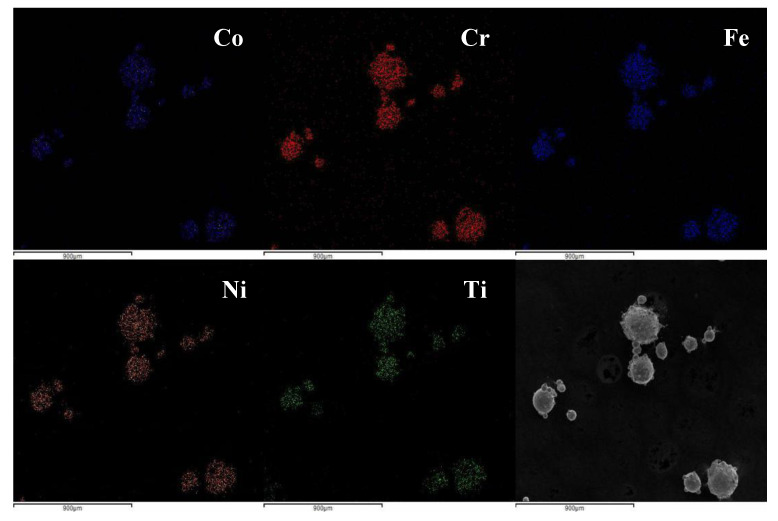
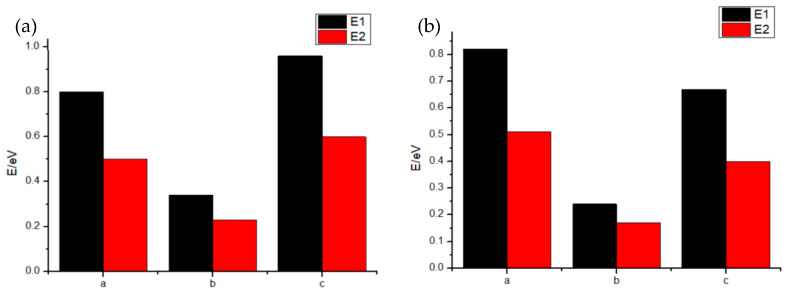
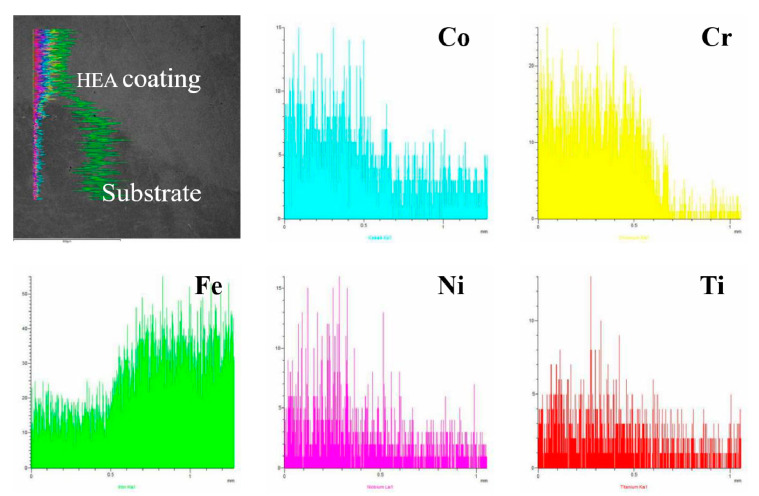
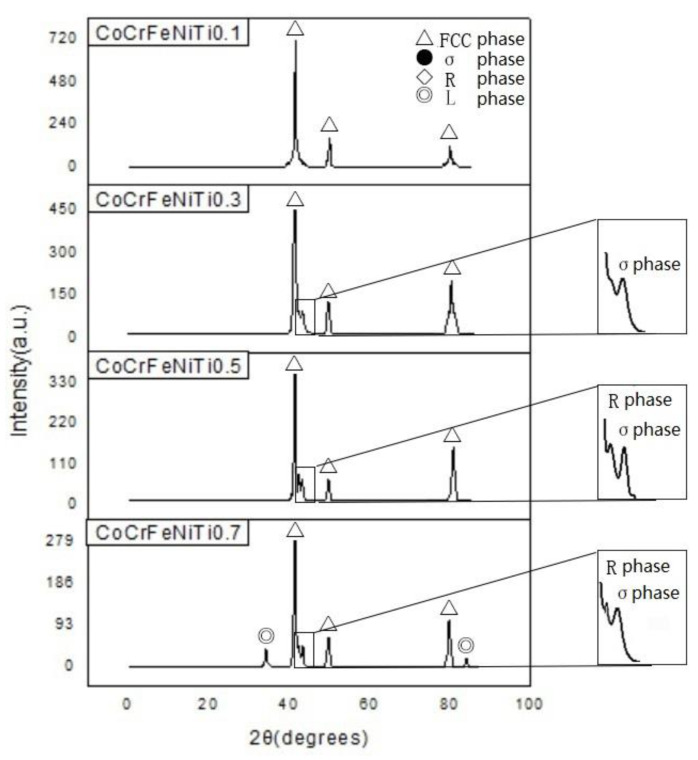
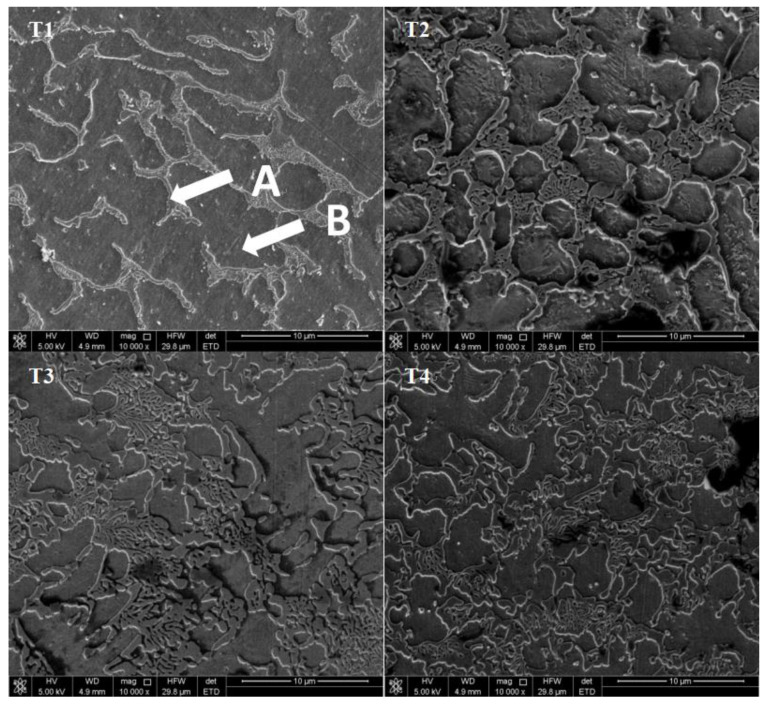
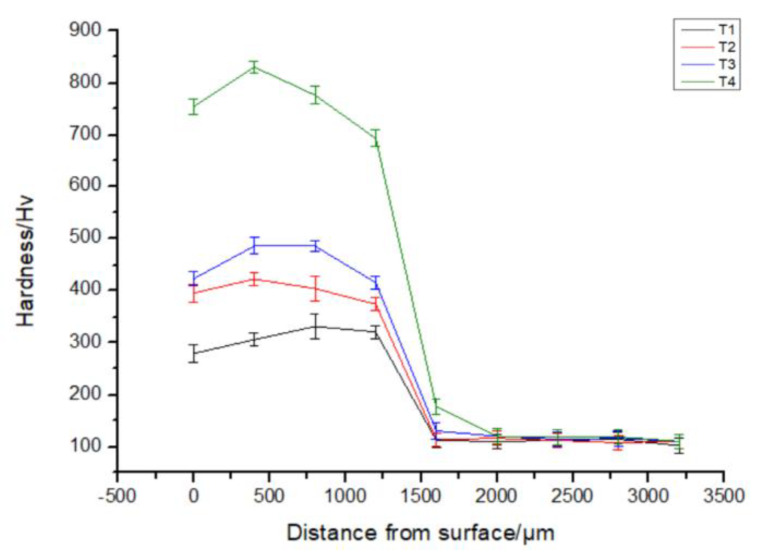
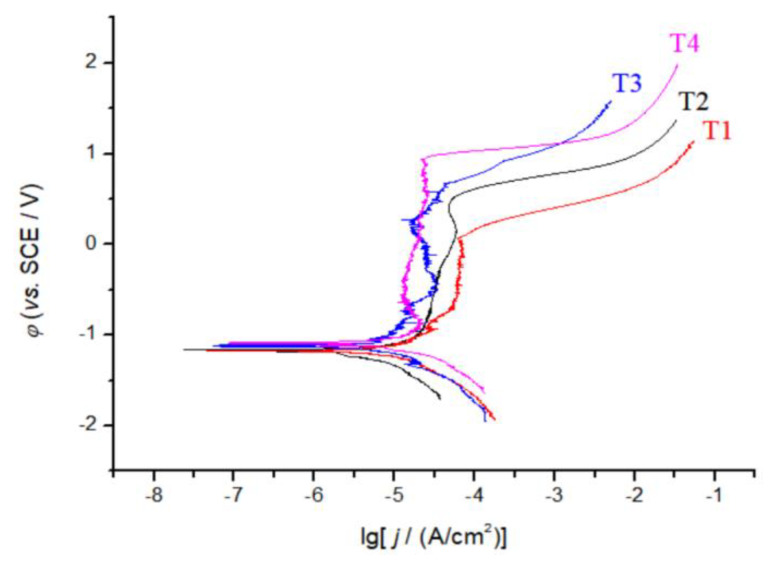
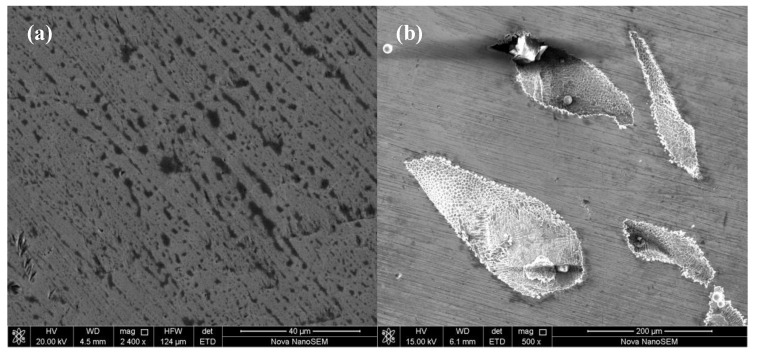
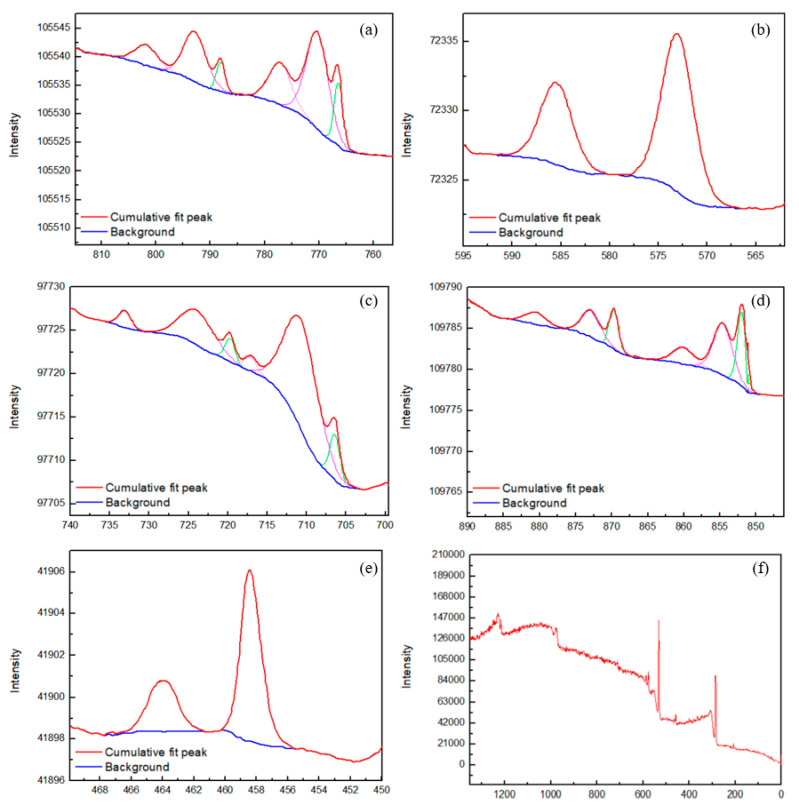
In this paper, CoCrFeNiTi high entropy alloy (HEA) coatings were prepared on the surface of Q235 steel by laser cladding. The microstructure, microhardness, and corrosion resistance of the coatings were studied. The mechanism of their corrosion resistance was elucidated experimentally and by first-principles calculations. The results show that CoCrFeNiTi adopts a face-centered cubic (FCC) phase, CoCrFeNiTi exhibits an FCC phase and a tetragonal FeCr phase, and CoCrFeNiTi adopts an FCC phase, a tetragonal FeCr phase, and a rhombohedral NiTi phase. The FCC phase, tetragonal FeCr phase, rhombohedral NiTi phase, and hexagonal CoTi phase are all observed in the CoCrFeNiTi HEA. The alloys assume the dendritic structure that is typical of HEAs. Ni and Ti are enriched in the interdendritic regions, whereas Cr and Fe are enriched in the dendrites. With increasing Ti content, the hardness of the cladding layers also increases due to the combined effects of lattice distortion and dispersion strengthening. When exposed to a 3.5 wt.% NaCl solution, pitting corrosion is the main form of corrosion on the CoCrFeNiTi HEA surfaces. The corrosion current densities of CoCrFeNiTi HEAs are much lower than those of other HEAs. As the Ti content increases, the corrosion resistance is improved. Through X-ray photoelectron spectroscopy (XPS) and first-principles calculations, the origin of the higher corrosion resistance of the coatings is connected to the presence of a dense passivation film. In summary, the corrosion resistance and mechanical properties of CoCrFeNiTi alloy are much better than the other three groups, which promotes the development of HEA systems with high value for industrial application.
本文通过激光熔覆在Q235钢表面制备了CoCrFeNiTi高熵合金(HEA)涂层。研究了涂层的微观结构、显微硬度和耐腐蚀性。通过实验和第一性原理计算阐明了其耐腐蚀机理。结果表明,CoCrFeNiTi呈现面心立方(FCC)相,CoCrFeNiTi呈现FCC相和四方FeCr相,CoCrFeNiTi呈现FCC相、四方FeCr相和菱方NiTi相。在CoCrFeNiTi高熵合金中均观察到FCC相、四方FeCr相、菱方NiTi相和六方CoTi相。这些合金呈现出高熵合金典型的树枝状结构。Ni和Ti在枝晶间区域富集,而Cr和Fe在枝晶中富集。随着Ti含量的增加,由于晶格畸变和弥散强化的共同作用,熔覆层的硬度也随之增加。当暴露在3.5 wt.%的NaCl溶液中时,点蚀是CoCrFeNiTi高熵合金表面腐蚀的主要形式。CoCrFeNiTi高熵合金的腐蚀电流密度远低于其他高熵合金。随着Ti含量的增加,耐腐蚀性提高。通过X射线光电子能谱(XPS)和第一性原理计算,涂层具有较高耐腐蚀性的原因与致密钝化膜的存在有关。综上所述,CoCrFeNiTi合金的耐腐蚀性和力学性能远优于其他三组,这促进了具有高工业应用价值的高熵合金体系的发展。