Manchikanti Laxmaiah, Singh Vanila, Kaye Alan D, Hirsch Joshua A
Pain Management Centers of America, Paducah, KY, USA.
University of Louisville, Louisville, KY, USA.
Pain Ther. 2020 Dec;9(2):373-391. doi: 10.1007/s40122-020-00170-8. Epub 2020 May 14.
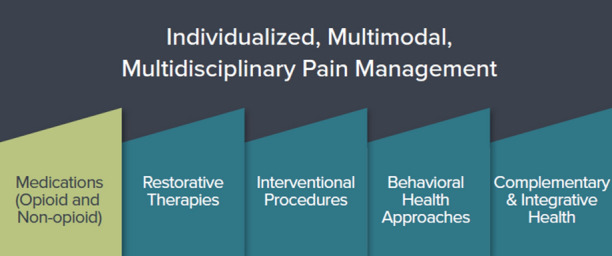
The treatment of noncancer pain in the United States and globally is met with significant challenges, resulting in profound physical, emotional, and societal costs. Based on this need, numerous modalities have been proposed to manage chronic pain, including opioid and nonopioid interventions as well as surgical approaches. Thus, the future of pain management continues to be mired in evolving concepts and constant debates. Consequently, it is crucial to understand the past as we move towards the future. The evolution of lessons for better pain management at present and for the future starting from the 1990s to the present date are reviewed and emphasized with a focus on learning from the past for the future. This review summarizes the evolution of multiple modalities of treatments, including multidisciplinary programs, multimodal therapy, interventional techniques, opioid therapy, other conservative modalities, and surgical interventions. This review emphasizes the individual, patient-centered development of an effective pain treatment plan after proper evaluation to establish a diagnosis. It includes measurable outcomes that focus on improvements in the quality of life and activities of daily living, as well as improvement in pain and function and, most importantly, return to productive citizenship. It is crucial that the knowledge of best practices be advanced, along with emphasis on lessons learned in the past to provide best practices for better pain management.
在美国乃至全球,非癌性疼痛的治疗面临着重大挑战,这会带来巨大的身体、情感和社会成本。基于这一需求,人们提出了多种治疗慢性疼痛的方法,包括阿片类和非阿片类干预措施以及手术方法。因此,疼痛管理的未来仍深陷于不断演变的概念和持续的争论之中。所以,在迈向未来的过程中,了解过去至关重要。本文回顾并强调了从20世纪90年代至今在改善疼痛管理方面的经验教训的演变,重点是为未来而从过去汲取经验。这篇综述总结了多种治疗方式的演变,包括多学科项目、多模式疗法、介入技术、阿片类药物治疗、其他保守治疗方式以及手术干预。这篇综述强调在进行适当评估以确立诊断后,以患者个体为中心制定有效的疼痛治疗计划。它包括可衡量的结果,重点是生活质量和日常生活活动的改善,以及疼痛和功能的改善,最重要的是恢复有生产能力的公民身份。推进最佳实践知识至关重要,同时要强调过去吸取的经验教训,以提供更好的疼痛管理的最佳实践。