Cook Douglas D, Meehan Kyler, Asatiani Levan, Robertson Daniel J
1Department of Mechanical Engineering, Brigham Young University, Provo, UT 84602 USA.
2Division of Engineering, New York University-Abu Dhabi, Saadiyat Island, Abu Dhabi, United Arab Emirates.
Plant Methods. 2020 May 8;16:65. doi: 10.1186/s13007-020-00610-8. eCollection 2020.
Stalk lodging (breaking of plant stems prior to harvest) is a major impediment to increasing agricultural yields of grain crops. Rind puncture resistance is commonly used to predict the lodging resistance of several crop species. However, there exist no standard operating procedures or suggested protocols for conducting rind penetration experiments. In addition, experimental details of rind penetration tests such as the shape and size of the penetrating probe are rarely reported in the literature. This has prevented meta-analysis of results and has likewise prevented key findings of past studies from being replicated. As a first step towards establishing an agreed upon measurement standard for rind puncture resistance this study investigates the effect of the puncturing probe's geometry on test results.
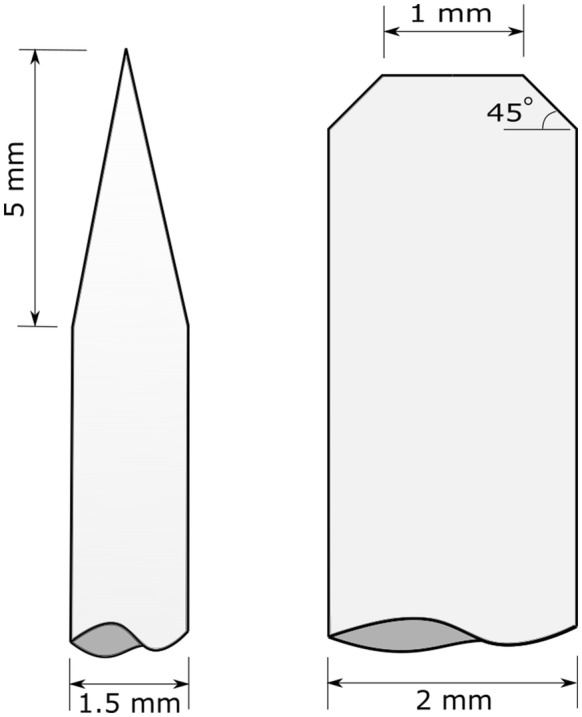
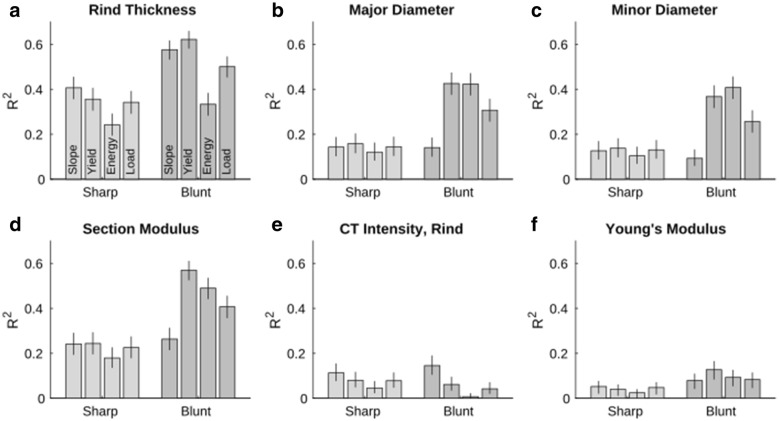
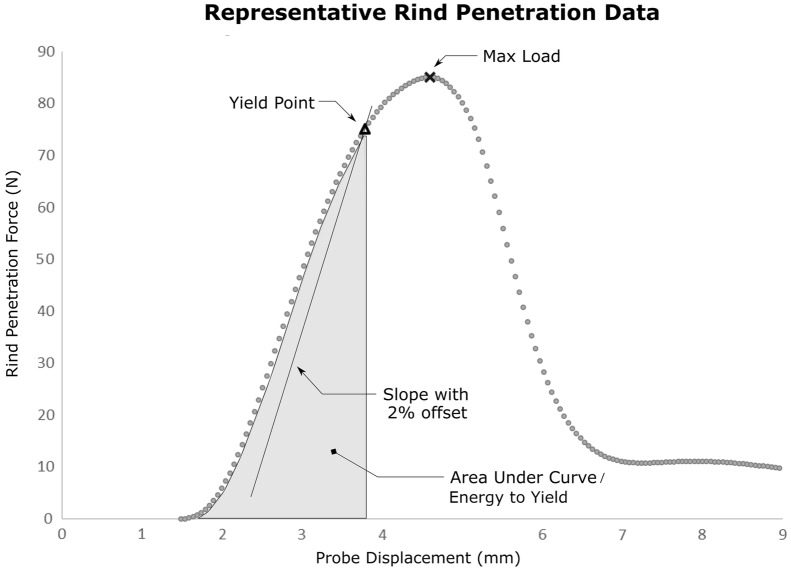
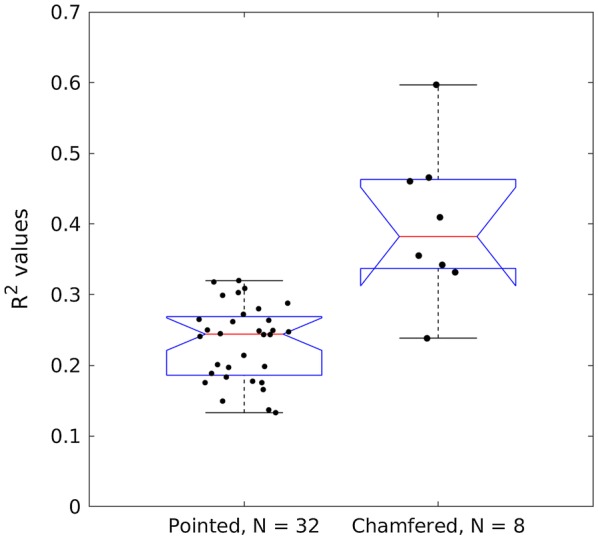
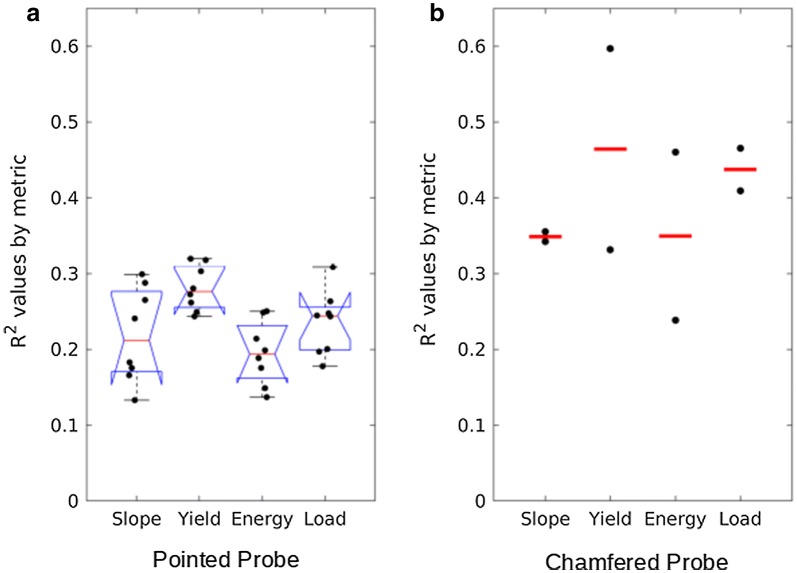
Results demonstrate that probe geometry has a significant impact on test results. In particular, results showed that a 2 mm diameter chamfered probe produced stronger correlations with stalk bending strength than a 1.5 mm diameter pointed probe. The chamfered probe was also more strongly correlated with geometric features of the stalk that are known to influence stalk lodging resistance (e.g., rind thickness, diameter and section modulus). In addition, several alternative rind penetration metrics were investigated, and some were found to be superior to the most common rind penetration metric of maximum load.
There is a need in the agricultural and plant science community to create agreed-upon operating procedures and testing standards related to mechanical traits of plant stems. In particular, a standardized probe geometry and insertion rate for rind penetration studies are needed to enable greater interoperability and meta-analysis of results. Probe shape and size should be reported in any study conducting rind penetration tests as these factors significantly impact test results.
茎倒伏(收获前植物茎秆折断)是提高谷类作物农业产量的主要障碍。外皮抗穿刺性通常用于预测几种作物的抗倒伏性。然而,目前尚无进行外皮穿刺实验的标准操作程序或建议方案。此外,外皮穿刺试验的实验细节,如穿刺探针的形状和尺寸,在文献中很少报道。这阻碍了对结果的荟萃分析,同样也阻碍了以往研究的关键发现被重复验证。作为朝着建立公认的外皮抗穿刺性测量标准迈出的第一步,本研究调查了穿刺探针的几何形状对测试结果的影响。
结果表明,探针几何形状对测试结果有显著影响。特别是,结果显示,直径2毫米的倒角探针与茎秆弯曲强度的相关性比直径1.5毫米的尖头探针更强。倒角探针与已知影响茎秆抗倒伏性的茎秆几何特征(如外皮厚度、直径和截面模量)的相关性也更强。此外,还研究了几种替代的外皮穿刺指标,发现其中一些指标优于最常用的最大载荷外皮穿刺指标。
农业和植物科学界需要制定与植物茎秆机械特性相关的公认操作程序和测试标准。特别是,需要为外皮穿刺研究制定标准化的探针几何形状和插入速率,以实现更高的结果互操作性和荟萃分析。在任何进行外皮穿刺试验的研究中,都应报告探针的形状和尺寸,因为这些因素会显著影响测试结果。