Ruth L. and David S. Gottesman Institute for Stem Cell and Regenerative Medicine Research, Albert Einstein College of Medicine, Bronx, New York, NY 10461, USA; Department of Cell Biology, Albert Einstein College of Medicine, Bronx, New York, NY 10461, USA.
Department of Radiation Oncology, Albert Einstein College of Medicine, Bronx, New York, NY 10461, USA.
Dev Cell. 2020 Jun 8;53(5):503-513.e5. doi: 10.1016/j.devcel.2020.04.012. Epub 2020 May 14.
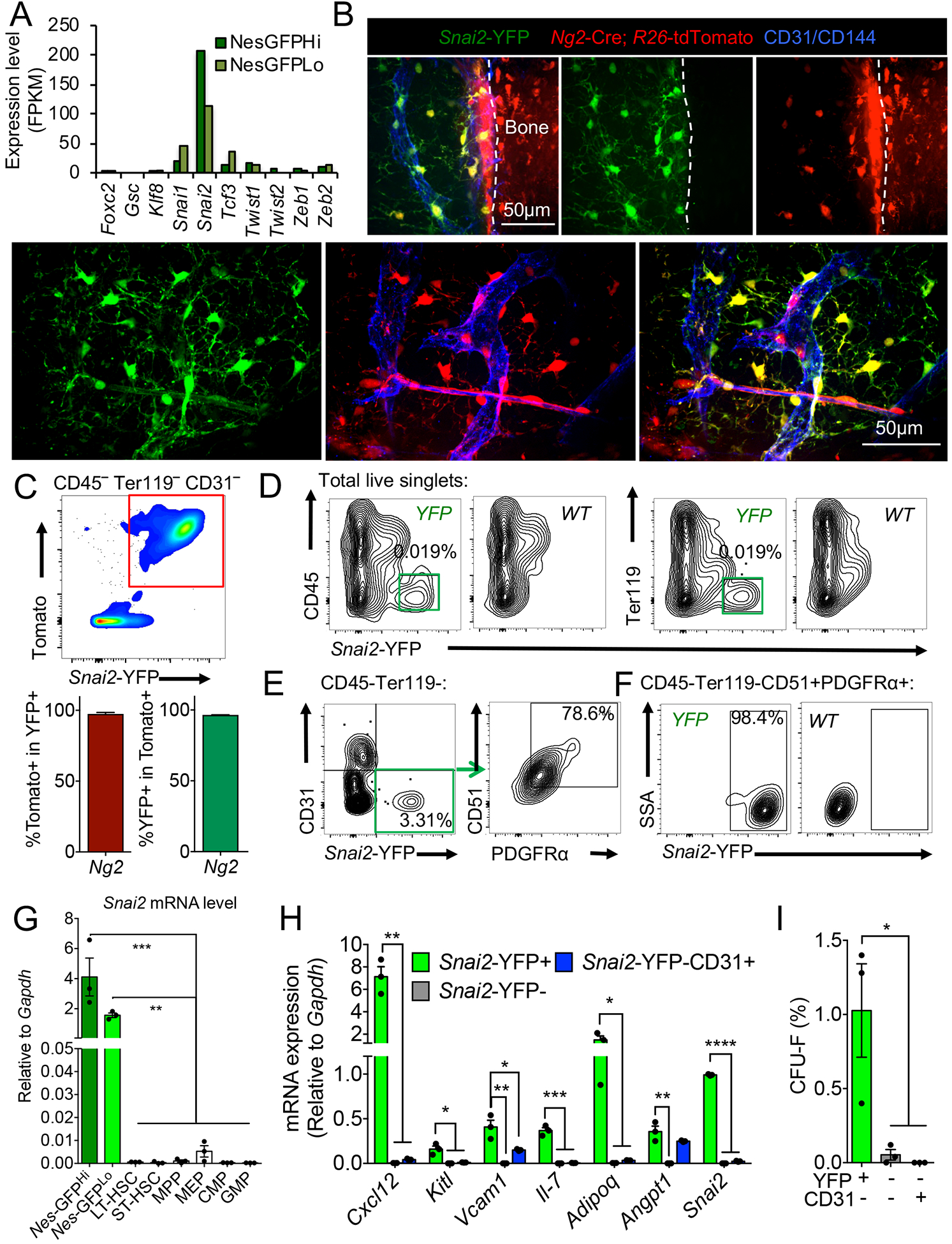
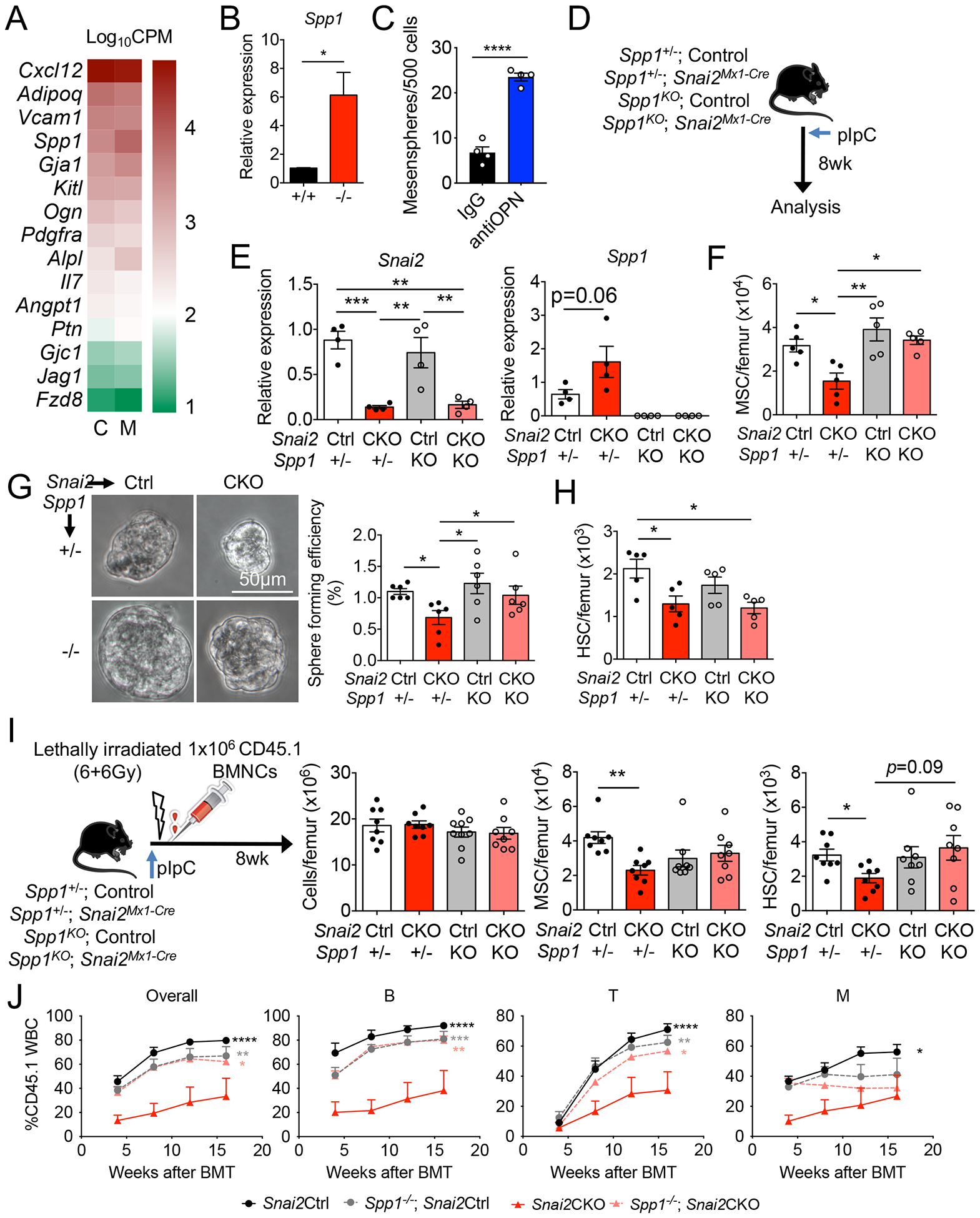
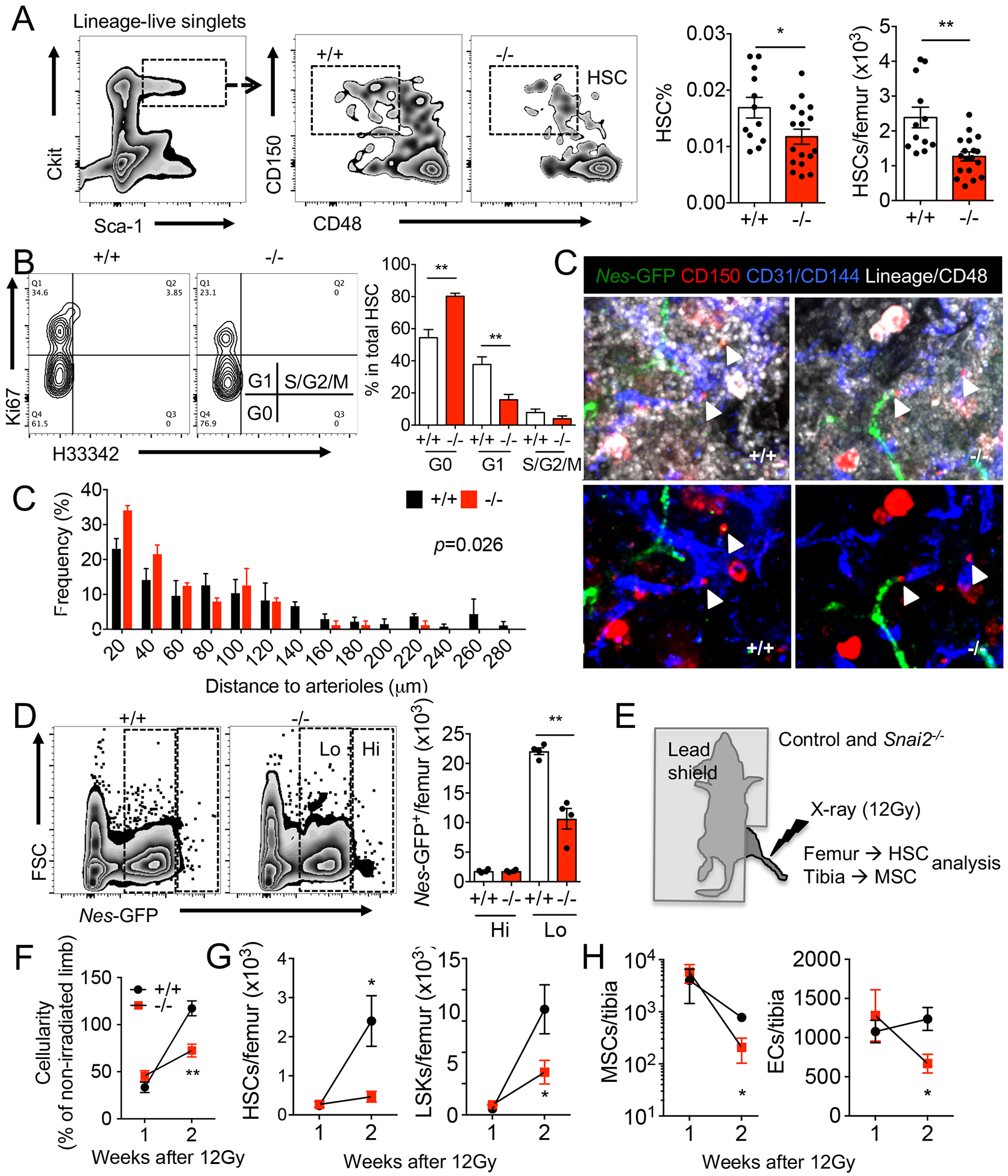
Bone marrow (BM) mesenchymal stem and progenitor cells (MSPCs) are a critical constituent of the hematopoietic stem cell (HSC) niche. Previous studies have suggested that the zinc-finger epithelial-mesenchymal transition transcription factor Snai2 (also known as Slug) regulated HSCs autonomously. Here, we show that Snai2 expression in the BM is restricted to the BM stromal compartment where it regulates the HSC niche. Germline or MSPC-selective Snai2 deletion reduces the functional MSPC pool and their mesenchymal lineage output and impairs HSC niche function during homeostasis and after stress. RNA sequencing analysis revealed that Spp1 (osteopontin) expression is markedly upregulated in Snai2-deficient MSPCs. Genetic deletion of Spp1 in Snai2-deficient mice rescues MSPCs' functions. Thus, SNAI2 is a critical regulator of the transcriptional network maintaining MSPCs by the suppression of osteopontin expression.
骨髓(BM)间充质干细胞和祖细胞(MSPCs)是造血干细胞(HSC)龛的重要组成部分。先前的研究表明,锌指上皮-间充质转化转录因子 Snai2(也称为 Slug)自主调节 HSCs。在这里,我们表明 BM 中的 Snai2 表达仅限于 BM 基质隔室,在那里它调节 HSC 龛。生殖系或 MSPC 选择性 Snai2 缺失会减少功能性 MSPC 池及其间充质谱系输出,并在稳态和应激后损害 HSC 龛功能。RNA 测序分析显示,Spp1(骨桥蛋白)在 Snai2 缺陷型 MSPCs 中的表达显著上调。在 Snai2 缺陷型小鼠中遗传缺失 Spp1 可挽救 MSPCs 的功能。因此,SNAI2 是通过抑制骨桥蛋白表达维持 MSPCs 的转录网络的关键调节剂。