Dörr Dominik, Standau Tobias, Castellón Svenja Murillo, Bonten Christian, Altstädt Volker
Department of Polymer Engineering, University of Bayreuth, Universitätsstraße 30, 95447 Bayreuth, Germany.
Institut für Kunststofftechnik, University of Stuttgart, Pfaffenwaldring 32, 70569 Stuttgart, Germany.
Polymers (Basel). 2020 May 13;12(5):1108. doi: 10.3390/polym12051108.
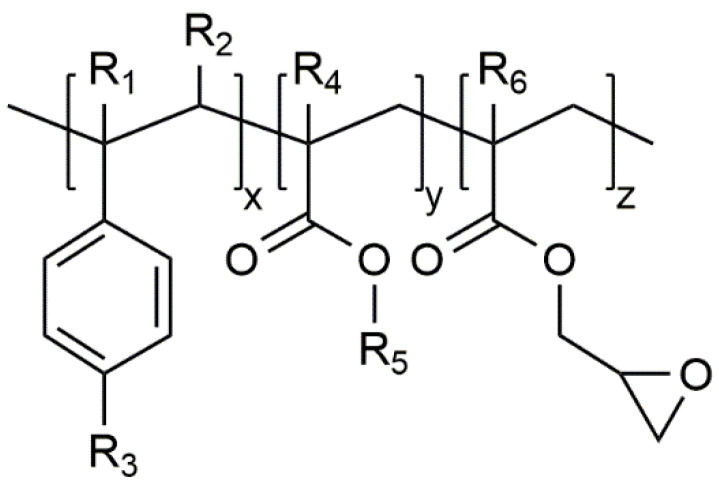
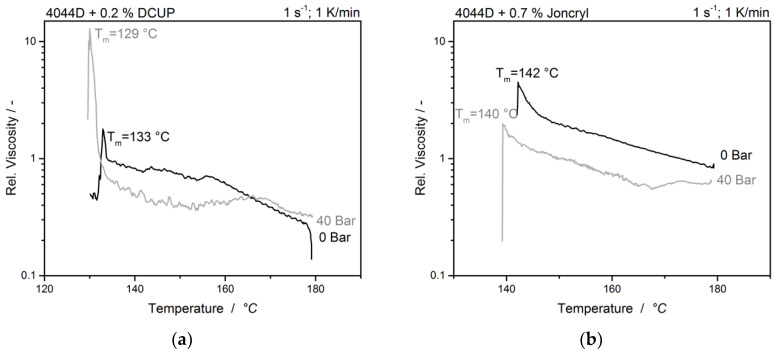
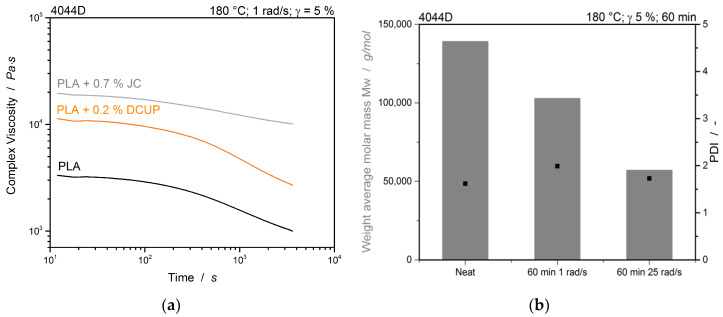
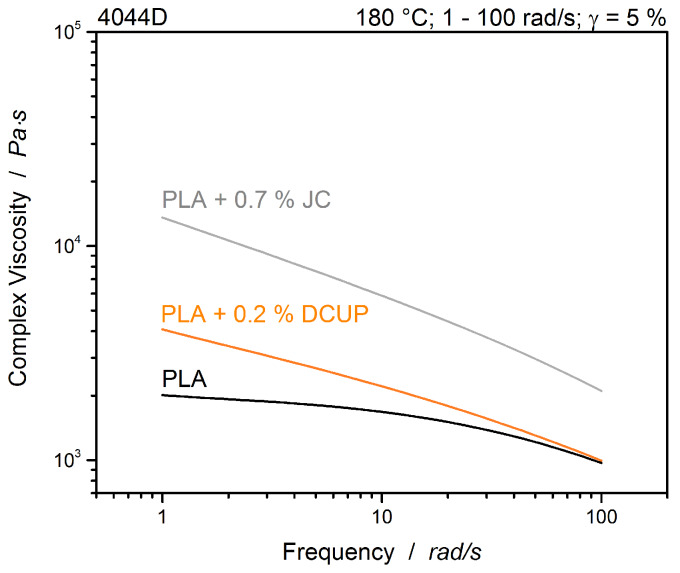
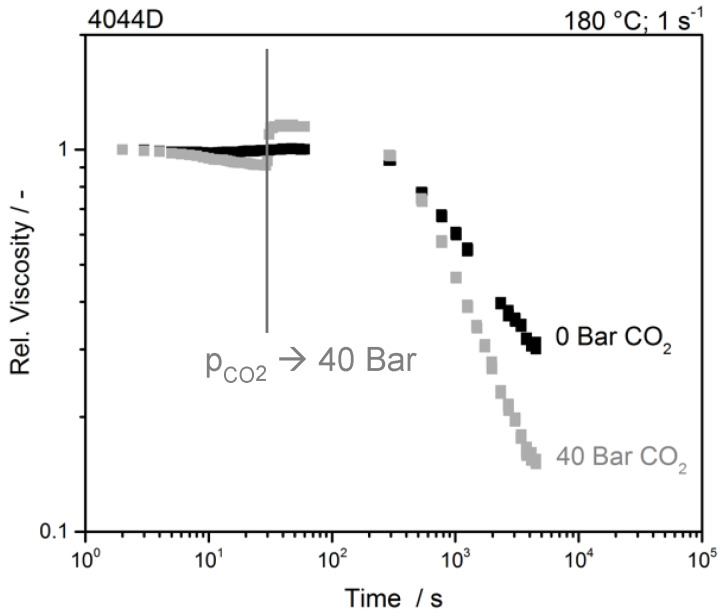
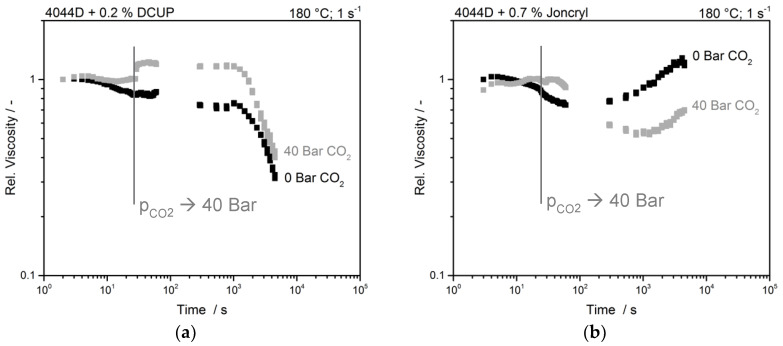
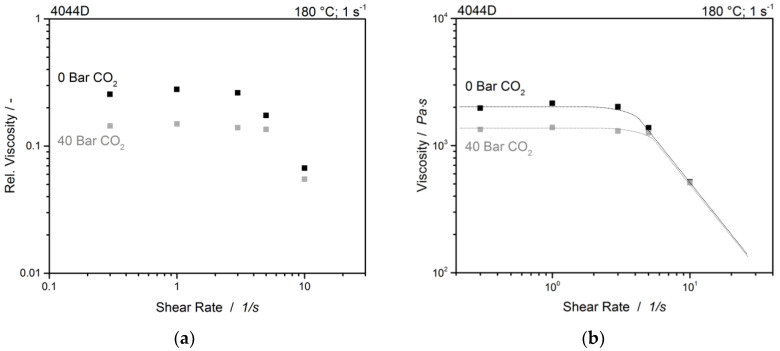
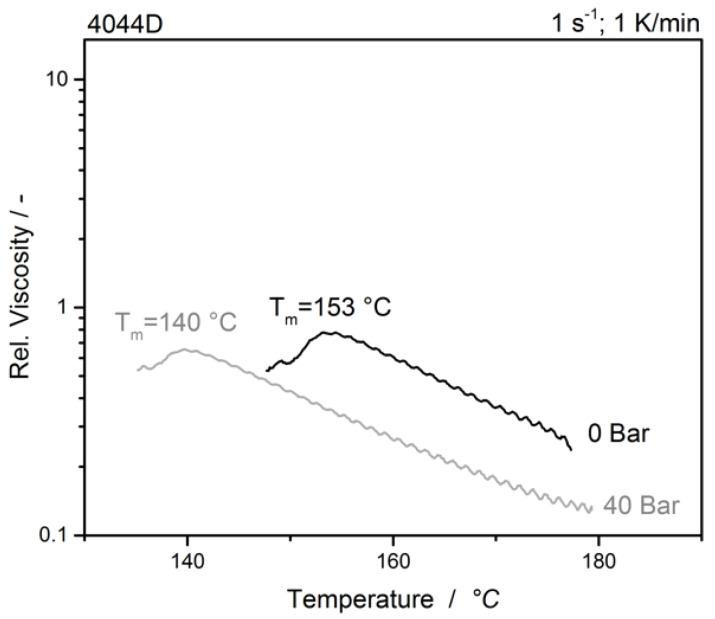
For the preparation of polylactide (PLA)-based foams, it is commonly necessary to increase the melt strength of the polymer. Additives such as chain extenders (CE) or peroxides are often used to build up the molecular weight by branching or even crosslinking during reactive extrusion. Furthermore, a blowing agent with a low molecular weight, such as carbon dioxide (CO), is introduced in the foaming process, which might affect the reactivity during extrusion. Offline rheological tests can help to measure and better understand the kinetics of the reaction, especially the reaction between the polymer and the chemical modifier. However, rheological measurements are mostly done in an inert nitrogen atmosphere without an equivalent gas loading of the polymer melt, like during the corresponding reactive extrusion process. Therefore, the influence of the blowing agent itself is not considered within these standard rheological measurements. Thus, in this study, a rheometer equipped with a pressure cell is used to conduct rheological measurements of neat and chemical-modified polymers in the presence of CO at pressures up to 40 bar. The specific effects of CO at elevated pressure on the reactivity between the polymer and the chemical modifiers (an organic peroxide and as second choice, an epoxy-based CE) were investigated and compared. It could be shown in the rheological experiments that the reactivity of the chain extender is reduced in the presence of CO, while the peroxide is less affected. Finally, it was possible to detect the recrystallization temperature T of the unmodified and unbranched sample by the torque maximum in the rheometer, representing the tear off of the stamp from the sample. T was about 13 K lower in the CO-loaded sample. Furthermore, it was possible to detect the influences of branching and gas loading simultaneously. Here the influence of the branching on T was much higher in comparison to a gas loading.
对于聚乳酸(PLA)基泡沫的制备,通常需要提高聚合物的熔体强度。在反应挤出过程中,常使用诸如扩链剂(CE)或过氧化物等添加剂通过支化甚至交联来增加分子量。此外,在发泡过程中会引入低分子量的发泡剂,如二氧化碳(CO₂),这可能会影响挤出过程中的反应活性。离线流变测试有助于测量并更好地理解反应动力学,特别是聚合物与化学改性剂之间的反应。然而,流变测量大多是在惰性氮气气氛中进行,聚合物熔体没有等效的气体负载,这与相应的反应挤出过程不同。因此,在这些标准流变测量中没有考虑发泡剂本身的影响。因此,在本研究中,使用配备压力传感器的流变仪在高达40巴的压力下,对纯聚合物和化学改性聚合物在CO₂存在的情况下进行流变测量。研究并比较了高压下CO₂对聚合物与化学改性剂(有机过氧化物以及作为第二选择的环氧基CE)之间反应活性的具体影响。流变实验表明,在CO₂存在下,扩链剂的反应活性降低,而过氧化物受影响较小。最后,通过流变仪中的扭矩最大值可以检测未改性和未支化样品的重结晶温度T,该扭矩最大值代表压模从样品上撕裂。在负载CO₂的样品中,T约低13K。此外,可以同时检测支化和气体负载的影响。在此,与气体负载相比,支化对T的影响要大得多。