Wellcome/EPSRC Centre for Interventional and Surgical Sciences, University College London, London, UK.
Department of Surgical & Interventional Engineering, King's College London, London, UK.
Int J Comput Assist Radiol Surg. 2020 Jul;15(7):1167-1175. doi: 10.1007/s11548-020-02170-7. Epub 2020 May 15.
Probe-based confocal laser endomicroscopy (pCLE) enables performing an optical biopsy via a probe. pCLE probes consist of multiple optical fibres arranged in a bundle, which taken together generate signals in an irregularly sampled pattern. Current pCLE reconstruction is based on interpolating irregular signals onto an over-sampled Cartesian grid, using a naive linear interpolation. It was shown that convolutional neural networks (CNNs) could improve pCLE image quality. Yet classical CNNs may be suboptimal in regard to irregular data.
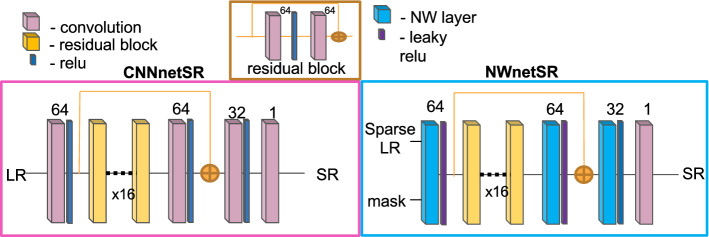
We compare pCLE reconstruction and super-resolution (SR) methods taking irregularly sampled or reconstructed pCLE images as input. We also propose to embed a Nadaraya-Watson (NW) kernel regression into the CNN framework as a novel trainable CNN layer. We design deep learning architectures allowing for reconstructing high-quality pCLE images directly from the irregularly sampled input data. We created synthetic sparse pCLE images to evaluate our methodology.
The results were validated through an image quality assessment based on a combination of the following metrics: peak signal-to-noise ratio and the structural similarity index. Our analysis indicates that both dense and sparse CNNs outperform the reconstruction method currently used in the clinic.
The main contributions of our study are a comparison of sparse and dense approach in pCLE image reconstruction. We also implement trainable generalised NW kernel regression as a novel sparse approach. We also generated synthetic data for training pCLE SR.
基于探针的共聚焦激光内窥镜(pCLE)通过探头实现光学活检。pCLE 探头由多根光纤排列成一束组成,这些光纤共同生成不规则采样模式的信号。目前的 pCLE 重建基于将不规则信号内插到过采样笛卡尔网格上,使用简单的线性内插。已经表明卷积神经网络(CNN)可以提高 pCLE 的图像质量。然而,对于不规则数据,经典的 CNN 可能不是最优的。
我们比较了将不规则采样或重建的 pCLE 图像作为输入的 pCLE 重建和超分辨率(SR)方法。我们还提出将纳达雅-沃森(NW)核回归嵌入到 CNN 框架中,作为一个新的可训练的 CNN 层。我们设计了深度学习架构,允许直接从不规则采样的输入数据重建高质量的 pCLE 图像。我们创建了合成稀疏 pCLE 图像来评估我们的方法。
通过基于以下指标的组合的图像质量评估验证了结果:峰值信噪比和结构相似性指数。我们的分析表明,密集和稀疏 CNN 都优于目前在临床中使用的重建方法。
我们研究的主要贡献是比较了 pCLE 图像重建中的稀疏和密集方法。我们还实现了可训练的广义 NW 核回归作为一种新的稀疏方法。我们还生成了用于训练 pCLE SR 的合成数据。