Division of Hematology and Oncology, Department of Medicine, Kyoto Prefectural University of Medicine, Kyoto, Japan.
Center for Molecular Diagnostics and Therapeutics, Kyoto Prefectural University of Medicine, Kyoto, Japan.
Cancer Med. 2020 Jul;9(14):5185-5199. doi: 10.1002/cam4.3136. Epub 2020 May 18.
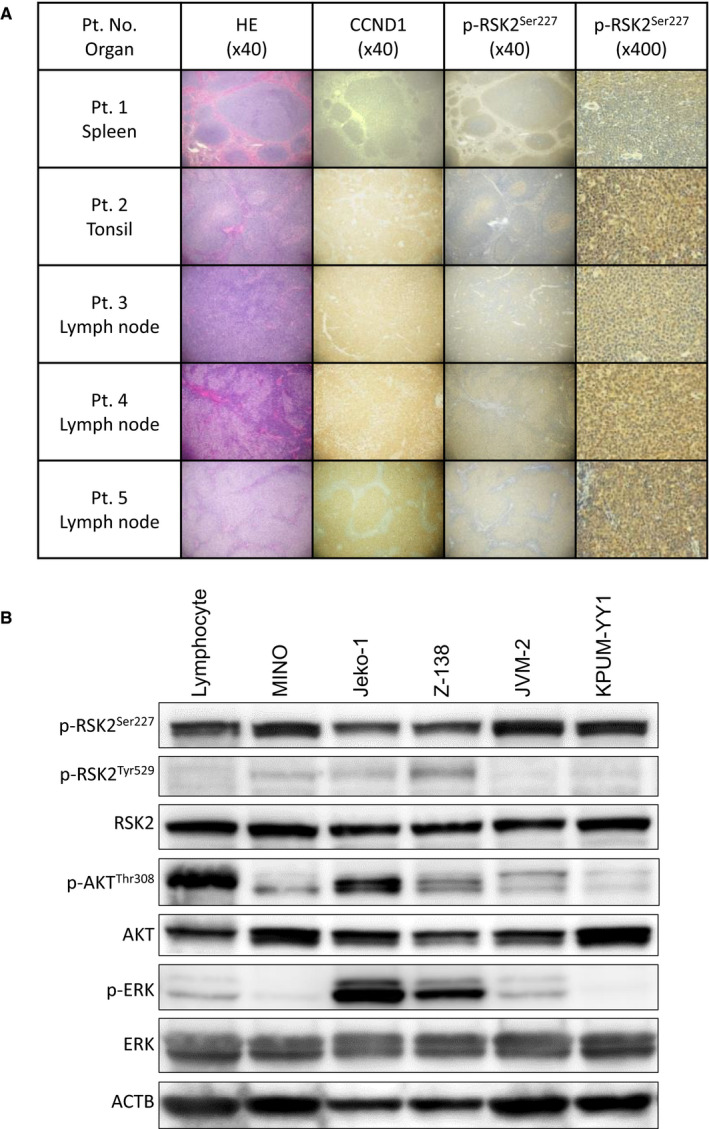
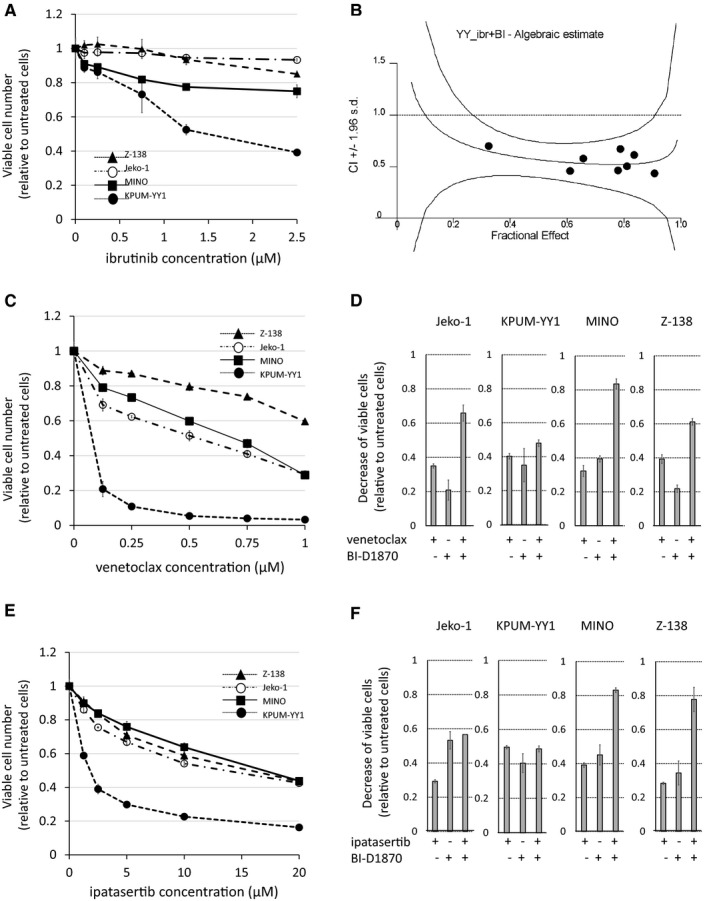
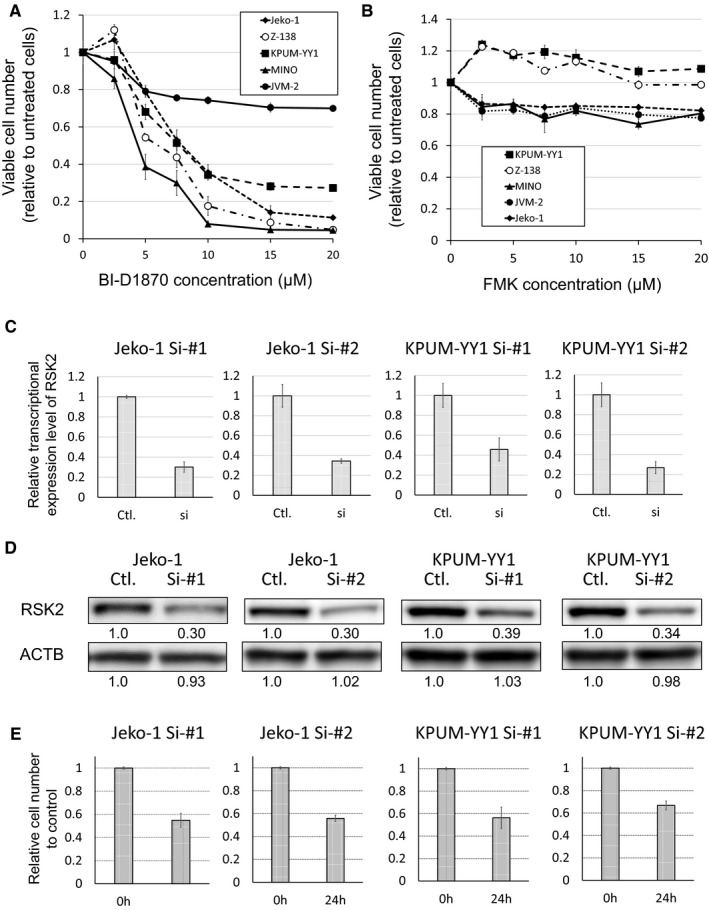
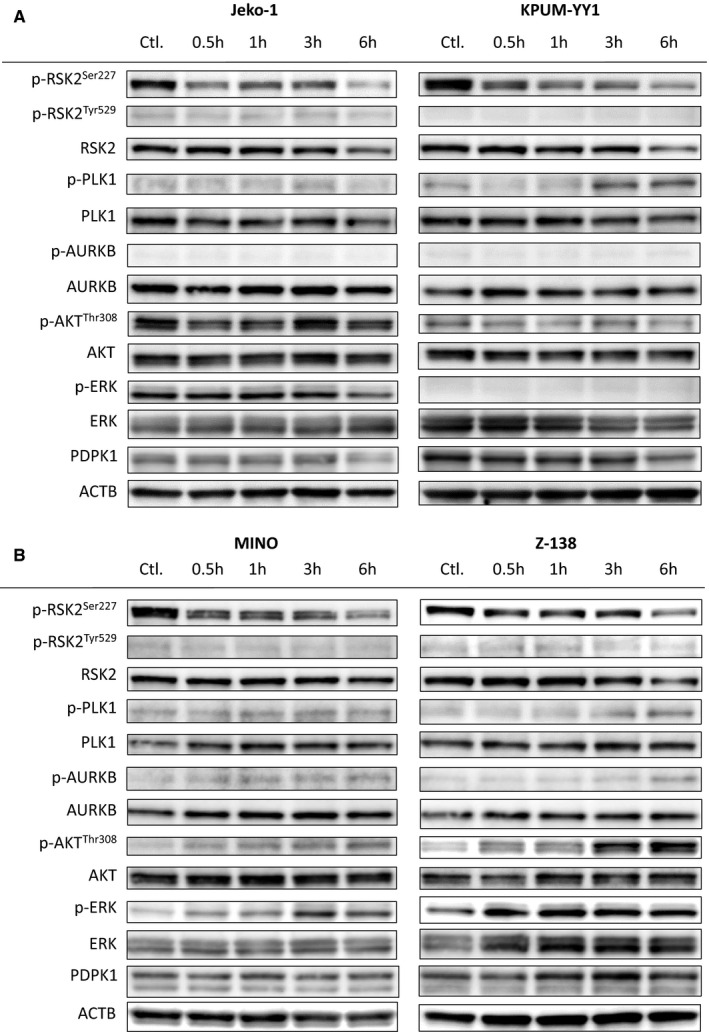
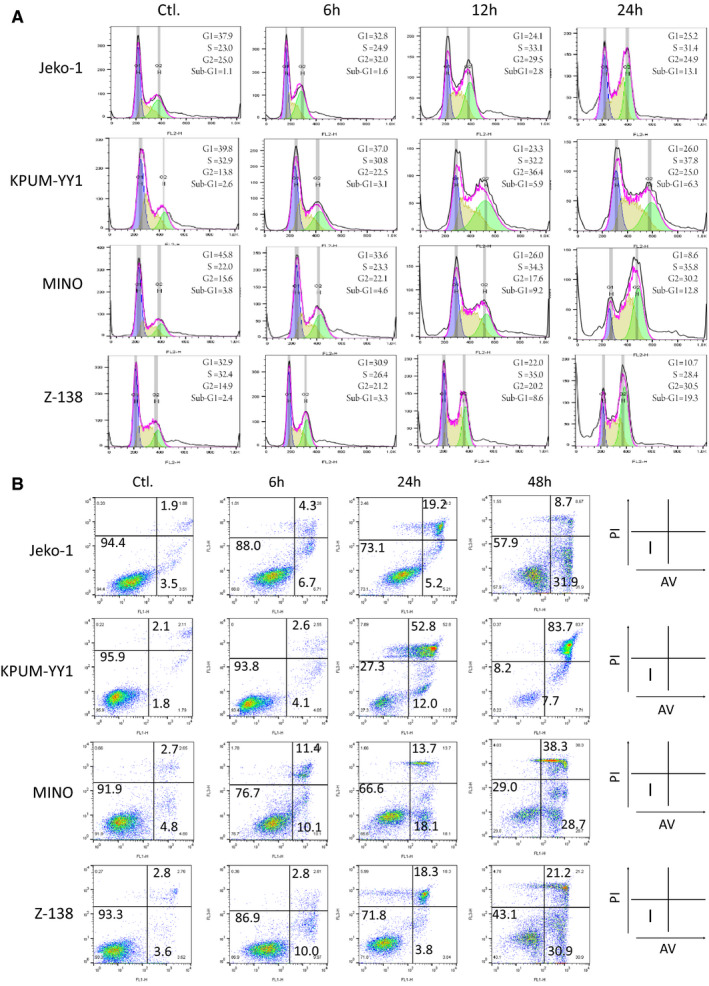
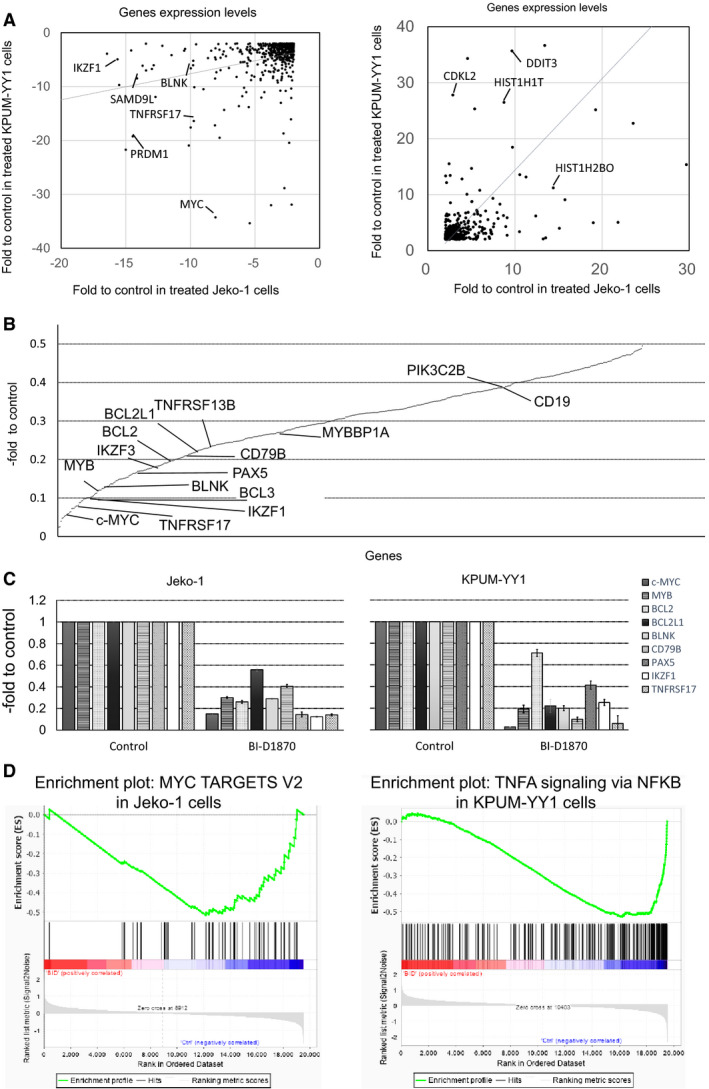
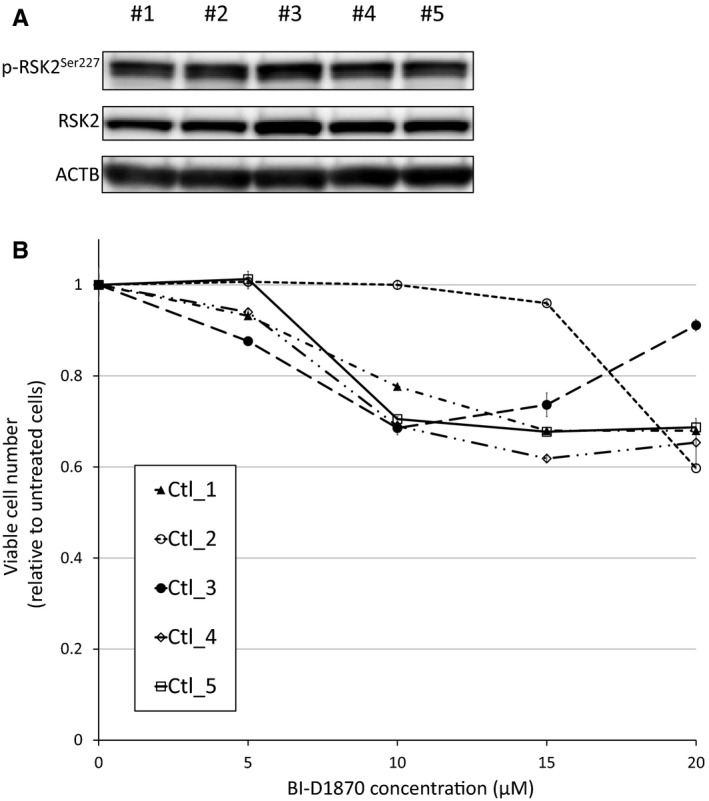
RSK2 is a serine/threonine kinase downstream signaling mediator in the RAS/ERK signaling pathway and may be a therapeutic target in mantle cell lymphoma (MCL), an almost incurable disease subtype of non-Hodgkin lymphoma. In this study, serine-227 (RSK2 ) in the N-terminal kinase domain (NTKD) of RSK2 was found to be ubiquitously active in five MCL-derived cell lines and in tumor tissues derived from five MCL patients. BI-D1870, an inhibitor specific to RSK2-NTKD, caused RSK2 dephosphorylation, and thereby, induced dose-dependent growth inhibition via G /M cell cycle blockade and apoptosis in four of the five cell lines, while one cell line showed only modest sensitivity. In addition, RSK2 gene knockdown caused growth inhibition in the four BI-D1870-sensitive cell lines. Comparative gene expression profiling of the MCL-derived cell lines showed that inhibition of RSK2 by BI-D1870 caused downregulation of oncogenes, such as c-MYC and MYB; anti-apoptosis genes, such as BCL2 and BCL2L1; genes for B cell development, including IKZF1, IKZF3, and PAX5; and genes constituting the B cell receptor signaling pathway, such as CD19, CD79B, and BLNK. These findings show that targeting of RSK2 enables concomitant blockade of pathways that are critically important in B cell tumorigenesis. In addition, we found favorable combinatory growth inhibitory effects of BI-D1870 with inhibitors of BTK (ibrutinib), AKT (ipatasertib), and BCL2 (venetoclax) in cell characteristic-dependent manners. These results provide a rationale for RSK2 in the NTKD as a potential therapeutic target in MCL and for future development of a novel bioavailable RSK2 NTKD-specific inhibitor.
RSK2 是 RAS/ERK 信号通路中的丝氨酸/苏氨酸激酶下游信号转导介质,可能是套细胞淋巴瘤(MCL)的治疗靶点,MCL 是一种几乎无法治愈的非霍奇金淋巴瘤亚型。在这项研究中,发现 RSK2 的 N 端激酶结构域(NTKD)中的丝氨酸 227(RSK2)在五种 MCL 衍生细胞系和来自五名 MCL 患者的肿瘤组织中普遍活跃。RSK2-NTKD 的特异性抑制剂 BI-D1870 导致 RSK2 去磷酸化,从而在五种细胞系中的四种细胞系中通过 G1/M 细胞周期阻滞和凋亡诱导剂量依赖性生长抑制,而一种细胞系仅表现出适度的敏感性。此外,RSK2 基因敲低导致四种 BI-D1870 敏感细胞系的生长抑制。MCL 衍生细胞系的比较基因表达谱显示,BI-D1870 抑制 RSK2 导致癌基因如 c-MYC 和 MYB 下调;抗凋亡基因如 BCL2 和 BCL2L1;B 细胞发育相关基因,包括 IKZF1、IKZF3 和 PAX5;以及构成 B 细胞受体信号通路的基因,如 CD19、CD79B 和 BLNK。这些发现表明,靶向 RSK2 能够同时阻断在 B 细胞肿瘤发生中至关重要的途径。此外,我们发现 BI-D1870 与 BTK(依鲁替尼)、AKT(ipatasertib)和 BCL2(venetoclax)抑制剂在以细胞特征依赖性方式具有有利的联合生长抑制作用。这些结果为 RSK2 在 NTKD 中作为 MCL 的潜在治疗靶点提供了依据,并为未来开发新型生物可利用的 RSK2 NTKD 特异性抑制剂提供了依据。